A little more detail
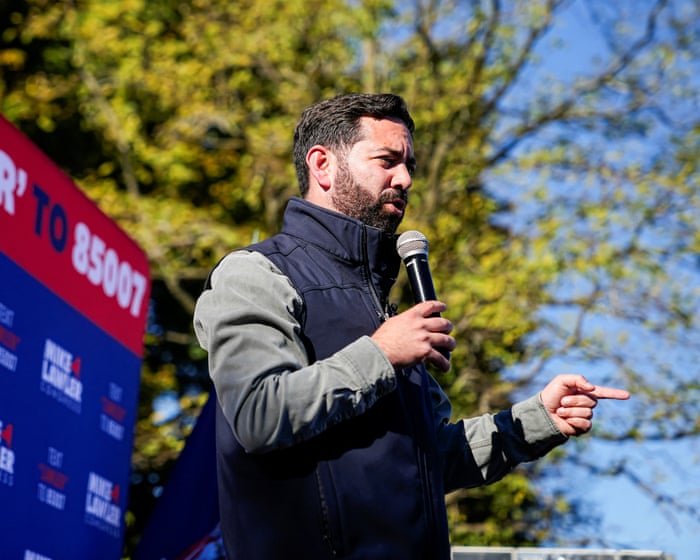
Republican Congressman Mike Lawler, who flipped New York’s 17th district in 2022, is reported to be in a close reelection contest as some constituents express anger at his alignment with many of President Trump’s policies. The Guardian frames NY-17 as one of the midterms’ tightest battlegrounds next week, suggesting his ties to the president may threaten his seat.
Source and Framing Analysis
Primary reporting for this cluster comes from a Guardian article that frames the contest around intra-party tension: Lawler’s prior success as a moderate who flipped the district in 2022 is set against his support for many of President Trump’s policies and reported constituent anger. The piece emphasizes vulnerability and narrative explanation over quantitative evidence. Strengths: clear, plausible reporting of political dynamics and local reaction; explicit attribution of the interpretation to the reporting outlet. Limitations and omissions: the article excerpt provides no polling numbers, no vote margins, no opponent names or campaign detail, no specific votes or policies cited, and few direct constituent quotes or sourcing that would quantify how widespread the anger is. The framing foregrounds personal/political tension (moderation vs. national alignment) rather than offering hard electoral metrics, so readers should treat the described vulnerability as qualitatively reported and worth confirming with polling, official returns, or multiple independent sources.
How sources covered this story
Sanctuary separately assesses reporting quality and alignment with Christian virtues. The virtues assessment considers truthfulness, dignity, compassion, justice, peacemaking, humility, and care for vulnerable people. It does not assess a publisher's faith or reward religious language.
Compare 1 reports
Reporting 75/100Virtues 72/100
- Distinctive contribution
- Links Lawler’s electoral vulnerability to a tension between his moderate positioning and his support for many of the president’s policies, and states that this combination has 'infuriated some of his constituents,' providing a behavioral explanation for why a previously successful incumbent might be endangered.
- Framing
- Frames Lawler as a vulnerable incumbent in a closely contested battleground (NY-17) whose alignment with the president’s policies conflicts with local expectations; emphasizes electoral danger and constituent anger as central themes.
- Omissions or uncertainty
- The excerpt provides no polling figures, vote margins, names or positions of opponents, specific policies Lawler supported, examples or quotes from 'infuriated' constituents, or sourcing for the claims. Timing (e.g., precisely when he flipped the seat in 2022 beyond the year) and the scale of the reported constituent anger are unspecified.
- Why these scores
- The excerpt is concise and communicates plausible, newsworthy facts with restrained language rather than hyperbole. However, in the supplied text it lacks supporting evidence, specific examples, attributions, or numbers that would increase verifiability and depth. For a short news brief this is adequate and responsibly worded, but limited in specificity. The wording is factual and non-dehumanizing, acknowledges constituent grievances (respecting voice and dignity), and avoids sensationalism, which aligns with truthfulness and humility. The excerpt offers little explicit compassion or attention to vulnerable individuals beyond noting anger, and it provides limited context that might support restorative understanding or justice-focused analysis, so it does not score higher.
Biblical Reflection
From a Christian perspective, this race illustrates the tensions that arise when local expectations of service meet national partisan pressures. The central questions for Christian civic engagement are not partisan victory but neighbor-care: do public leaders protect the vulnerable, pursue justice, act with humility, and seek the common good? Faithful participation in a close election includes informed voting based on records and impacts, patient and truthful conversation with neighbors who disagree, and holding officeholders accountable in ways aimed at restoration and the flourishing of the community rather than partisan triumph. Scripture’s call to servant leadership invites voters to prioritize service and the dignity of all neighbors when judging public officials.
Scripture in context
- 1 — Jesus contrasts worldly leadership (seeking power and status) with servant leadership, speaking to his disciples shortly before his passion about how his followers should lead. — The passage invites Christians to judge political leaders by their willingness to serve rather than dominate. It calls voters to prioritize humility, care for the vulnerable, and sacrificial service when assessing public officials and when deciding how to engage in partisan conflict.
Faithful Response
Pray for clarity, humility, and for leaders and voters to act justly and mercifully.
Read officials’ voting records and policy proposals and assess concrete effects on vulnerable neighbors rather than relying on personalities or partisan branding.
Host or attend calm, evidence-focused conversations and voter-education sessions that foreground local impacts and mutual listening.
Vote informedly, participate in local civic institutions that meet community needs, and hold elected officials accountable in ways that seek truth and restoration rather than personal vindication.
Reflection and Discussion
- 1Does my vote prioritize neighbor-care, justice, and humility over party allegiance?
- 2How can I hold leaders accountable in ways that seek restoration and public good rather than revenge?
- 3What concrete outcomes (policy, funding, services) matter most to vulnerable people in NY-17, and how do the candidates’ records align with those needs?
Sources
Reporting links are evidence inputs; Sanctuary News' biblical reflection is commentary.
This is a developing, single-source report. Details may change as more reporting becomes available.
- 1.Mike Lawler flipped a New York district red in 2022. But his ties to Trump might bite him in the midtermsprimary_reporting