News Summary
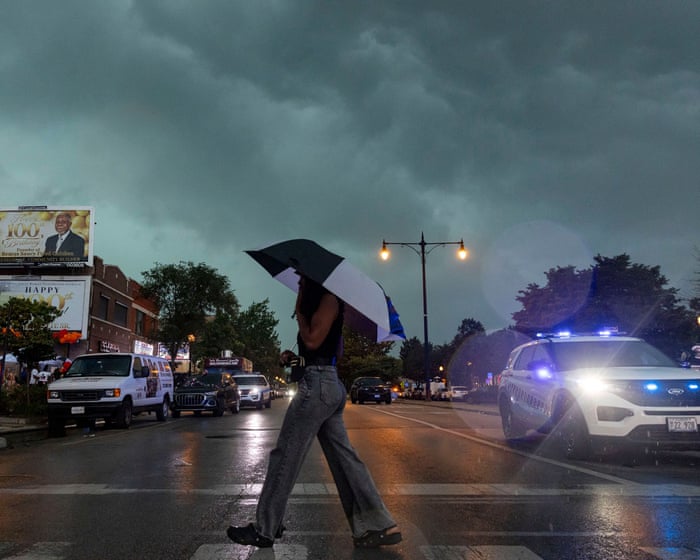
The Guardian reports that powerful storms swept across parts of the U.S. Midwest (Indiana, Ohio, Illinois, Kentucky), producing winds gusting above 80 mph, flooding and tornadoes. The article says three people died and more than 800,000 customers lost power after winds toppled trees and downed power lines. Two local details named in the report: a four-year-old child in Geneva Township, Indiana, died when a tree fell on his home, and a separate death occurred in Portage, Illinois-area, in what the article describes as a "suspected weather-related" house explosion. The piece is an initial account and explicitly flags uncertainty about the cause of the Portage explosion and omits full verification of outage and casualty details from emergency agencies or utilities.
Source and Framing Analysis
Primary source: The Guardian (article titled "Powerful storms in US midwest leave three dead and 800,000 without power"). The report foregrounds human impact (fatalities, a child victim) and infrastructure disruption (large-scale outages, trees and power lines down). That framing is appropriate for immediate public-interest reporting. The article is concise and matter-of-fact, but it is an initial dispatch and relies on early counts and local reporting; it does not cite utility-confirmed outage figures or official investigations for the Portage explosion. Where the article signals uncertainty (using "suspected"), it responsibly avoids asserting causation; readers should expect updates as agencies verify causes, casualty details, and restoration timelines. No partisan or ideological framing is apparent — the choices are emphasis on scale and human toll — but evidence gaps (third fatality details, outage sourcing, tornado confirmations) remain and should be closed by follow-up reporting or official statements.
How sources covered this story
Sanctuary separately assesses reporting quality and alignment with Christian virtues. The virtues assessment considers truthfulness, dignity, compassion, justice, peacemaking, humility, and care for vulnerable people. It does not assess a publisher's faith or reward religious language.
Compare 1 reports
Reporting 78/100Virtues 72/100
- Distinctive contribution
- Reports the overall toll (three dead, over 800,000 without power), peak gusts (>80 mph / 130 km/h), affected states (Indiana, Ohio, Illinois, Kentucky) and two specific fatal incidents: a four-year-old killed by a fallen tree in Geneva Township and a suspected weather-related house explosion in Portage.
- Framing
- Straight news reporting focused on immediate impacts (fatalities, outages, damage from wind/flood/tornado); uses vivid but factual verbs ("tore down trees and power lines", "swept across"). The excerpt emphasizes human consequences and infrastructure disruption.
- Omissions or uncertainty
- Excerpt does not explain the source(s) of the casualty and outage figures or provide timestamps; it does not describe the third death, number of injuries, extent of property damage, emergency response or power-restoration efforts, or verification of the suspected house explosion cause.
- Why these scores
- Concise and fact-focused with specific numbers and local details, which is useful. Deductions for the excerpt's lack of explicit sourcing/attribution for counts, incomplete detail about the third fatality, and limited contextual information (response, verification of the explosion). Overall solid, clear reporting for a brief news dispatch. The excerpt is truthful and non-dehumanizing, names vulnerable victims (a child) with restraint, and highlights community harm, which aligns with care and compassion. It lacks explicit attention to victims' needs, assistance efforts, or moral framing (which would raise the score), but it does not exploit or sensationalize suffering.
Biblical Reflection
These storms are a sober reminder that sudden natural disasters bring acute loss and practical need. Christian response should center truth-telling and mercy: grieve with those who grieve, verify information before sharing, and move quickly to provide practical care (shelter, food, warmth, medical help) alongside prayer. The church should coordinate with local emergency management and established relief organizations, prioritize assistance to the most vulnerable (children, elderly, low-income households, people with medical needs), and advocate for fair and rapid restoration of services. Spiritually, storms expose human fragility and call the church to combine lament with steady, humble service — offering presence, resources, and long-term support for community recovery and resilience.
Scripture in context
- 1Psalm 46:1-3 — A communal psalm historically used in times of upheaval and disaster that names God as refuge and strength amid threats and dislocation. — This passage can frame communal lament and consolation: it permits honest fear and grief while encouraging the faithful to act with courage and care for neighbors. Use it to ground pastoral presence, to remind congregations that lament and service belong together, and to sustain hope in practical work of relief without minimizing real loss.
Faithful Response
Practical and pastoral steps Christians and congregations can take: 1) Pray for victims, first responders, utility crews, and those left without power or shelter, while avoiding premature explanations about causes. 2) Verify needs through local emergency management or established relief coalitions before mobilizing donations; prioritize monetary gifts to vetted relief funds or pre-arranged material drives with clear lists. 3) Open church facilities as shelter, charging/warming stations, or meal centers only after coordinating with authorities; ensure volunteers follow safety and registration protocols. 4) Conduct needs-assessments focused on vulnerable neighbors (elderly, disabled, families with young children) and offer transportation, temporary shelter, meals, or childcare. 5) Provide pastoral care and grief counseling; organize prayer vigils that also serve as hubs for practical help. 6) Advocate for equitable restoration and long-term infrastructure support for hard-hit communities. Always center dignity, humility, and the concrete welfare of those suffering rather than speculation about causes.
Reflection and Discussion
- 1How can our congregation prepare now so we can respond quickly and responsibly to acute storms (shelter, volunteers trained, lists of verified partner agencies)?
- 2When news reports contain provisional or "suspected" causes, how do we maintain compassion without amplifying rumor?
- 3Which neighbors in our community are most vulnerable during extended power outages, and how will we prioritize reaching them?
- 4What forms of long-term support (repairs, counseling, advocacy) might be offered after immediate needs are met?
Sources
Reporting links are evidence inputs; Sanctuary News' biblical reflection is commentary.
This outlook currently relies on fewer than two linked sources. Broaden verification before teaching from it.
- 1.Powerful storms in US midwest leave three dead and 800,000 without powerprimary_reporting