News Summary
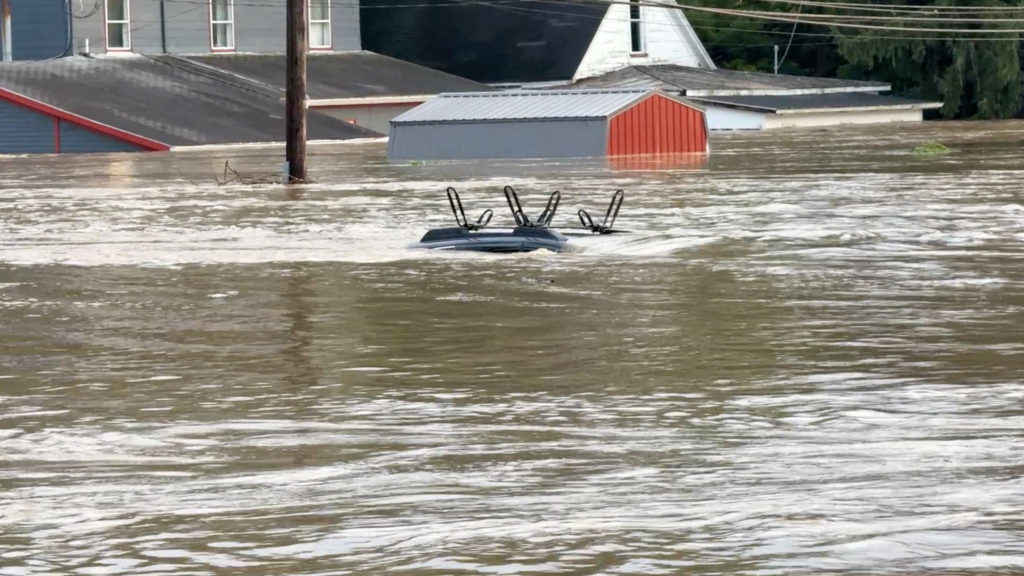
PBS NewsHour's news wrap reported three headline items: (1) a week of heavy storms and catastrophic floods in the U.S. Midwest that killed at least seven people; (2) Hurricane Lala struck the Big Island of Hawaii and other Hawaiian islands, leaving a trail of destruction; and (3) U.S. envoy Jared Kushner left Israel without achieving a breakthrough on the president’s stalled Gaza peace proposal. The wrap is concise and does not supply locations, names, damage estimates, timelines, or on‑the‑ground sourcing; each claim is reported by PBS NewsHour and should be corroborated by additional reporting for fuller context and confirmation.
Source and Framing Analysis
Source: PBS NewsHour (single news‑wrap segment supplied). Framing: brief headline-style summaries that prioritize speed and breadth over depth. The report uses qualified language (e.g., 'at least seven') but offers no local attributions, official statements, or supporting data in the supplied excerpt. Utility: good as an alert to multiple developing stories; limitation: insufficient detail for policy conclusions, operational relief planning, or diplomatic analysis. Reliability note: factual claims are presented plainly but are based on a single short item in this dataset; independent corroboration and on-the-ground reporting are needed to assess scale, causes, and consequences.
How sources covered this story
Sanctuary separately assesses reporting quality and alignment with Christian virtues. The virtues assessment considers truthfulness, dignity, compassion, justice, peacemaking, humility, and care for vulnerable people. It does not assess a publisher's faith or reward religious language.
Compare 1 reports
Reporting 74/100Virtues 76/100
- Distinctive contribution
- Provides a succinct summary corroborating three separate events: casualty count from Midwest floods, Hurricane Lala's destructive impact across Hawaiian islands, and Kushner's departure from Israel without progress on the Gaza proposal.
- Framing
- A brief 'news wrap' style summary presenting top items in neutral, headline-like sentences; factual and concise, with modest hedging ('at least seven').
- Omissions or uncertainty
- No dates, specific locations in the Midwest, identities or circumstances of the deceased, scope/extent of damage in Hawaii, sources for the claims, or statements from officials or witnesses. The diplomatic item lacks details on the proposals, timeline, or responses from Israeli officials or Palestinian representatives.
- Why these scores
- Appropriate for a short news wrap: concise, uses qualifying language ('at least') to indicate uncertainty, and records multiple distinct items. However, the excerpt provides no sourcing, no contextual detail, no quotes or attribution, and limited specificity, which restrains its standalone informational value beyond a brief summary. Neutral, non-sensational language that reports casualties without dehumanizing or exploitative detail. The excerpt shows humility about uncertainty ('at least seven') and does not inflame or stigmatize any group. It is brief and lacks explicit compassionate framing or attention to victims, which prevents a higher score, but it responsibly presents facts without evident harm.
Biblical Reflection
These three items together remind Christians that sudden natural calamity and slow, difficult diplomacy coexist in our broken world. Natural disasters call for immediate mercy and practical care for vulnerable neighbors; stalled diplomatic efforts remind us the work of peace is patient and often frustrating. The proper Christian posture blends lament for those who suffer, humble attention to facts (avoiding premature judgments), and active compassion—mobilizing aid, advocating for resources, and praying for negotiators and civilians. Scripture invites us to be peacemakers and to shelter the hurting; that call shapes how we receive and respond to these reports without turning sketchy early accounts into final verdicts.
Scripture in context
- 1Psalm 46 — A communal song traditionally invoked in times of national crisis and natural disaster. — Encourages the church to be a steady refuge—offering practical relief, pastoral presence, and reminders of God's sustaining presence amid upheaval.
- 2Matthew 5:9 — Part of the Beatitudes that names peacemakers as blessed. — Frames Christian support for diplomatic and reconciliatory efforts, and calls the church to patient, prayerful peacemaking when official negotiations stall.
Faithful Response
Pray specifically and persistently for victims, first responders, relief workers, and diplomats; avoid vague platitudes and sustain intercession beyond the news cycle.
Give to vetted disaster-relief organizations or credible local church relief efforts serving Midwestern and Hawaiian communities; prioritize channels with accountability and local partners.
Organize or join practical local responses (supply drives, temporary shelter, transportation assistance, pastoral care) while coordinating with established relief agencies to avoid duplication or harm.
Resist partisan or premature narratives about causes or competence; seek fuller reporting before forwarding or amplifying claims as settled fact.
Advocate for long-term recovery resources and attention to vulnerable populations disproportionately affected by floods, hurricanes, and conflict.
Reflection and Discussion
- 1Which concrete needs are described in the report, and which needs are not visible because of missing detail?
- 2How can my congregation sustain care and attention for affected communities beyond the immediate news cycle?
- 3In what ways does the church practice peacemaking locally that can inform our posture toward stalled international diplomacy?
- 4Am I relying on single-source headlines for my understanding, or am I seeking corroboration before forming or sharing judgments?
Sources
Reporting links are evidence inputs; Sanctuary News' biblical reflection is commentary.
This outlook currently relies on fewer than two linked sources. Broaden verification before teaching from it.
- 1.News Wrap: 7 dead after storms and catastrophic floods in Midwestprimary_reporting