News Summary
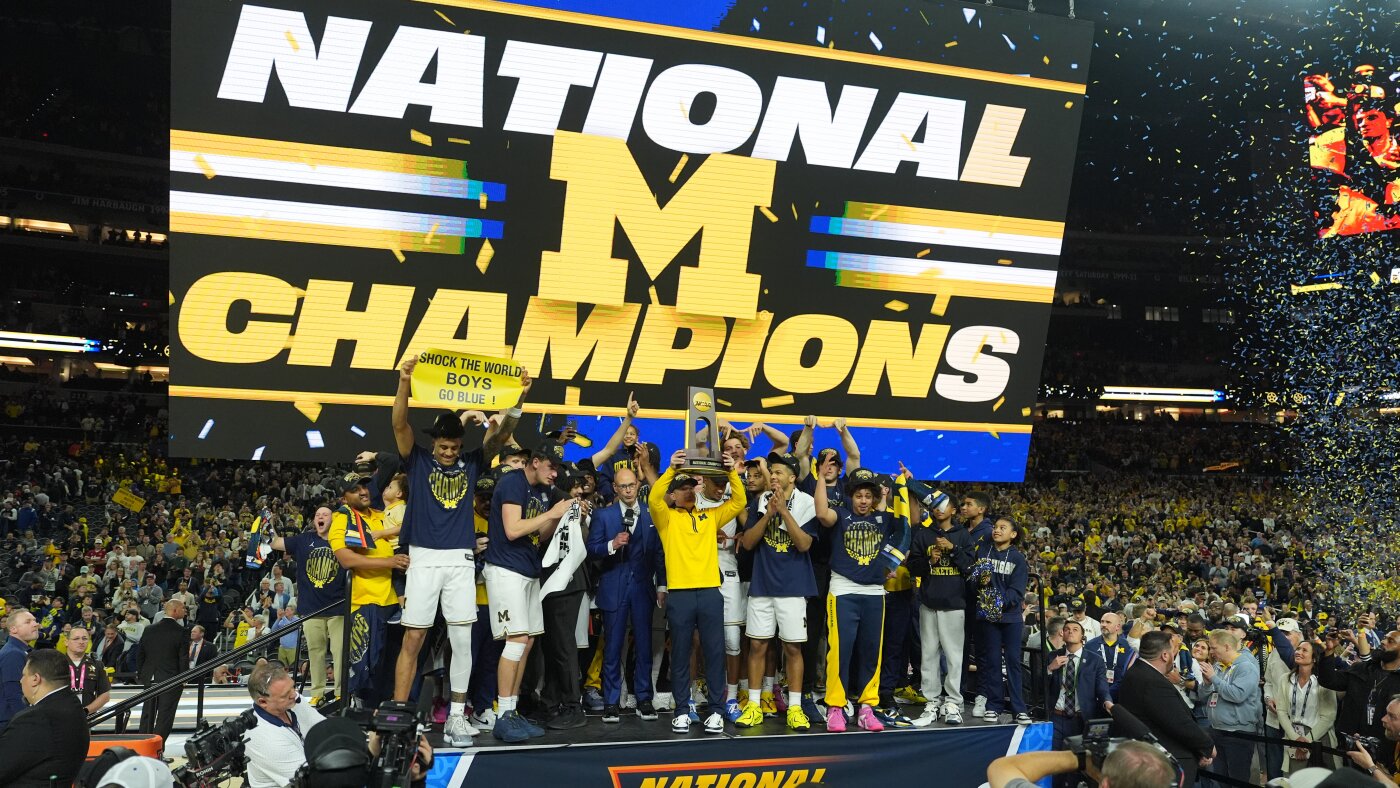
On April 6, 2026, at the Final Four in Indianapolis, the University of Michigan defeated UConn 69-63 to win the NCAA men's basketball national championship — Michigan's second all-time title (the first was in 1989). Michigan finished the season 37-3; UConn finished 35-5. Michigan made just two three-pointers (2-of-15) and faced difficulty on the glass, but shot 25-of-28 from the free-throw line. Elliot Cadeau led Michigan with 19 points. Trey McKenney hit a late three and sank key free throws; Yaxel Lendeborg, playing with knee and foot issues, scored 13 on 4-of-13 shooting. UConn shot 30.9% from the field, suffered foul trouble, and missed late long-range attempts that might have closed the gap; Alex Karaban scored 17 for UConn. The article notes Michigan's starting five were all previously at other schools (all but Nimari Burnett arrived in Ann Arbor this season), highlighting coach Dusty May's use of the transfer portal and his role in forming a winning culture. Reporters commented on the game's low outside shooting and physical, defensive nature compared to Michigan's earlier high-scoring tournament games.
Biblical Reflection
This report describes athletic achievement and the mechanics of a single victory, but it also reveals two competing cultural lenses: one that frames college sports as performance and roster construction (including heavy use of the transfer portal and money-driven recruiting), and another that sees team formation, sacrifice, and perseverance. The article's phrases like "the best team money could buy" and "mercenaries" point to a transactional view of athletes — treating players primarily as assets — while other elements (players playing through injury, a coach molding a new group) highlight resilience, leadership, and community. From a Christian perspective, athletic excellence and hard work are not in themselves wrong; Scripture honors diligence, teamwork, and disciplined training. But Christians should also name and resist tendencies that idolize success, wealth, or status. When coverage reduces people to commodities, it obscures human dignity and can encourage pride or a win-at-all-costs mentality. Conversely, the story provides a vantage point to celebrate virtues like perseverance, mutual reliance, and disciplined leadership, and to pray for the spiritual and physical wellbeing of athletes whose careers and identities are often publicly commodified. As readers, we should hold both tensions: rejoice in the genuine good — teamwork, sacrifice, restoration of a program — while critiquing cultural narratives that elevate money, status, or spectacle above character, stewardship, and the flourishing of young people.
Scripture in context
This outlook does not yet include contextual Scripture citations. Do not treat a general biblical theme as an exegetical conclusion.
Faithful Response
No prescribed response is offered. Consider the reflection prompts below in your own church context.
Reflection and Discussion
- 1How does labeling teams or players as "mercenaries" or "the best money could buy" shape our view of athletes — as people made in God's image or primarily as commodities?
- 2What values does the article elevate (winning, roster-building, resilience) and which Christian virtues (humility, stewardship, care for the whole person) are left unexamined?
- 3When we celebrate sporting success, how can we also advocate for the long-term spiritual, educational, and physical wellbeing of the players involved?
Sources
Reporting links are evidence inputs; Sanctuary News' biblical reflection is commentary.
This outlook currently relies on fewer than two linked sources. Broaden verification before teaching from it.
- 1.Original reportprimary