News Summary
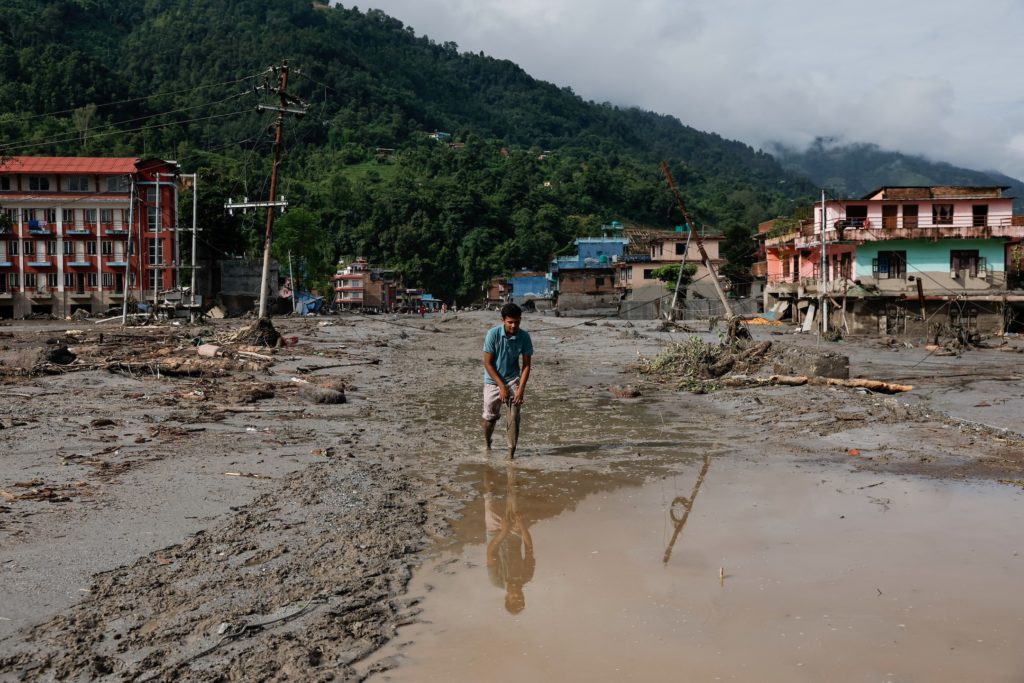
PBS NewsHour reports catastrophic flooding struck parts of Nepal and Tibet shortly after a glacier failure. Scientists interviewed in the piece describe a glacier collapse as the likely trigger that released a torrent of water, mud, and debris downstream that swept through communities. The report uses cautious language (“likely”) and does not provide casualty or damage totals, independent official confirmation, the glacier’s name or precise evidence (e.g., satellite imagery or field survey) supporting the attribution.
Source and Framing Analysis
Source: PBS NewsHour. Framing: the article summarizes an early-stage scientific assessment and attributes the causal claim to scientists, using hedged phrasing (for example, 'likely' or 'believe'). Strengths: responsibly cautious language and emphasis on human impact. Limitations and uncertainties explicitly present in the piece: no casualty or damage figures, no named local authority confirmations in the excerpt, no detailed description of the evidence that supports the glacier-collapse hypothesis, and no definitive statement linking this single collapse to long-term climate trends. Readers should treat the glacier-collapse attribution as a plausible, expert-held hypothesis that requires further independent verification and more data before becoming a settled conclusion.
How sources covered this story
Sanctuary separately assesses reporting quality and alignment with Christian virtues. The virtues assessment considers truthfulness, dignity, compassion, justice, peacemaking, humility, and care for vulnerable people. It does not assess a publisher's faith or reward religious language.
Compare 1 reports
Reporting 75/100Virtues 74/100
- Distinctive contribution
- Attributes the flooding to a likely glacier collapse that unleashed water, mud and debris, and situates the disaster in Nepal and Tibet while noting growing clarity about its scale.
- Framing
- Cautious and descriptive: the piece attributes the causal claim to 'scientists' and uses hedging language ('believe', 'likely'), and emphasizes the human impact ('swept away entire communities').
- Omissions or uncertainty
- No named scientists or institutions, no specific glacier identified, no timeline or date, no description of the evidence (satellite imagery, field observations, instrumentation), no casualty or damage figures, and no discussion of alternative explanations.
- Why these scores
- Concise and responsibly worded: the excerpt attributes the causal claim to scientists and uses appropriate hedging. It is limited in specificity and supporting evidence (no named sources, data, or timeline), but for a short news brief it avoids definitive overstatement and indicates uncertainty. Neutral, non-sensational language that attributes findings to experts and highlights community harm, which aligns with humility, truthfulness, and concern for vulnerable people. Score is moderate-high because the excerpt is responsible and not dehumanizing, though it lacks explicit emphasis on aid, dignity, or justice for victims.
Biblical Reflection
Christian responsibilities: (1) immediate compassion and practical care for neighbors harmed by the floods, prioritizing human dignity and relief over rapid causal narratives; (2) careful attention to scientific investigation and honest public communication about what is known and what remains uncertain; (3) long-term stewardship and justice: where human-driven warming increases hazard frequency, Christians should weigh mercy and advocacy for policies that protect vulnerable communities. The report’s central factual claim — that a glacier collapse likely triggered destructive flooding — is presented as an expert assessment and is plausible given similar past events, but important uncertainties remain about casualty counts, the specific glacier involved, and the extent to which long-term warming directly caused this collapse. Humility and sustained support for affected communities should guide Christian responses.
Scripture in context
- 1Genesis 2:15 — In the creation account, humanity is placed in the garden to serve and care for it; the surrounding text addresses human responsibility within creation rather than dominion as unchecked exploitation. — This event invites Christians to reflect on stewardship: caring for creation includes protecting vulnerable people who live in fragile environments and advocating for practices that reduce avoidable harms to neighbors.
- 2Luke 10:25–37 (Parable of the Good Samaritan) — Jesus tells this parable to redefine ‘neighbor’ as the person in need who receives compassionate, practical aid across social boundaries. — When disaster strikes, Christians should prioritize immediate compassion and practical assistance for those harmed, regardless of national or cultural identity, and treat relief as a central expression of faith.
Faithful Response
Pray for those impacted, for rescuers and local leaders, and for wisdom for scientists and aid coordinators.
Give to and coordinate with vetted relief organizations or established church partners working on the ground in Nepal and Tibet; favor sustained support over one-time gestures.
Mobilize pastoral care for affected congregants and diaspora communities, and provide clear, verified information to congregations to prevent rumor or panic.
Encourage and support transparent scientific investigation and credible local reporting; avoid amplifying unverified casualty figures or definitive causal claims.
Advocate for policies and development practices that reduce vulnerability in high-risk landscapes and prioritize justice for communities that bear disproportionate harm.
Reflection and Discussion
- 1How can our congregation hold together immediate compassion for victims and disciplined uncertainty about the disaster’s precise causes?
- 2What stewardship responsibilities do we have toward communities living in fragile, high‑mountain environments, and how do justice and mercy shape our policy priorities?
- 3In our public and pastoral communications, how can we avoid simplistic blame or denial while calling for accountability, prevention, and care?
Sources
Reporting links are evidence inputs; Sanctuary News' biblical reflection is commentary.
This outlook currently relies on fewer than two linked sources. Broaden verification before teaching from it.
- 1.How melting glaciers contributed to the flooding disaster in the Himalayasprimary_reporting