News Summary
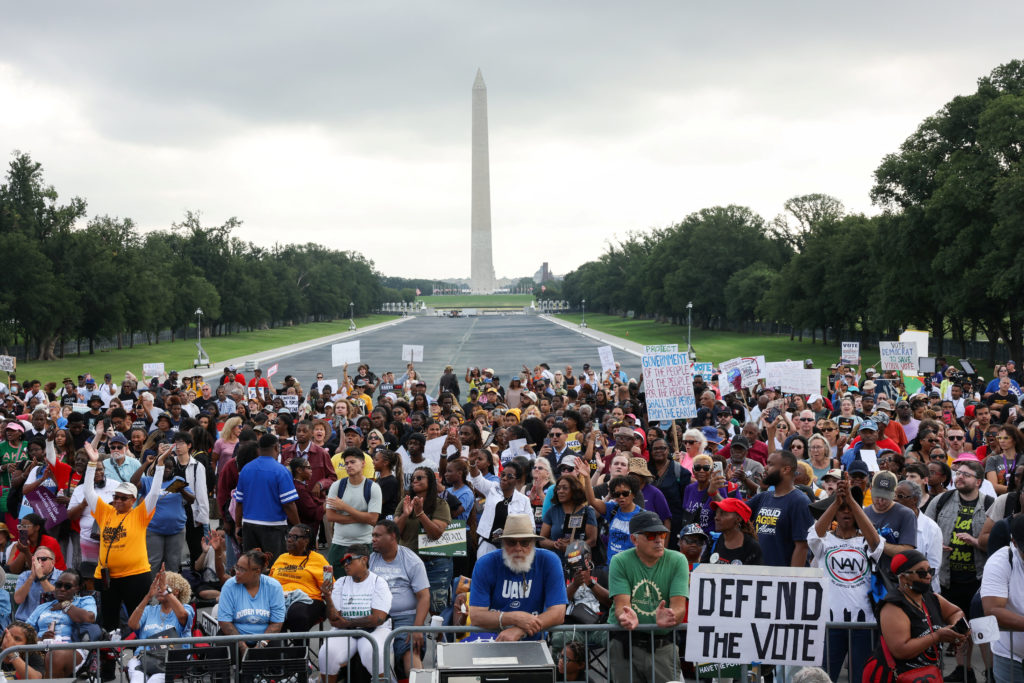
PBS NewsHour previewed a planned rally on the National Mall ahead of the midterm elections, described as supporting voting rights and racial justice. The program said thousands were expected to attend and framed the event as following a wave of recent voting-law changes and redistricting that civil-rights groups have condemned as harmful to Black Americans. The program title names Hakeem Jeffries and Sanders as connected to the rally; the item does not specify which voting-law changes or redistricting actions are meant, which civil-rights groups made the condemnations, the precise roles of the named public figures, or post-event outcomes.
Source and Framing Analysis
The item is an event notice produced by PBS NewsHour. It frames the gathering as a pro–voting-rights and racial-justice rally and places it in the context of recent national debates over voting-law changes and redistricting. Strengths: clear attribution of the rally’s purpose and cautious language ('expected') about attendance. Limitations and uncertainties in the piece include (a) no identification of specific voting-law changes or redistricting plans referenced, (b) no named civil-rights organizations or quoted spokespeople, (c) no detail about organizers or the precise involvement and roles of the named figures (Hakeem Jeffries and 'Sanders'), and (d) no verified turnout numbers or reporting from the event itself. Because the coverage is a short preview, readers cannot independently evaluate the underlying claims or their scale from this item alone.
How sources covered this story
Sanctuary separately assesses reporting quality and alignment with Christian virtues. The virtues assessment considers truthfulness, dignity, compassion, justice, peacemaking, humility, and care for vulnerable people. It does not assess a publisher's faith or reward religious language.
Compare 1 reports
Reporting 72/100Virtues 78/100
- Distinctive contribution
- States that thousands were expected, identifies the rally’s dual focus (voting rights and racial justice), ties the event directly to a broader wave of voting-law changes and redistricting, and reports civil-rights groups’ characterization of those changes as detrimental to Black Americans.
- Framing
- Frames the gathering as a pro-voting-rights and racial-justice rally tied to national debates over recent voting-law changes and redistricting; presents the civil-rights groups’ condemnation as the explanatory context for the protest.
- Omissions or uncertainty
- No named speakers beyond headline names, no specific attendee numbers (uses 'thousands' and 'expected'), no named civil-rights organizations, no specifics about which voting-law changes or redistricting actions are referenced, no timestamps or outcomes from the event.
- Why these scores
- As a brief 'watch live' preview, the text responsibly and succinctly states the event purpose and situates it in a recent policy context. It uses cautious language ('expected') rather than asserting unverified facts. However, it lacks specific attribution (which groups made the condemnation), concrete examples of the laws/redistricting cited, and precise attendance or speaker details, so it is useful but limited. The excerpt is neutral, truthful, and respectful in tone; it highlights concerns about justice and potential harms to a vulnerable group (Black Americans), which aligns with values of justice and care for the vulnerable. It does not sensationalize or dehumanize participants. The score is not higher because the excerpt provides limited explicit compassion or restorative/peacemaking context beyond reporting the protest and criticisms.
Biblical Reflection
A Christian response recognizes two primary biblical concerns present in this story: the dignity of neighbor and the call to justice. Public demonstrations can be a lawful, nonviolent means for people—especially those experiencing marginalization—to call attention to barriers to civic participation. Christians should therefore listen carefully to claims about harms, evaluate rhetoric and tactics for truthfulness and nonviolence, and avoid partisan reflexes that dehumanize opponents. Practically, faithful engagement blends care for vulnerable neighbors (helping them exercise their political voice and access the ballot) with pursuit of fair processes and truthful public discourse. Prayerful humility, mercy in speech, and a commitment to justice and peace should shape Christian participation in or response to such rallies.
Scripture in context
- 1Isaiah 1:17 — Isaiah urges the community and leaders to learn to do good, seek justice, and defend the oppressed amid corrupt or unjust practices. — This passage calls Christians to attend to structural injustice and to listen to those harmed by laws and practices; it supports advocacy that pursues fair treatment for vulnerable neighbors while also calling for inner repentance and moral integrity in public action.
- 2Micah 6:8 — Micah summarizes what God requires: to act justly, love mercy, and walk humbly. — Micah frames public engagement: seek justice for neighbors, show mercy in relationships and rhetoric, and avoid prideful or vindictive approaches when advocating for change.
Faithful Response
Listen first to people directly affected by voting-law changes and redistricting before forming judgments.
Support lawful, peaceful efforts that protect access to the ballot: nonpartisan voter registration, accurate voter-information resources, and trusted election-protection organizations.
Pray for leaders, organizers, and participants, asking for peaceful assembly, truthful speech, and protections for vulnerable communities.
Encourage congregational education: host neutral information sessions on how to register and vote, and offer safe forums for members to share concerns and experiences.
Reflection and Discussion
- 1Which neighbors are most affected by recent voting-law and redistricting changes, and have I listened to their experiences?
- 2Am I inclined to defend a political position out of partisan loyalty rather than a desire for truth and justice?
- 3How can my civic participation reflect both courage for justice and care for communal peace?
Sources
Reporting links are evidence inputs; Sanctuary News' biblical reflection is commentary.
This outlook currently relies on fewer than two linked sources. Broaden verification before teaching from it.
- 1.WATCH LIVE: March on Washington rally draws attention to voting rights with Jeffries, Sandersprimary_reporting