News Summary
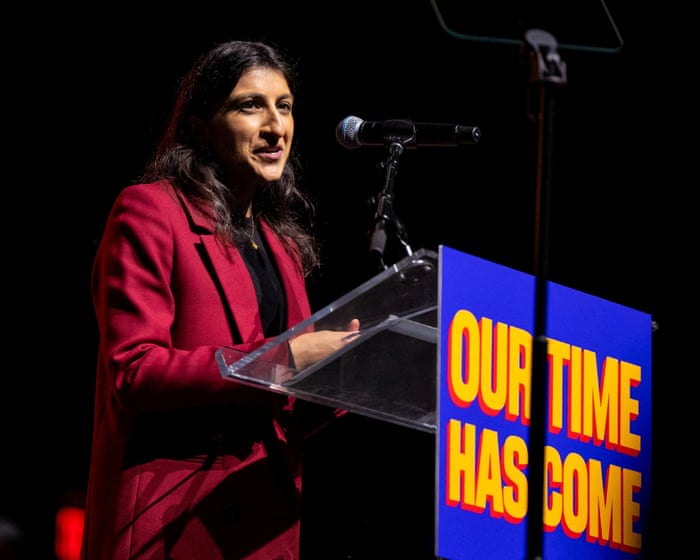
Facts: Mayor Zohran Mamdani named Lina Khan as chair of New York City's Economic Development Board and Tony Shorris as president of the city's Economic Development Corporation. Khan is a former chair of the U.S. Federal Trade Commission and is reported to have advised Mamdani and participated in early vetting for the EDC president role. Shorris is described as a longtime city official. Attribution and framing: The Guardian reports these facts and frames the appointments as signaling a shift in the city's economic agenda. Uncertainty: The article does not provide detailed policy plans, official statements from the appointees or mayor, or responses from stakeholders.
Source and Framing Analysis
The Guardian article is the sole supplied source and reports personnel changes and background context. Its central framing—that the hires constitute a significant policy shift—moves beyond mere personnel reporting into analysis; this claim is plausible given the appointees' profiles but needs corroboration through official statements, policy proposals, or reactions from development stakeholders. Key uncertainties include the specific policy direction the new leadership will take, how the EDC and EDB will exercise their powers under the new leaders, and the details of the vetting process referenced.
Biblical Reflection
These appointments put people with clear policy orientations and city-government experience into positions that shape economic priorities and development decisions. From a Christian perspective, leadership in economic institutions is a matter of stewardship: choices about zoning, incentives, neighborhood investment, and regulation have real consequences for poor and vulnerable neighbors. The report’s factual claims about the hires are straightforward, but its framing that these moves constitute a broad ‘shift’ invites attention to what policies will actually change and who will gain or lose.
Christ-centered discernment calls us to watch for how power is exercised. We should hope for policies that protect small businesses, prevent exploitation, steward public resources faithfully, and prioritize housing security and opportunity for marginalized communities. At the same time, Christians ought to hold public officials to standards of transparency, justice, and truth—advocating for policies that reflect mercy, fairness, and the common good rather than partisan advantage or narrow interests.
Practically, this is a moment for faithful citizens to pray for wisdom for leaders, to ask concretely how proposed economic shifts will affect the poor, and to engage with civic processes (public comments, hearings, congregation-based advocacy) in ways that combine humility, courage, and care for neighbors.
Scripture in context
- 1Matthew 25 (parable of the sheep and the goats) — In this teaching, Jesus frames final judgment around concrete acts of mercy—feeding the hungry, sheltering the stranger, clothing the naked—addressing how communal life should treat the poor and vulnerable. — Leaders and citizens alike should evaluate economic policy by its effect on the needy; public stewardship that ignores material suffering fails the ethical demands described in this passage.
Faithful Response
Pray for Mayor Mamdani, Lina Khan, Tony Shorris, and for wisdom for those who work in EDC/EDB.
Learn the concrete powers and programs of the EDC and EDB and follow proposed changes—attend hearings or submit comments where available.
Advocate, with compassion and factual concern, for housing, worker protections, and small-business supports that protect vulnerable neighbors.
Support or partner with local ministries and organizations that serve communities likely affected by development decisions to ensure their voices are heard.
Reflection and Discussion
- 1How should the church weigh professional expertise and prior policy positions when praying for and engaging with appointed leaders?
- 2In what concrete ways can our community translate concern for economic justice into policy engagement without succumbing to partisan tribalism?
- 3What evidence should we demand to evaluate whether a change in agency leadership actually improves life for the most vulnerable?
Sources
Reporting links are evidence inputs; Sanctuary News' biblical reflection is commentary.
This outlook currently relies on fewer than two linked sources. Broaden verification before teaching from it.
- 1.Mamdani taps Lina Khan and Tony Shorris for key New York economic postsprimary_reporting