News Summary
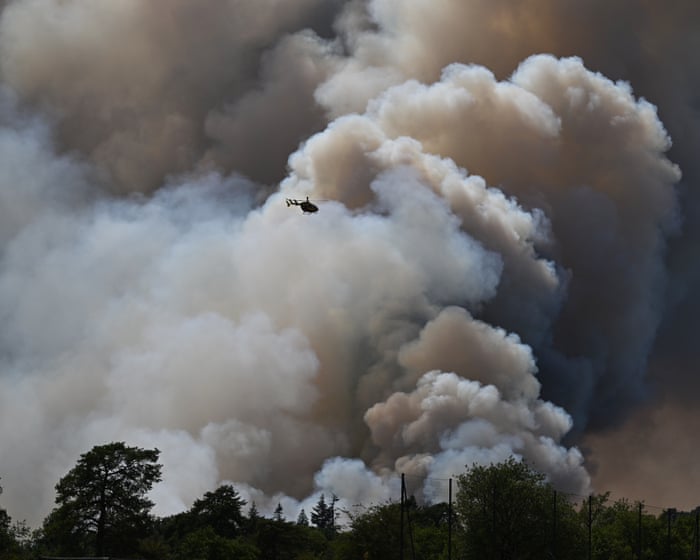
Facts reported: firefighters in France's Bordeaux/Gironde region have observed a pyrocumulonimbus linked to large wildfires during the third heatwave of the summer; the article cites statistics that France has burned far more land in 2026 than the 30,000 hectares recorded for 2025, and that 220,000 people were evacuated in Gironde; Spain's environment ministry is cited saying over 170,000 hectares burned in 2026 versus 29,000 the previous year, and over 100,000 people displaced. Interpretive claims: the editorial concludes climate-driven risks are accelerating while climate policies are being deprioritized and argues politics must catch up. Uncertainties: the article is an editorial and attributes some technical and historical claims to firefighters or ministries without linking to independent datasets in the piece itself.
Source and Framing Analysis
This is an editorial (opinion) published by The Guardian that mixes reported figures and attributions with a policy argument. Key figures (hectares burned, evacuation totals) are presented as facts attributed to government bodies and firefighters; readers should note the piece’s framing purpose — to argue that politics lags behind growing climate risks. That framing influences selection of statistics and comparisons to prior years; it does not invalidate the reported numbers but does mean policy conclusions are interpretive rather than purely evidentiary.
Biblical Reflection
The Guardian editorial combines reported operational facts (evacuations, hectares burned, heatwave counts) with an interpretive argument that political responses lag behind increasing climate risks. As Christians we should first receive the factual human cost with compassion: thousands displaced, homes at risk, and emergency responders under strain. That reality demands mercy — immediate relief, prayer for those affected, and practical support for evacuation and recovery efforts.
Beyond emergency care, the story raises stewardship and justice questions. Scripture frames human responsibility toward creation and concern for vulnerable neighbors; environmental disruption that disproportionately harms particular communities invites a moral response that includes mitigation, adaptation, and policies protecting the poorest and most exposed. The editorial’s call for political catch‑up is a policy judgment rather than a provable causal assertion about specific decisions; Christians should weigh such prescriptions soberly, seeking truth and resisting partisan simplification.
Finally, humility and hope matter. The scale of these fires should not produce fatalism: it should provoke prayerful action, informed advocacy, and cooperative service. Christians can model patience, honest assessment of risks, and courageous solidarity with those suffering, while encouraging leaders to pursue policies that protect life, preserve creation, and care for the displaced.
Scripture in context
- 1Matthew 25:31-46 — In its literary context this passage concerns final judgment and places emphasis on concrete acts of mercy—feeding, clothing, visiting the sick and imprisoned—presented as the criteria by which loving service is recognized. — The passage calls Christians to practical compassion for those who suffer; in the context of wildfires this grounds immediate care for evacuees and long-term commitment to those rebuilding their livelihoods.
- 2Genesis 2:15 — Genesis 2 describes the creation account, where humanity is placed in the garden 'to work it and keep it'—a mandate for responsible stewardship rather than domination without care. — This supports a theological basis for environmental responsibility: protecting creation and vulnerable communities from foreseeable harm is part of faithful stewardship.
Faithful Response
Pray specifically for evacuees, emergency responders, and local leaders; join or support trusted relief organizations providing shelter, food, and recovery assistance.
Encourage your congregation to prepare practical response plans (donation drives, volunteer coordination, temporary shelter) and to partner with local relief networks.
Advocate constructively for resilient public policy (land management, emergency funding, climate adaptation) while seeking trustworthy information from official sources.
Educate your community about disaster preparedness and advocate for care of those most at risk, including the economically vulnerable and elderly.
Reflection and Discussion
- 1How does this coverage shape our priorities between immediate relief and longer-term prevention when caring for those harmed?
- 2What assumptions about responsibility (individual, communal, governmental) underlie calls for political action, and how should Scripture shape our evaluation?
- 3Where can our local congregation offer mercy and practical support that complements wider policy responses?
Sources
Reporting links are evidence inputs; Sanctuary News' biblical reflection is commentary.
This outlook currently relies on fewer than two linked sources. Broaden verification before teaching from it.
- 1.The Guardian view on Europe’s wildfires: politics must catch up with the new reality | Editorialprimary_reporting