News Summary
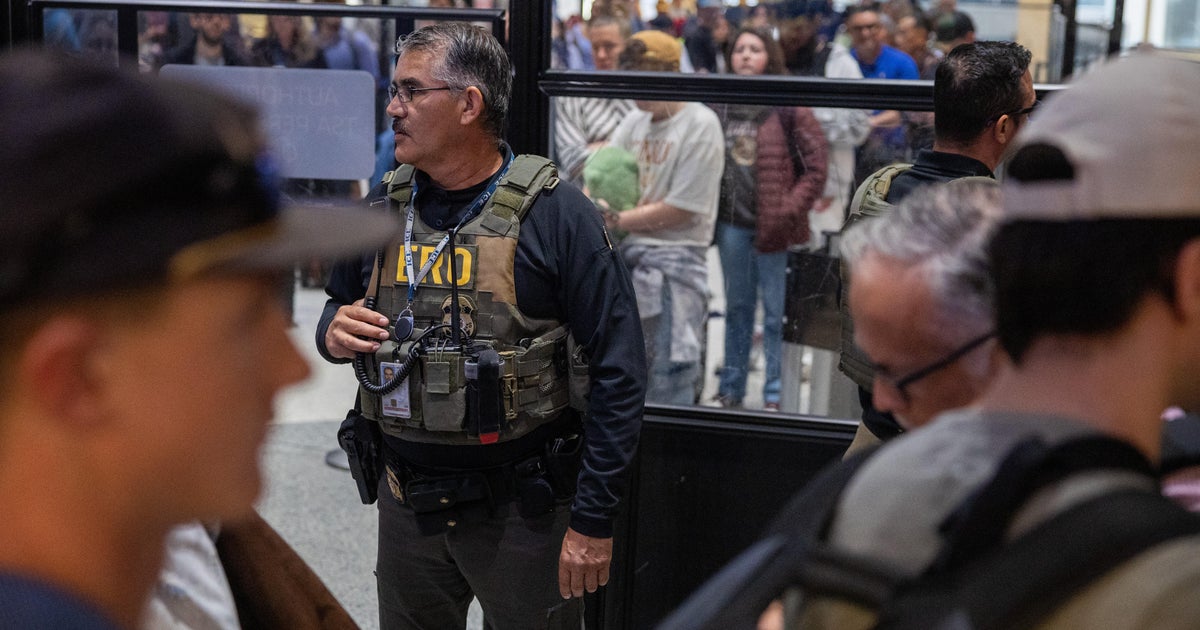
At George Bush Intercontinental Airport (IAH) in Houston, nearly 40% of TSA employees reportedly called out during a prolonged partial federal government shutdown, producing massive security lines. In Terminal A, the queue stretched over three floors and into the airport's underground train corridor; only two of the airport's five terminals had TSA staffing. Reported wait times exceeded four hours, with PreCheck and CLEAR lanes closed. Some travelers missed flights or rebooked immediately; others planned to sleep overnight in the airport to ensure they boarded. Families, children, and travelers with disabilities faced particular hardship: there was limited access to food, the routing was reportedly not ADA-compliant, and staff distributed water but little else. To help manage lines, the Biden administration dispatched Immigration and Customs Enforcement (ICE) officers to several airports (14 were reportedly staffed), and CBS News observed around two dozen ICE enforcement officers and local police at IAH directing passengers and helping at choke points while TSA continued ID checks and screening. Airport announcements warned passengers of multi-hour delays and advised contacting airlines to rebook. Many travelers expressed frustration but said they did not want to engage in political blame—only that Washington fix the problem.
Biblical Reflection
From a biblical perspective this story surfaces several overlapping concerns: the suffering of ordinary people caught between political decisions, the duty of authorities to provide order and protection, and the Christian call to compassion and practical care. Scripture repeatedly affirms that governing authorities exist to promote the common good (and thus are accountable to steward public safety well). When public systems fail, the immediate human cost lands first on the vulnerable—families with small children, the disabled, the elderly—whose dignity and needs Scripture calls us to defend. The arrival of armed ICE officers to manage civilian passenger flow raises pastoral questions about the use of enforcement personnel in roles that are primarily logistical and humanitarian; Christians should ask whether such measures respect the image-bearing dignity of travelers and whether they risk escalating fear rather than relieving suffering. Practically, the situation calls for three responses consistent with Christian teaching: (1) lament and advocacy — mourn the needless hardship and press leaders for responsible stewardship and transparent solutions; (2) neighborly care — offer tangible help where possible (meals, childcare, assistance for the disabled) rather than simply pointing fingers; and (3) prayerful accountability — pray for wisdom for leaders and for policies that protect the common good while safeguarding the weak. Faithfulness here means both calling rulers to account for their responsibilities (seeking justice and order) and immediately bearing one another's burdens in compassion.
Scripture in context
This outlook does not yet include contextual Scripture citations. Do not treat a general biblical theme as an exegetical conclusion.
Faithful Response
No prescribed response is offered. Consider the reflection prompts below in your own church context.
Reflection and Discussion
- 1Who around me is bearing an avoidable burden because of decisions made by leaders, and how can I tangibly help?
- 2How can I balance calling for accountable, just governance with practical compassion for those suffering now?
- 3When news stirs frustration, will I first respond in prayer and service rather than anger or partisan division?
Sources
Reporting links are evidence inputs; Sanctuary News' biblical reflection is commentary.
This outlook currently relies on fewer than two linked sources. Broaden verification before teaching from it.
- 1.Original reportprimary