News Summary
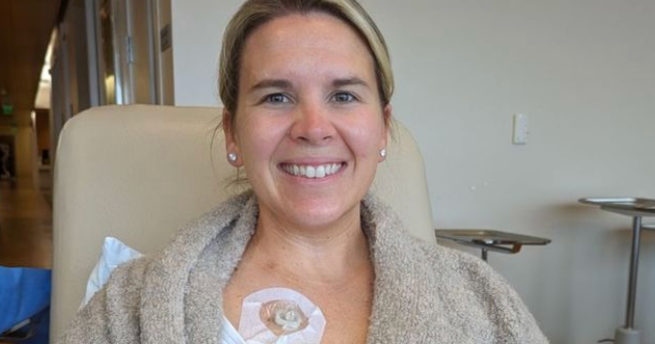
Amy Piccoli, a 39-year-old mother from Los Angeles, was diagnosed in May 2024 with Stage IV colon cancer discovered incidentally after an emergency-room CT scan. Genetic testing indicated her tumors were likely to respond to immunotherapy; she began treatment in June 2024 and received immunotherapy (including pembrolizumab) added in July, which produced marked tumor shrinkage allowing removal of the primary colon tumor. Her liver metastases could not be resected, and continuing standard therapy alone would leave a low (about 10%) five-year survival chance according to her care team. Based on emerging European data suggesting much higher five-year survival for highly selected patients who receive liver transplants after resection of the primary tumor, she was evaluated at Northwestern Medicine and found eligible for a liver transplant from a living donor. A friend, Lauren Prior, was selected as the donor; both surgeries took place in December 2025 and were reported to go smoothly. Piccoli remained in Chicago for three months of post-transplant care and surveillance; her scans have been clear so far and she will continue frequent imaging for five years. Doctors caution that only a minority of patients meet strict eligibility criteria for this approach and that only a few U.S. centers currently offer it.
Biblical Reflection
This article reports a medically hopeful story rooted in emerging clinical practice: for a narrowly defined group of patients with colorectal cancer confined to the liver, liver transplantation after control of the primary tumor can substantially improve survival. The reporting rightly emphasizes both the promise (large gains in selected cases) and the limitations (stringent selection criteria, limited centers, donor availability). The piece leans into a human-interest frame — a personally moving recovery — which naturally emphasizes success; readers should note survivorship and selection biases (cases like this are chosen because they succeeded) and that long-term outcomes and broader applicability remain under study. From a Christian pastoral standpoint, the story invites gratitude for medical skill and donor generosity, compassion for those still facing terminal illness, and sober reflection about justice: who can access cutting-edge care and how scarce organs are allocated. Truth requires acknowledging both real medical progress and the practical, ethical limits. Mercy calls the community to support patients, donors, and families; humility cautions against treating one anecdote as definitive medical proof; courage and neighbor-love point Christians toward advocacy for equitable access to care and support for clinical research that can expand safe options.
Scripture in context
This outlook does not yet include contextual Scripture citations. Do not treat a general biblical theme as an exegetical conclusion.
Faithful Response
No prescribed response is offered. Consider the reflection prompts below in your own church context.
Reflection and Discussion
- 1Does this story highlight a single successful case in a way that might obscure how rare and selective this treatment currently is?
- 2Who benefits from emerging, resource-intensive treatments and who may be left out — and how should Christians respond as neighbors and advocates?
- 3How can we balance grateful celebration for individual recoveries with prudent skepticism and support for the broader research and ethical frameworks needed to expand safe access?
Sources
Reporting links are evidence inputs; Sanctuary News' biblical reflection is commentary.
This outlook currently relies on fewer than two linked sources. Broaden verification before teaching from it.
- 1.Original reportprimary