News Summary
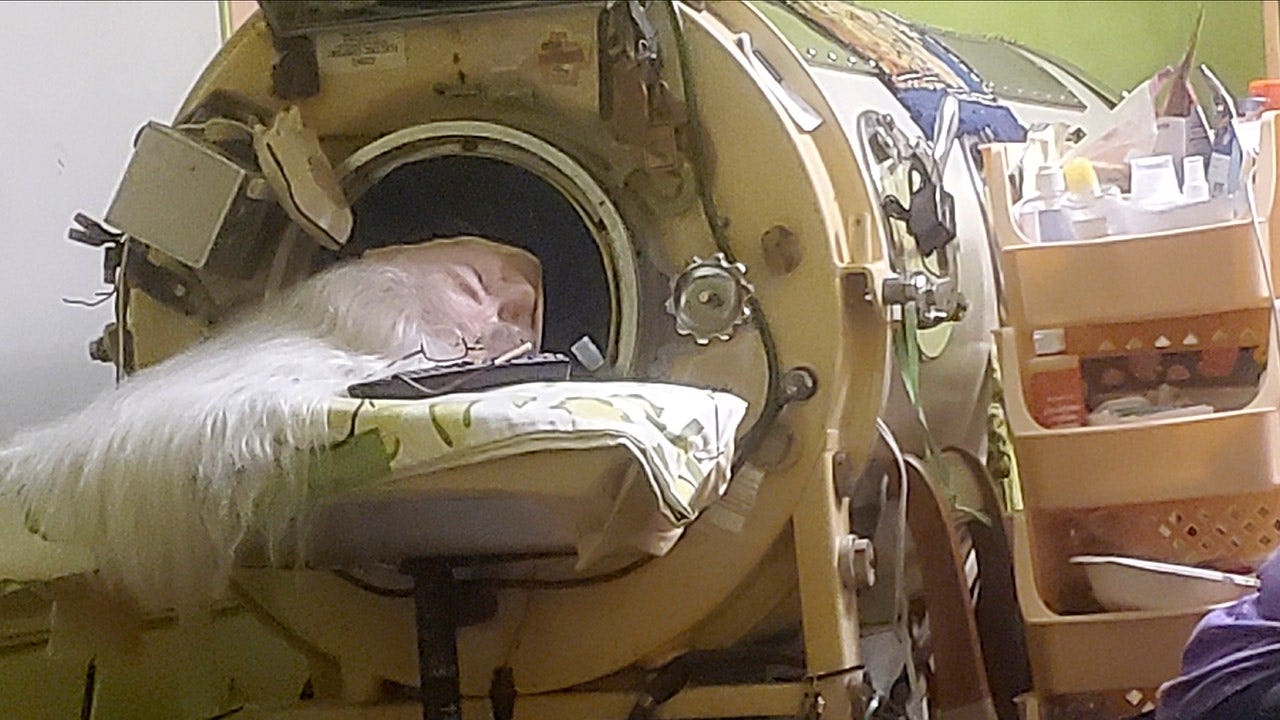
Martha Lillard, a 78-year-old Oklahoma woman who contracted polio at age five and used an iron lung to assist breathing, has died. Polio had left her paralyzed from the neck down; she used the iron lung while sleeping and—after contracting COVID-19 twice during the pandemic—became dependent on it nearly full time. Lillard regained some use of her left arm and legs through therapy, lived independently for many years, volunteered with the Humane Society, wrote poetry, and married earlier in the year to a man she had corresponded with for decades. Her death certificate lists chronic pulmonary failure and post-polio syndrome as causes of death; her sister attributed worsening respiratory problems in part to long-haul COVID. The article explains what an iron lung is, notes that polio was effectively eliminated in the U.S. after vaccines (by 1979), and includes family recollections about her life and perseverance. The Associated Press contributed reporting.
Biblical Reflection
This article centers a personal story that highlights both human resilience and medical history: the toll polio once took, the life-changing benefit of vaccines, and the ongoing vulnerabilities of people with long-term disabilities. The reporting generally aligns with verifiable facts (polio’s decline after vaccination; what an iron lung is) while relying on family testimony for links between Lillard’s decline and long‑haul COVID—an understandable but not definitively proven connection in the piece. The narrative invites sympathy and admiration, and it can prompt healthy gratitude for public‑health advances. Christians should notice two tensions: the necessity of telling individual stories without turning them into simplistic symbols, and the call to respond with concrete compassion rather than sentiment alone. The story also nudges us to remember the marginalized—those living with chronic illness—and to advocate for their dignity, care, and access to medical and social support. Finally, celebrate the good of scientific progress (vaccines and rehabilitation) while remaining humble about unanswered medical questions and the real suffering behind headlines.
Scripture in context
This outlook does not yet include contextual Scripture citations. Do not treat a general biblical theme as an exegetical conclusion.
Faithful Response
No prescribed response is offered. Consider the reflection prompts below in your own church context.
Reflection and Discussion
- 1How does this personal story shape my understanding of the real human consequences behind public‑health achievements like vaccination?
- 2Am I treating headlines that link conditions (for example, long‑haul COVID and worsening chronic illness) as established fact, or am I willing to hold careful uncertainty where evidence is still developing?
- 3In what concrete ways should our local churches and Christian communities support people who live with long-term disabilities and chronic illness?
Sources
Reporting links are evidence inputs; Sanctuary News' biblical reflection is commentary.
This outlook currently relies on fewer than two linked sources. Broaden verification before teaching from it.
- 1.Original reportprimary