News Summary
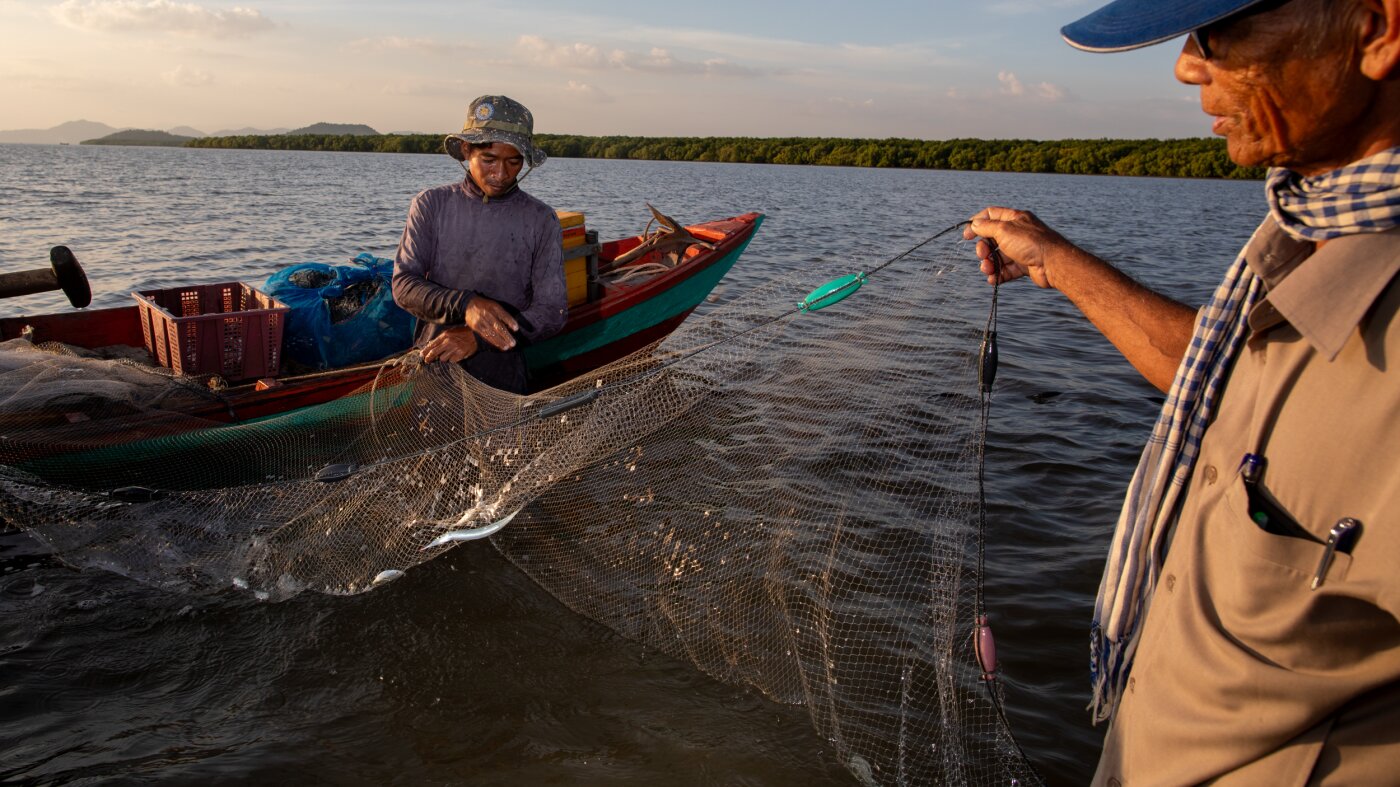
Coastal communities in Cambodia, including the villages of Koh Kresna and Lok, experienced severe declines in local fish stocks after extensive mangrove loss tied to historical economic collapse and resource extraction. Since the early 2000s, villagers, scientists, and international organizations (including the Red Cross and Landesa) have worked together to protect existing mangrove forest and plant new mangrove saplings. Koh Kresna and nearby Lok now administer a community fishery that manages more than 145 acres of mangrove forest, has replanted over 2,000 saplings in recent years, and enforces sustainable harvesting. Regional and global studies cited in the article report that mangroves serve as nurseries for juvenile fish and crustaceans, protect shorelines from storm surge and erosion, and sequester significant amounts of carbon. United Nations analyses indicate that global mangrove loss has slowed since 2000 and net loss decreased between 2010 and 2020 compared with the previous decade. The article highlights local economic improvements—regular catches and sales—and frames Cambodia’s restoration work as contributing to broader climate mitigation and coastal resilience goals.
Biblical Reflection
This story highlights practical stewardship that aligns with biblical principles: local people caring for God’s creation in ways that protect livelihoods and neighbors. The article emphasizes agency among village leaders and fishers who, informed by scientific knowledge and supported by NGOs, chose restoration and sustainable management rather than one-time aid or extractive recovery. Scripture repeatedly calls God’s people to tend the earth (Genesis 2:15) and to love their neighbors; restoring mangroves both restores creation and protects communities from storms and hunger.
Be aware of two framing tendencies in the piece: (1) it foregrounds international science and NGOs as catalysts, which can underplay local knowledge and long-term indigenous practices; (2) it links mangrove restoration to global climate mitigation, which is factually supported for carbon storage but may imply a single-policy solution to complex socio-economic and political drivers of environmental loss. The article is truthful in its central claims—mangroves support fisheries, protect coasts, and store carbon—and it offers a positive counterexample to narratives of only environmental decline. From a Christian perspective, the good news here is how restorative action, community stewardship, and cooperative care for creation can heal both ecosystems and human communities. The sober reminder is that long-term restoration requires justice: sustainable livelihoods, secure land rights, and ongoing local stewardship rather than short-term projects.
Scripture in context
This outlook does not yet include contextual Scripture citations. Do not treat a general biblical theme as an exegetical conclusion.
Faithful Response
No prescribed response is offered. Consider the reflection prompts below in your own church context.
Reflection and Discussion
- 1Whose voices are centered in this restoration narrative—local stewards or outside organizations—and how does that affect our understanding of effective stewardship?
- 2Does the article present mangrove restoration as a technical fix, a community practice, or both? What does Scripture suggest about the relationship between spiritual responsibility and practical care for creation?
- 3What structural issues (land rights, poverty, governance) underlie environmental decline here, and how should Christians weigh immediate ecological gains against the need for long-term justice and local empowerment?
Sources
Reporting links are evidence inputs; Sanctuary News' biblical reflection is commentary.
This outlook currently relies on fewer than two linked sources. Broaden verification before teaching from it.
- 1.Original reportprimary