News Summary
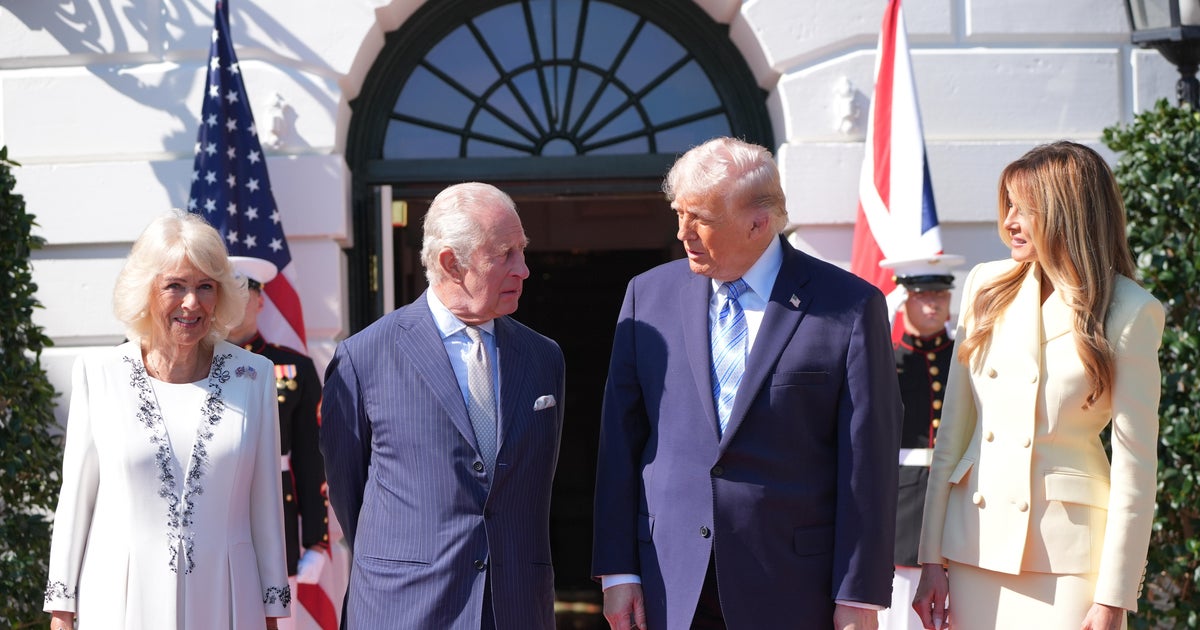
King Charles III and Queen Camilla arrived in Washington on Monday for their first visit to the United States as monarchs. The visit, timed near the 250th anniversary of the signing of the U.S. Declaration of Independence, includes meetings at the White House (a private tea with President Donald Trump and First Lady Melania Trump), a ceremonial military review, a bilateral meeting between King Charles and President Trump, a separate meeting between the queen and the first lady, an address by the king to a joint meeting of Congress on Tuesday, and a state dinner at the White House. The royal couple are also scheduled to travel to New York to honor 9/11 victims and make a stop in Virginia. Palace officials said the visit will proceed as planned despite recent security concerns following an attempted shooting at the White House Correspondents' Dinner. Commentators quoted in the article say the visit comes amid strains in U.S.–U.K. relations tied to U.S. military action involving Iran, President Trump’s criticism of NATO and of U.K. Prime Minister Keir Starmer, and disagreements over policy such as use of bases and immigration. Public-opinion polling cited (YouGov) indicated notable British skepticism about the visit. The article references analysts who expect the king’s congressional remarks to be broadly historical and diplomatic, and it notes that King Charles’ constitutional role is more ceremonial than political. The article also recounts prior meetings between Charles and Mr. Trump and mentions recent controversies involving members of the royal family (including the arrest of Prince Andrew and the stripping of certain titles).
Biblical Reflection
From a Christian viewpoint, this story highlights several spiritual themes: the need for wise diplomacy, the care of nations for common good, and the temptation to interpret ceremonial acts as political endorsement. The article largely reports facts about schedule and context but emphasizes tensions and partisan reactions—an angle that can encourage readers to focus on conflict rather than the work of relationship-building. Christians should note that monarchs and heads of state operate within different roles and constraints; the king’s visit is primarily symbolic and diplomatic rather than a direct intervention in policy. Scripture commends peacemaking, wise counsel, and humility in leadership (Matthew 5:9; Proverbs 11:14). Therefore, the Christian response is not simply to cheer or condemn any side but to pray for clarity, restraint, and justice; to discern where public rhetoric reflects substantive policy differences versus political signaling; and to resist tribal reflexes that reduce complex international relationships to partisan wins or losses. Finally, believers should be attentive to how media framing can amplify anxiety and division; we are called to seek the peace of the city (Jeremiah 29:7) and to pray for rulers so that the church may live quietly and faithfully (1 Timothy 2:1-2).
Scripture in context
This outlook does not yet include contextual Scripture citations. Do not treat a general biblical theme as an exegetical conclusion.
Faithful Response
No prescribed response is offered. Consider the reflection prompts below in your own church context.
Reflection and Discussion
- 1How does the article’s emphasis on tension and criticism shape your perception of the visit compared with the visit’s stated diplomatic and commemorative purposes?
- 2Am I treating ceremonial diplomacy as either full political endorsement or full condemnation, rather than a constrained, symbolic opportunity for relationship-building?
- 3What assumptions about national interest, justice, and security underlie the commentators’ views, and how can Christian virtues (peacemaking, truth-seeking, humility) help reframe those assumptions?
Sources
Reporting links are evidence inputs; Sanctuary News' biblical reflection is commentary.
This outlook currently relies on fewer than two linked sources. Broaden verification before teaching from it.
- 1.Original reportprimary