News Summary
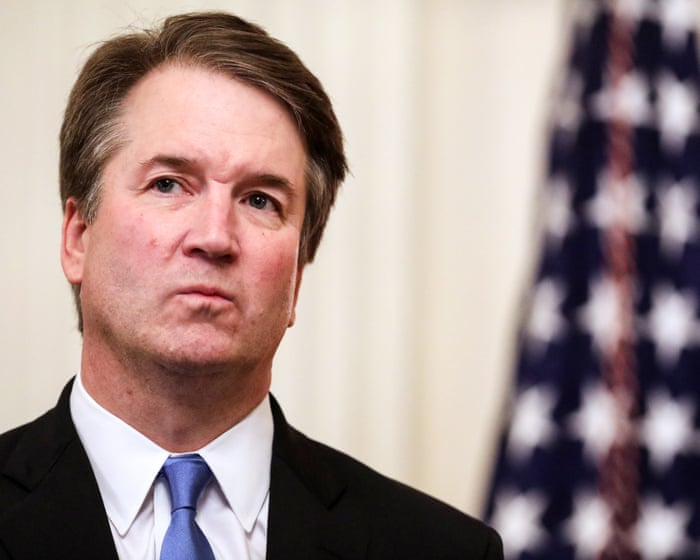
Reported facts: The Guardian opinion piece reports Wall Street Journal-attributed voting-alignment figures for Supreme Court justices (Thomas 89%, Alito 88%, Kavanaugh 76%) and argues Kavanaugh’s opinions have advanced parts of Donald Trump’s agenda. Attributed claims: The article attributes to Kavanaugh a preference for creative legal workarounds over strict originalist/textualist arguments and claims downstream political effects. Uncertainty: The piece is interpretive and causal links between specific opinions and events (street violence, tariff-driven shakedowns, congressional chaos) are asserted by the author without citation to primary causal evidence in the supplied article.
Source and Framing Analysis
This is an opinion column in the Guardian that blends a cited statistic (attributed to the Wall Street Journal) with interpretive claims and causal inference. The framing emphasizes political consequences and casts Kavanaugh as central to operationalizing a presidential agenda, which reflects the author's interpretive lens. Material uncertainties include the underlying data from the Wall Street Journal (not supplied here), the selection of judicial opinions used as examples (the article summarizes but does not quote or link to specific opinions), and the evidentiary basis for causal claims linking opinions to unrest or policy actions.
Biblical Reflection
The article frames judicial decisions not simply as legal arguments but as political instruments with concrete social consequences. From a Christian standpoint, courts and judges are intended to serve justice, protect the vulnerable, and preserve ordered public life; when legal reasoning is portrayed as instrumental to political ends, it calls Christians to careful discernment about claims connecting judicial rulings to social disorder. The Guardian piece is an opinion that mixes reported statistics (attributed to the Wall Street Journal) with interpretive and causal claims that go beyond the public record provided in the piece itself.
Christians should weigh the claims with humility and a commitment to truth: separate what is reported (attribution of voting percentages) from what the author infers (that specific opinions directly produced violence or policy chaos). We must resist quick politicized judgments of individuals. At the same time, the article raises serious questions about the moral responsibilities of those in positions of legal authority and the real-world effects of legal reasoning. Charity and accountability both matter: hold institutions and leaders to standards of justice without demonizing persons, and advocate for transparency and public explanation where legal reasoning plausibly affects public safety and rights.
Finally, the church’s vocation includes praying for wisdom for judges, calling for fair and lawful institutions, and caring for neighbors harmed by public policy and violence. Christians should use this reporting as a prompt to study the decisions themselves, encourage civically responsible engagement, and foster peaceable public discourse rather than amplify partisan rancor.
Scripture in context
- 1Romans 13:1-7 — In Paul's letter to the Romans, this passage addresses the relationship Christians should have with governing authorities, urging respect for lawful order while acknowledging the state's role in maintaining justice and restraining wrongdoing within a domestic Roman context. — The passage prompts Christians to seek lawful institutions that restrain injustice and to pray for those in authority; it does not license uncritical allegiance to any ruler and invites believers to pursue justice and the common good while exercising conscience and accountability.
Faithful Response
Study primary sources: read the actual opinions referenced rather than relying only on commentary.
Pray for judges and leaders, asking God for wisdom, integrity, and protection for the vulnerable.
Engage civically with courage and humility—write to elected officials, support transparent judicial processes, and advocate nonviolently for policies that protect neighbors.
Practice charitable speech: critique ideas and decisions without dehumanizing persons, and prioritize reconciliation where possible.
Reflection and Discussion
- 1What evidentiary standards should we apply before accepting claims that judicial opinions caused specific social harms?
- 2How does a Christian commitment to truth and mercy shape our critique of judges and institutions?
- 3Where should Christians place their hope when institutions seem to fail—reform, civic engagement, prayer, or all three?
Sources
Reporting links are evidence inputs; Sanctuary News' biblical reflection is commentary.
This outlook currently relies on fewer than two linked sources. Broaden verification before teaching from it.
- 1.Brett Kavanaugh has become Trump’s chief enabler on the supreme court | Sidney Blumenthalprimary_reporting