News Summary
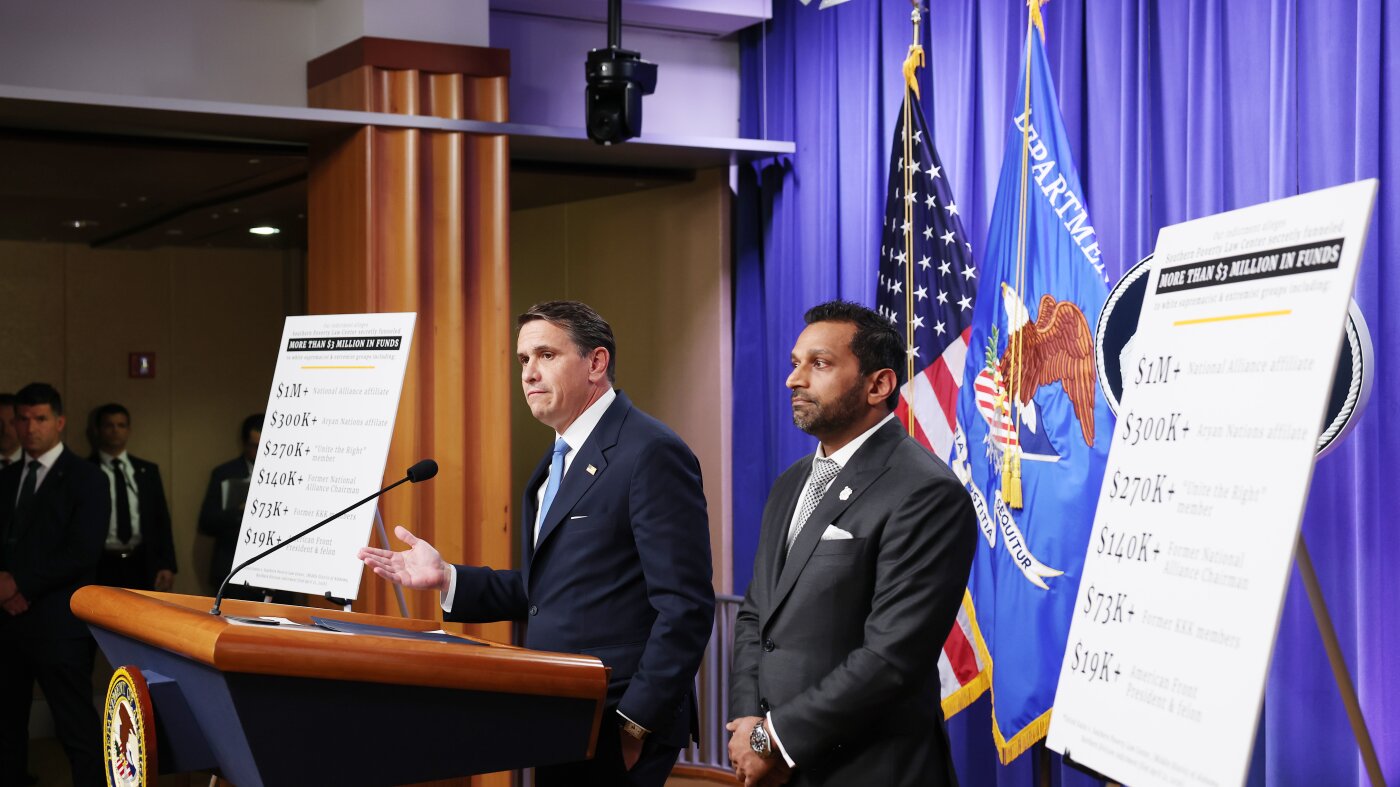
In late April, federal prosecutors announced an indictment against the Southern Poverty Law Center (SPLC), alleging criminal fraud. The Justice Department says the SPLC misrepresented bank accounts used to pay confidential informants and funneled more than $3 million into the pockets of white supremacist and extremist groups, and accuses the nonprofit of defrauding donors by claiming to fight extremism while funding it. The indictment was announced at a news conference attended by Acting U.S. Attorney General Todd Blanche and FBI Director Kash Patel. The SPLC denies the allegations and called them false. NPR spoke with three former SPLC employees and two current employees (who spoke anonymously). Those former and current staff described a history of internal problems: the 2019 firing of co-founder Morris Dees amid sexual-harassment and discrimination allegations; subsequent resignations of senior leaders; a workplace review led by Tina Tchen; staff unionization; reported morale and publication slowdowns; and layoffs in 2024 that significantly reduced the immigration team. Sources said these internal issues and organizational changes coincided with a shifting political environment in which some far-right ideas and groups moved closer to political power. The article also cites examples of other institutions and studies in the anti-extremism space responding differently to changes in the political landscape. The piece reports commentary from former staff that the SPLC struggled to adapt to the mainstreaming of certain extremist narratives and that this, combined with internal instability, has weakened anti-extremism efforts. The SPLC disputes claims about workplace discrimination and denies wrongdoing; investigators and courts will determine the legal outcome of the indictment.
Biblical Reflection
From a Christian perspective, this story raises several sober themes: accountability, truthfulness, stewardship, and the danger of institutional decline. If the indictment's factual claims are true, they point to serious breaches of trust — particularly in handling donor funds and in representing the organization's mission. Scripture consistently insists on honesty in business and leadership (e.g., 'false scales' are condemned), and the misuse of money or deception against the vulnerable or the public is morally serious. Equally, Christians should remember the rule of law and due process: allegations require careful, objective adjudication rather than immediate judgment from partisan sources. The article leans on anonymous insider testimony and links organizational failings to broader political shifts; readers should note where narrative inference replaces verifiable fact. There's also the risk of tribalism: Christians can be tempted to defend institutions aligned with our values without sober scrutiny, or to rejoice prematurely at their troubles. The biblical posture is to seek truth, call for repentance and reform where wrongs are established, and to pray for justice tempered by mercy. Finally, the piece highlights how political power can reshape public discourse about extremism. Believers must resist false dichotomies that turn every institution into an ally or enemy, instead advocating for transparency, protecting the marginalized, and upholding justice in both civic and church life.
Scripture in context
This outlook does not yet include contextual Scripture citations. Do not treat a general biblical theme as an exegetical conclusion.
Faithful Response
No prescribed response is offered. Consider the reflection prompts below in your own church context.
Reflection and Discussion
- 1What standards of evidence does the article present, and where does it rely on anonymous sources or inference rather than documented facts?
- 2How might political polarization shape both the practices of watchdog organizations and the public narratives about them?
- 3When an institution that has long defended justice faces allegations of wrongdoing, how should Christians balance the call for accountability with the need for due process and measured judgment?
Sources
Reporting links are evidence inputs; Sanctuary News' biblical reflection is commentary.
This outlook currently relies on fewer than two linked sources. Broaden verification before teaching from it.
- 1.Original reportprimary