A little more detail
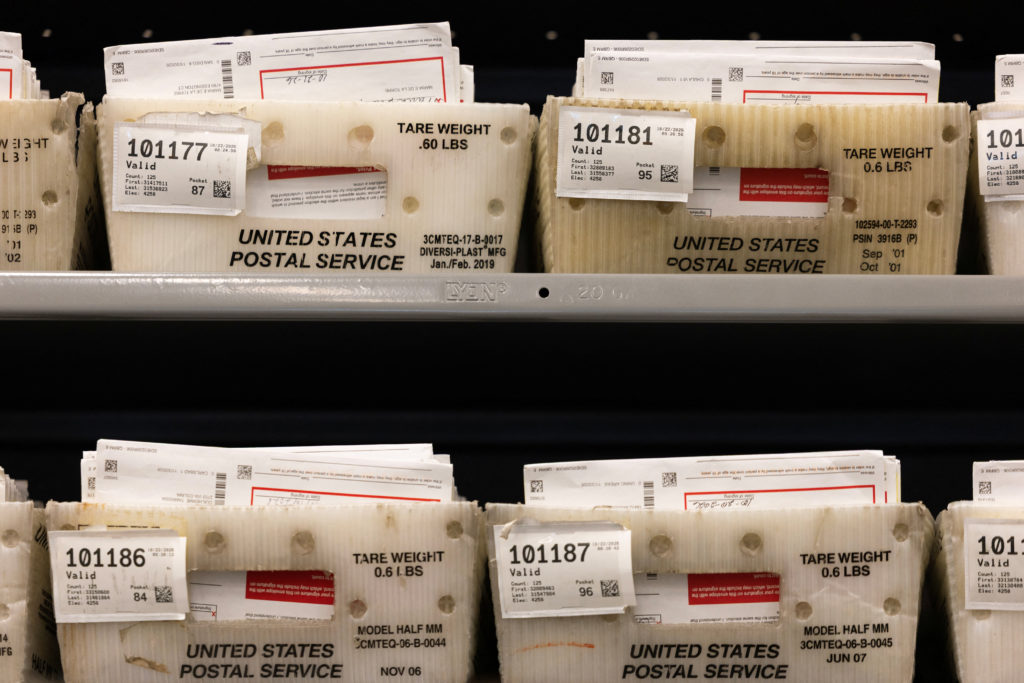
A federal judge denied a request from the federal government to stop California from processing ballots for people the government alleged were likely noncitizens. The PBS NewsHour report says the request targeted as many as "up to 20,000" ballots and quotes the judge warning that granting the request would "wreak havoc" on the midterm elections. The allegation that the ballots belonged to likely noncitizens is attributed to the federal filing; the judge's denial and quoted concern are reported by PBS. The report does not supply the judge's name or court, the legal standard used, the government's underlying evidence, or any response from California election officials.
Source and Framing Analysis
Primary source: PBS NewsHour (single supplied article). Strengths: concise reporting of a concrete legal outcome (a federal judge denied the request) and inclusion of a direct quote capturing the judge's practical concern about election administration. Limitations and omissions (noted in the PBS excerpt itself): the story omits the judge's identity and court, the date and procedural posture, the government’s legal theory and evidentiary basis for labeling ballots as from "likely noncitizens," and any response or context from California election officials. Framing effect: the piece emphasizes the practical consequences of the requested relief (disruption to voting) rather than the substantive merits of the government's underlying claim; that framing is defensible given the public-interest stakes but leaves readers unable to evaluate the strength of the factual allegations. Because the critical factual claim about voter citizenship status is presented as an allegation by the government without documented evidence in the report, independent corroboration and court filings are needed to assess the core dispute.
How sources covered this story
Sanctuary separately assesses reporting quality and alignment with Christian virtues. The virtues assessment considers truthfulness, dignity, compassion, justice, peacemaking, humility, and care for vulnerable people. It does not assess a publisher's faith or reward religious language.
Compare 1 reports
Reporting 78/100Virtues 76/100
- Distinctive contribution
- States the judge's denial, quantifies the ballots at issue ('up to 20,000'), and supplies the judge's quoted concern that segregating ballots would 'wreak havoc' on the midterm elections.
- Framing
- Concise, factual legal-news framing emphasizing the judicial ruling and its practical impact on election administration (using a direct quote to capture the judge's reasoning).
- Omissions or uncertainty
- Does not name the judge or the court, lacks the date and procedural posture, omits details of the government's legal arguments and the evidence for the 'likely noncitizen' allegation, and does not identify the plaintiffs/defendants or possible next steps (appeal, injunction scope).
- Why these scores
- The excerpt is clear, concise, and uses a direct quote to convey the judge's rationale, which is good practice. It states the core outcome and a specific quantitative claim. It is limited by lack of basic contextual details (judge/court identity, dates, legal basis, and parties), but as a brief news lede it responsibly communicates the essential fact without apparent sensationalism. The language is measured and factual, avoiding dehumanizing or inflammatory rhetoric and treating a legal decision with restraint. It centers on protection of orderly elections, which aligns with care for the common good. The excerpt does not explicitly highlight impacts on vulnerable people or offer restorative/contextual detail, so it earns a solid but not exceptional score.
Biblical Reflection
Christians must hold two responsibilities together: to pursue honest, well-ordered public institutions that protect the common good (including the integrity of elections) and to protect the dignity and rights of people who may be wrongly accused or marginalized. When allegations arise that could remove people's ability to vote, prudence requires transparent evidence, due process, and public procedures that preserve both accuracy and human dignity. We should avoid reflexive partisan postures and instead seek truth with humility, show mercy to those vulnerable to wrongful exclusion, and press for legal and administrative safeguards that prevent both fraud and unjust disenfranchisement. Practically, this means supporting transparent reviews, notice-and-opportunity processes for affected voters, nonpartisan verification mechanisms, and pastoral care for communities under scrutiny. These commitments flow from a Christian concern for justice, peacemaking, and care for the vulnerable while also valuing the integrity of civic life.
Scripture in context
- 1 — Instructions in Israel’s law about appointing judges and ensuring justice, given in the context of forming fair institutions for the community. — This passage underlines the need for impartial procedures and fair adjudication; applying it here encourages Christians to support transparent legal steps and safeguards that prevent both corruption and unjust exclusion.
- 2 — A Jesus teaching about final judgment that emphasizes care for the hungry, stranger, prisoner, and vulnerable as the measure of righteousness. — While not about elections directly, this passage calls believers to protect and care for neighbors who might be marginalized by systems of power — a reminder to ensure protective measures do not become tools of exclusion.
Faithful Response
Pray for clarity, evidence, and orderly process rather than partisan victory.
Seek and share reliable reporting and primary documents (court filings, judge's order) before amplifying claims about voter status or procedure.
Advocate for safeguards that combine accuracy with protections against wrongful disenfranchisement, such as transparent reviews, notice and opportunity to contest, and nonpartisan verification.
If providing pastoral care, offer forums for calm discussion, connect congregants to trusted nonpartisan voter-protection resources, and model a posture of humility and mercy in public conversation.
Reflection and Discussion
- 1What standards of proof and procedural protections would we demand if our own voting rights were at stake?
- 2How can Christians resist tribal or fear-driven responses while still working to protect the integrity of elections?
- 3What steps can our congregation take to help protect both election administration and the dignity of people who might be wrongly accused?
- 4How should pastors and Christian leaders balance speaking truth about civic risks with pastoral care for affected communities?
Sources
Reporting links are evidence inputs; Sanctuary News' biblical reflection is commentary.
This is a developing, single-source report. Details may change as more reporting becomes available.
- 1.Judge denies federal request to segregate California ballots, says it would 'wreak havoc' on votingprimary_reporting