News Summary
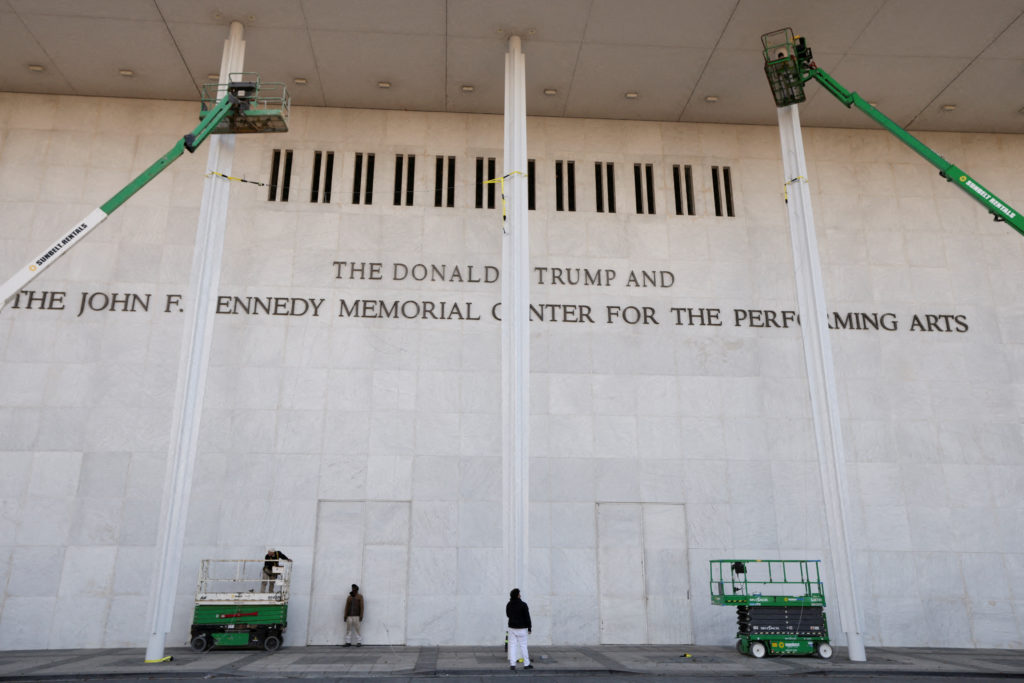
At a U.S. District Court hearing, U.S. District Judge Christopher Cooper interrupted shortly after Bradley Mayers, counsel for the Trump administration, began speaking and asked why the Kennedy Center needed to start inscribing the president’s name on the building as soon as Sept. 8. The hearing lasted nearly two hours. The publicly available report (PBS NewsHour) highlights the judge’s early, pointed question about the timing but does not provide the Kennedy Center’s explanation, the underlying legal filings, who brought the suit, or the hearing’s outcome.
Source and Framing Analysis
Primary source for this cluster is a PBS NewsHour report that presents a discrete courtroom moment: the judge’s interruption and a specific contested timeline (inscription beginning as soon as Sept. 8). The excerpt is tightly focused and neutral in tone; it attributes names (Judge Christopher Cooper and lawyer Bradley Mayers) and gives a concrete timing detail. Limitations and framing cautions: the piece does not include the Kennedy Center’s stated rationale for the schedule, the legal basis for the proposed timing, the full arguments made at the hearing, who is challenging or supporting the action, or subsequent court rulings. Because the report centers judicial skepticism about urgency, readers should not infer motive or outcome from the interruption alone. Additional primary materials needed to resolve open questions include court filings, the Kennedy Center’s public statements, and fuller transcripts or reporting on the nearly two-hour hearing.
How sources covered this story
Sanctuary separately assesses reporting quality and alignment with Christian virtues. The virtues assessment considers truthfulness, dignity, compassion, justice, peacemaking, humility, and care for vulnerable people. It does not assess a publisher's faith or reward religious language.
Compare 1 reports
Reporting 78/100Virtues 75/100
- Distinctive contribution
- Reports that U.S. District Judge Christopher Cooper interrupted the lawyer early in a nearly two-hour hearing to question the urgency of starting inscription work as soon as September, giving a precise contested timeline and demonstrating judicial skepticism.
- Framing
- Presents the judge's interruption and question in a way that highlights judicial scrutiny of the Kennedy Center's stated timetable for returning Trump's name; the excerpt foregrounds procedural skepticism rather than advocacy for either side.
- Omissions or uncertainty
- Excerpt lacks broader context: it does not state the year, the full background of the dispute or lawsuit, who brought the case, the legal arguments, which exact building-face naming is at issue, or the Kennedys Center's justification for the September timeline. The single-sentence snippet does not include responses from other participants or subsequent remarks.
- Why these scores
- The excerpt is specific and properly attributed (names the judge and the opposing lawyer) and gives a concrete timeline detail, which supports credibility. Because only a short excerpt is supplied, it is necessarily incomplete; however, within that snippet the wording is precise and not sensationalized. The score recognizes good sourcing and clarity while noting limited context in the supplied text. The excerpt is neutral, truthful, and respectful in tone—reporting a courtroom interaction without demeaning anyone. Highlighting judicial scrutiny can be seen as serving justice and accountability. No evidence of dehumanizing language or exploitation of suffering; limitations are only those of brevity rather than moral failing.
Biblical Reflection
This moment, where a court presses an institution about haste in restoring a leader’s name, raises civic and moral concerns Christians should weigh separately from the bare facts. Scripture calls believers to humility, to prefer the interests of others, and to pursue justice through fair, orderly process. When public institutions rush symbolic acts of recognition, Christians should ask whether such actions serve the common good, respect due process, and reflect prudent stewardship of public trust. The church’s distinct role is not to cheer or vilify on partisan grounds but to insist on truth, fair procedure, and concern for vulnerable neighbors affected by public signals of honor and endorsement. At the same time, courts performing careful scrutiny of asserted urgencies align with a biblical respect for orderly, reasoned decision-making that protects rights and prevents rash action.
Scripture in context
- 1Philippians 2:3-4 — Paul’s letter to the Philippians admonishes believers to avoid selfish ambition and conceit and to look to the interests of others, urging unity and Christlike humility within a divided community. — When institutions pursue honors or move quickly on symbolic restorations, Christians should ask whether the action reflects humility and service to the common good rather than personal prestige or partisan signaling; this lens helps evaluate whether haste serves constructive ends or undermines trust.
Faithful Response
Pray for judges, public servants, and institutional leaders to have wisdom, restraint, and commitment to fair process.
Seek the primary documents before forming firm judgments: request court filings, official Kennedy Center statements, and a full hearing transcript or fuller reporting.
Encourage congregations to practice measured discernment—teach principles of civic virtue (truth-telling, patience, respect for process) rather than partisan response.
Offer pastoral space for members who feel unsettled by symbolic public honors—model listening across differences and resist immediate moralizing without full information.
If your church engages civically, model procedures for accountability and deliberation (e.g., public comment, written requests for institutional rationale) rather than relying solely on media summaries.
Reflection and Discussion
- 1How does the timing and urgency of restoring a public honor reveal institutional priorities, and how should Christians weigh those priorities against the needs of the common good?
- 2What signs should we look for to determine whether a rushed symbolic act serves justice and truth or instead signals prestige or partisan alignment?
- 3How can the church practice and teach humility and careful deliberation when civic honors become politicized?
- 4When a court questions procedural urgency, what responsibilities do citizens and congregations have to seek clarity and avoid premature condemnation or celebration?
Sources
Reporting links are evidence inputs; Sanctuary News' biblical reflection is commentary.
This outlook currently relies on fewer than two linked sources. Broaden verification before teaching from it.
- 1.Judge questions why Kennedy Center is moving so quickly to return Trump's name to buildingprimary_reporting