News Summary
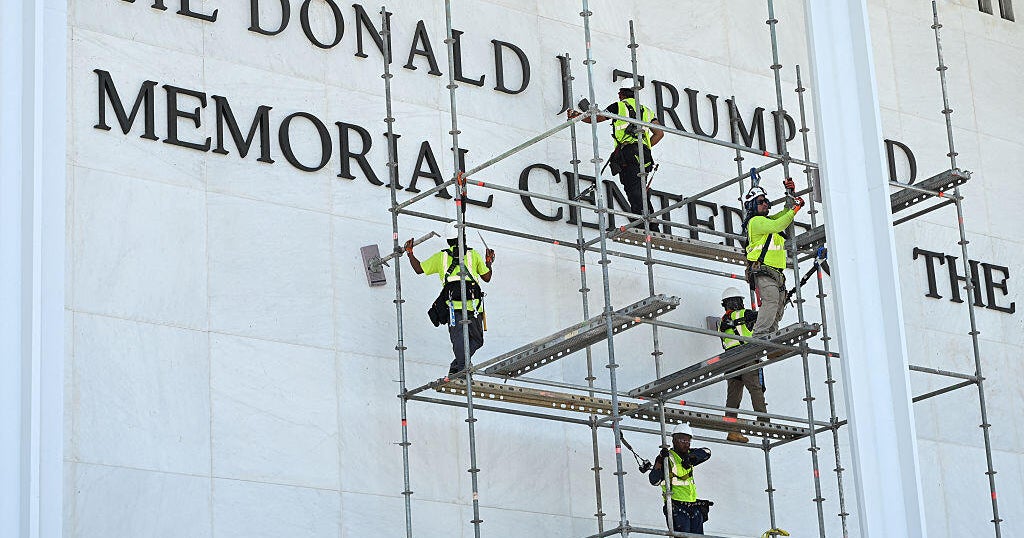
U.S. District Judge Christopher Cooper denied the Trump administration's request for a stay Friday, allowing his earlier order requiring the removal of President Trump's name from the John F. Kennedy Center for the Performing Arts to proceed. Cooper previously ruled the president's name had been illegally added and concluded that only Congress can authorize a name change to the federally established memorial. The administration said it would appeal Cooper's ruling, but the judge found defendants had not shown a likelihood of success on appeal or that they would suffer irreparable harm without a stay. Scaffolding was seen at the Kennedy Center as staff began restoring the center's original name; the center's website already removed the president's name from much online material. The center's board, reconstituted with Trump-aligned trustees after the president returned to office, voted in December to rebrand the facility as the Trump–Kennedy Center; a Democratic board member brought the legal challenge. Cooper also blocked a plan to close the center for lengthy renovations as part of his earlier order.
Biblical Reflection
This ruling is a concrete example of the rule of law checking unilateral political uses of public institutions. The dispute centers on statutory authority and proper governance of a federally created memorial; the court applied legal standards about who holds the power to change a national institution's name. Christians should value truthful reporting of facts and legal reasoning rather than partisan spin. The article's framing is straightforward but uses phrases like "Trump-aligned" that signal political alignment; readers should note that those descriptors reflect governance changes rather than legal justification. Pastoral concerns include the politicization of cultural and memorial spaces, which can erode common civic trust and turn shared heritage into partisan trophies. A Christian response emphasizes humility over aggrandizement, respect for lawful processes, and stewardship of public goods for the common good rather than personal legacy. Mercy and civility are due to those on both sides even while holding institutions accountable to law and truth.
Scripture in context
This outlook does not yet include contextual Scripture citations. Do not treat a general biblical theme as an exegetical conclusion.
Faithful Response
No prescribed response is offered. Consider the reflection prompts below in your own church context.
Reflection and Discussion
- 1Who rightly holds authority over national memorials and public institutions, and how should Christians weigh legal process versus political impulse?
- 2How does the politicization of cultural institutions affect our ability to love our neighbors across political divides?
- 3Are we tempted to treat political leaders as idols; how does that shape our judgment about stewardship of shared civic spaces?
Sources
Reporting links are evidence inputs; Sanctuary News' biblical reflection is commentary.
This outlook currently relies on fewer than two linked sources. Broaden verification before teaching from it.
- 1.Original reportprimary