News Summary
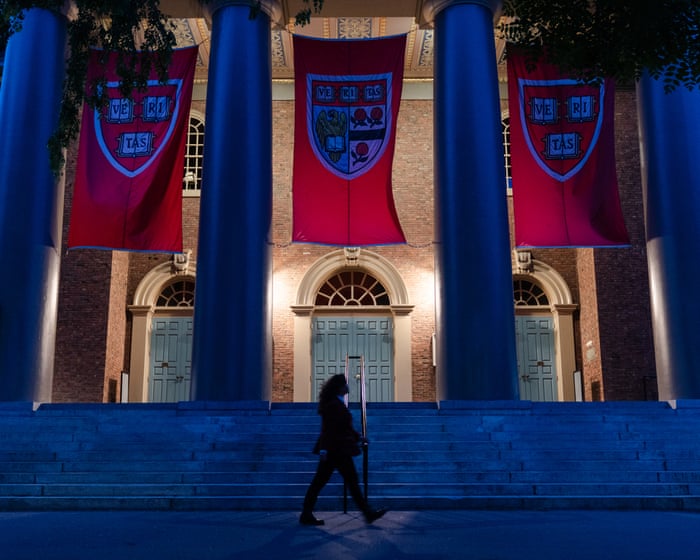
A U.S. district judge, Richard Stearns, dismissed a lawsuit filed by the Trump administration in March 2026 that alleged Harvard University failed to protect Jewish and Israeli students from harassment after the war in Gaza. The court dismissed the case on the ground that the complaint did not plausibly allege an ongoing violation of federal civil‑rights law. The reporting does not include the full court opinion, details of the alleged incidents, the specific legal statutes invoked, or responses from Harvard or the administration beyond the filing and dismissal.
Source and Framing Analysis
The available report (The Guardian) provides the core procedural outcome and names the judge and filing month, framing the story in legal terms focused on pleading sufficiency. That framing conveys a clear judicial result but leaves significant evidentiary and factual context unspecified. Material uncertainties arise because the article excerpt does not include the court’s full opinion, the complaint’s detailed allegations or exhibits, statements from the parties, or information about appeals or non‑legal remedies. Relying on a single brief account risks overemphasizing the procedural outcome while underreporting the underlying factual claims and campus conditions that motivated the lawsuit. Readers should seek the court filings and statements from Harvard and the administration to evaluate factual claims and possible next steps.
How sources covered this story
Sanctuary separately assesses reporting quality and alignment with Christian virtues. The virtues assessment considers truthfulness, dignity, compassion, justice, peacemaking, humility, and care for vulnerable people. It does not assess a publisher's faith or reward religious language.
Compare 1 reports
Rank 1
The Guardian: Judge dismisses Trump lawsuit that claimed Harvard failed to protect Jewish studentsReporting 75/100Virtues 75/100
- Distinctive contribution
- Explicitly names US District Judge Richard Stearns, states the suit was filed in March, and quotes the legal conclusion that the administration 'failed to plausibly show an ongoing violation of federal civil rights law.'
- Framing
- Neutral, legal/judicial framing emphasizing the court’s dispositive finding about the plausibility of ongoing civil‑rights violations; presents outcome as a judicial ruling rather than political commentary.
- Omissions or uncertainty
- No detail on the underlying factual allegations of harassment, no excerpts from the ruling explaining legal reasoning beyond 'failed to plausibly show,' no statements from the parties, no information on possible appeals or next steps, no timeline or examples of alleged incidents, and no direct quotation from the opinion.
- Why these scores
- Concise and accurately attributed to a specific judge and court, uses careful legal language ('failed to plausibly show') appropriate for the subject. It is limited in depth and context (legal reasoning, factual specifics, parties' responses), but for a brief news item it responsibly conveys the key outcome without sensationalism. The excerpt is factual and non‑inflammatory, respects the dignity of parties by focusing on legal findings rather than ad hominem language, and does not exploit suffering or foment hostility. It neither elevates compassion explicitly nor provides restorative context, so it aligns well with truthfulness and humility but is neutral on active care or justice framing.
Biblical Reflection
A narrow dismissal on pleadings does not necessarily resolve pastoral or community concerns about student safety, campus climate, or accountability. Christians should hold together love for truth, care for vulnerable neighbors, and respect for lawful process: pursue accurate information before judgment, provide compassionate support to students who feel harmed, and press institutions for concrete protections and transparent processes even when courts decline to grant relief. Legal outcomes are one piece of a broader moral responsibility to protect the dignity and safety of all students and to pursue reconciliation, justice, and peace in fractured communities.
Scripture in context
- 1Matthew 5:9 — Jesus teaches that followers are to be peacemakers and to embody a character of reconciliation amid conflict. — Christians can apply this by seeking both the protection of vulnerable people and the difficult work of bridge‑building: engaging legal avenues when appropriate, while also offering pastoral care, listening carefully to harmed persons, and creating spaces for truth and reconciliation on campus.
Faithful Response
Encourage accurate sourcing: direct congregants and campus contacts to read primary documents (the complaint and the judge’s opinion) and official statements from Harvard and the administration before drawing firm conclusions.
Provide pastoral care: ensure local ministries and campus chaplains are prepared to listen to and support students who feel threatened, marginalized, or traumatized regardless of legal rulings.
Advocate for concrete protections: work with campus chaplaincies and student services to strengthen reporting mechanisms, counseling access, bias‑incident responses, and transparent communication during crises.
Model measured public witness: avoid partisan simplifications; teach humility, mercy, and truthfulness in public conversation, and prioritize the dignity and safety of vulnerable neighbors over scoring political points.
Reflection and Discussion
- 1How does our commitment to truth and mercy shape our response when a court dismisses a case on procedural grounds but community harm may still exist?
- 2What practical steps can our congregation take to support students (of any background) who feel unsafe or unheard on campus?
- 3How do we balance advocating for accountability with preserving opportunities for reconciliation and education in a polarized campus environment?
Sources
Reporting links are evidence inputs; Sanctuary News' biblical reflection is commentary.
This outlook currently relies on fewer than two linked sources. Broaden verification before teaching from it.
- 1.Judge dismisses Trump lawsuit that claimed Harvard failed to protect Jewish studentsprimary_reporting