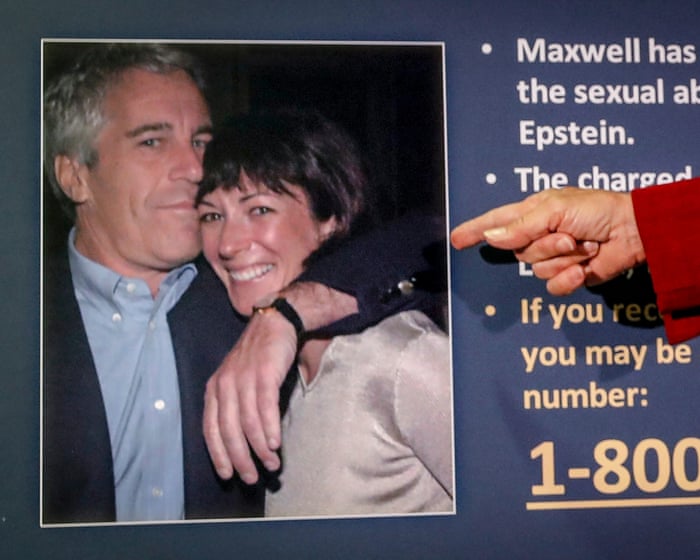
News Summary
U.S. District Judge Paul Engelmayer of the Southern District of New York denied Ghislaine Maxwell’s petition to vacate her 2021 sex‑trafficking conviction and 20‑year sentence. In a written opinion reported to be 67 pages, the court characterized Maxwell’s claims as “demonstrably meritless” and found the petition relied on speculation, distortions, or falsehoods. Maxwell had argued that trial evidence was concealed and that a juror failed to disclose an abuse history; the court concluded she did not show a substantial denial of constitutional rights.
Source and Framing Analysis
Primary reporting for this update is based on a Guardian account that summarizes the district court’s written decision and on corroborating reporting (e.g., PBS NewsHour). The Guardian article supplies specific, material details: the judge’s name (Paul Engelmayer), the reported length of the opinion (67 pages), the sentence length (20 years), and the judge’s quoted characterization of the petition as “demonstrably meritless.” PBS NewsHour independently corroborates the core judicial finding and repeats the court’s language that the assertions were based on “speculation, distortions, and/or outright falsehoods.” Both outlets frame the story as a legal/procedural resolution centered on the court’s evaluation rather than as an exhaustive accounting of the underlying factual record or of reactions from Maxwell, her lawyers, prosecutors, or alleged victims. Absent from the supplied reporting are the full court opinion text and the detailed legal analysis and evidentiary evaluation contained in it, statements from Maxwell’s counsel or prosecutors, and any information about whether further appeals will be filed. Those gaps limit the public’s ability to independently assess the court’s reasoning and the specific factual bases of Maxwell’s allegations.
How sources covered this story
Sanctuary separately assesses reporting quality and alignment with Christian virtues. The virtues assessment considers truthfulness, dignity, compassion, justice, peacemaking, humility, and care for vulnerable people. It does not assess a publisher's faith or reward religious language.
Compare 2 reports
Reporting 85/100Virtues 78/100
- Distinctive contribution
- Names the judge (Paul Engelmayer), cites a 67‑page decision in the Southern District of New York, references the 20‑year sentence, and summarizes the types of claims Maxwell advanced (hidden trial evidence and a juror’s abuse history).
- Framing
- Legal/institutional framing centered on a court ruling; uses direct, evaluative language attributed to the judge ("demonstrably meritless"), and situates the decision as a denial of a petition for relief tied to Epstein-related convictions.
- Omissions or uncertainty
- Does not provide Maxwell’s response or any quoted defense, does not summarize key factual findings supporting the judge’s conclusion, omits whether there will be further appeals, and does not provide detail about the alleged hidden evidence or juror history beyond naming them.
- Why these scores
- The excerpt is specific (judge, page-length of decision, court, sentence length) and attributes the evaluative language correctly to the judge. It summarizes the basis for the motion and the court’s finding of speculation/falsehoods. Lacks fuller exposition of the underlying factual record and Maxwell’s counterarguments in the excerpt, but for a news brief it responsibly presents key facts with attribution. The excerpt is factual and non-sensational, attributes strong language to the judge rather than asserting it as reporter opinion, and avoids dehumanizing language. It does not explicitly foreground compassion or the perspectives of alleged victims, but it maintains truthful, respectful reporting of a legal decision.
Reporting 75/100Virtues 74/100
- Distinctive contribution
- Concise confirmation of the judge’s rejection and direct repetition of the judge’s quoted language describing Maxwell’s claims as speculation/distortions/falsehoods, supporting corroboration across outlets.
- Framing
- Straightforward legal-news framing emphasizing the judge’s rejection of Maxwell’s characterization of her conviction as a "complete miscarriage of justice," with the critical language presented as a judicial finding.
- Omissions or uncertainty
- The excerpt omits identifying the judge, the specific court, length or details of the written decision, Maxwell’s specific allegations, the sentence length, or any response from Maxwell or her lawyers.
- Why these scores
- The excerpt cleanly attributes the central evaluative claim to the judge and concisely states the outcome. It is accurate and non-sensational but is brief and lacks many contextual specifics that would strengthen understanding (e.g., judge identity, decision length, sentence details). The excerpt reports the court’s judgment in a factual, non-inflammatory way and attributes strong language to the court. It neither sensationalizes nor demeans subjects, but it also does not include broader contextual attention to victims or restorative concerns; overall respectful and measured.
Biblical Reflection
Christians should receive verified judicial outcomes soberly and compassionately. The ruling, as reported, affirms a court determination in a high‑profile criminal case; we should welcome careful pursuit of justice for those harmed and protection for vulnerable people. At the same time, we must insist on fair, transparent processes for everyone accused and resist gloating or dehumanization. The Gospel calls us to seek truth and justice while practicing mercy, humility, and care for survivors. Practically, that means supporting survivor services, urging transparency of primary court documents where appropriate, and treating all parties with dignity even as we press for accountability and institutional reform.
Scripture in context
- 1Isaiah 1:17 — Isaiah addresses Israel’s moral failures and calls for concrete acts of justice: defending the oppressed, correcting injustice, and caring for those harmed by society’s leaders. In its historical context it urges the community to translate ritual religion into ethical action toward neighbors. — This passage calls Christians to practical justice — to advocate for and protect the vulnerable, to seek redress for wrongs, and to insist that institutions examine evidence and procedures honestly. In responding to this case, that means supporting survivor care, pressing for transparent judicial records and accountable processes, and resisting both cynical dismissal of victims and uncritical celebration of outcomes.
Faithful Response
Pray for survivors of abuse, for those who have been harmed, for all affected by the trial and appeals process, and for judges, lawyers, and advocates to have wisdom and integrity.
Support reputable survivor‑support and trauma‑informed organizations that provide counseling, legal assistance, and long‑term care.
Encourage officials and courts to publish primary documents (the full opinion, filings) where appropriate so the public can assess claims and rulings transparently; avoid amplifying unverified allegations.
Provide trauma‑informed pastoral care in congregations: listen well, protect confidentiality, connect people to professionals, and ensure congregational safeguarding policies are enforced.
Hold together truth and mercy: affirm the need for accountability and systemic reform while avoiding partisan or vindictive responses toward individuals.
Reflection and Discussion
- 1How can our community support survivors in ways that prioritize their dignity, safety, and long‑term healing?
- 2What steps should we take to ensure our local institutions (church, school, nonprofit) have transparent, enforceable protections against abuse?
- 3How do we discern between celebrating accountability and dehumanizing people involved in criminal cases?
- 4When a court dismisses an allegation or petition, how should that shape our pastoral and communal responses to both survivors and the accused?
Sources
Reporting links are evidence inputs; Sanctuary News' biblical reflection is commentary.
This outlook currently relies on fewer than two linked sources. Broaden verification before teaching from it.
- 1.Judge rejects Ghislaine Maxwell’s sex-trafficking appeal, calling claims ‘demonstrably meritless’primary_reporting