News Summary
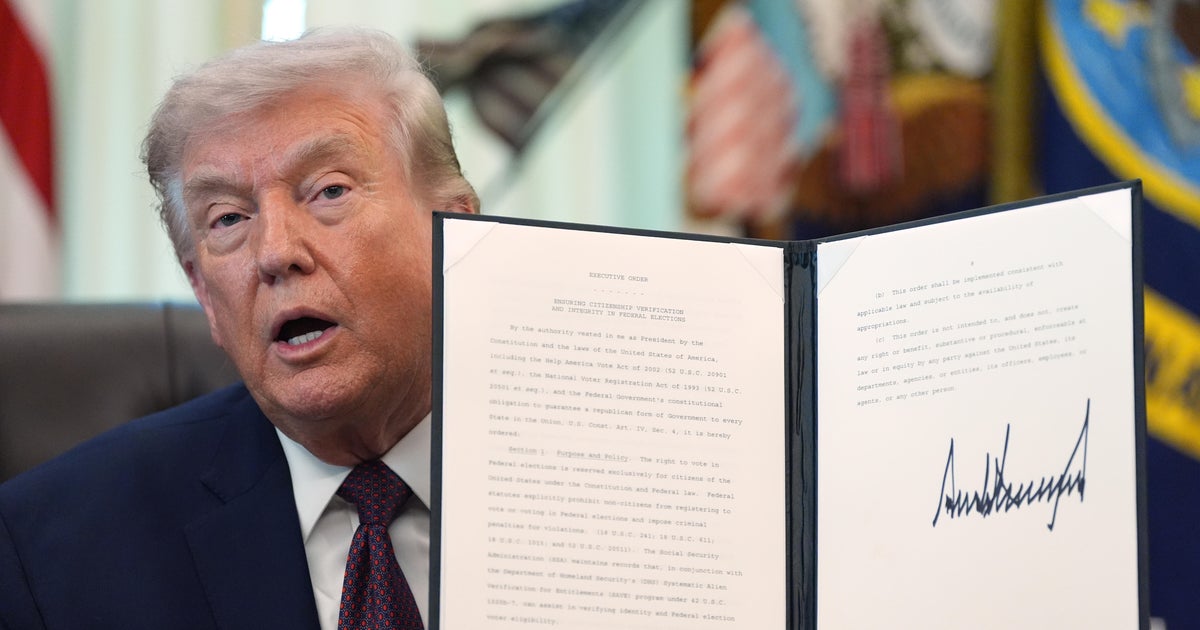
A federal judge in Boston, U.S. District Judge Indira Talwani, issued a ruling blocking the Trump administration from taking steps to implement two provisions of an executive order signed in March. The order would have required the Homeland Security Secretary to compile a federally created list of U.S. citizens eligible to vote in each state using Social Security Administration data, and directed the U.S. Postal Service to send absentee ballots only to people on those federally prepared lists. Talwani ruled that neither Congress nor the president has authority to create state voter rolls or to direct states' election administration in that way, and found no statute delegating such authority to federal agencies. She also said the order’s enforcement provisions — including a directive to prioritize investigation or prosecution of state or local election officials who do not use the federal lists — would chill and intimidate local election officials. The opinion noted that USPS rulemaking does not authorize the kind of control over mail-in ballots the order proposed. The challenge was brought by 23 states and the District of Columbia. Separately, a D.C. judge earlier denied an initial motion to block the order in a different lawsuit; that decision is being appealed. The Postmaster General testified in Congress about a proposed rule tying ballot delivery to states’ transmission of approved voter lists to the federal government. The White House and Justice Department were contacted for comment.
Biblical Reflection
This ruling raises core concerns about the proper limits of executive power, the constitutional division of responsibilities between federal and state governments, and the protection of citizens’ access to the ballot. From a Christian perspective, the dispute involves competing goods: the legitimate desire for accurate voter rolls and election integrity, and the equally important duty to safeguard citizens’ ability to vote without intimidation or undue centralization of power. The court’s decision emphasizes rule-of-law and institutional humility — virtues Christians can affirm — by checking unilateral action that would reorganize how elections are run nationwide. At the same time, claims about fraud or integrity deserve careful, honest investigation rather than sweeping administrative shortcuts. Christians should be wary of rhetoric that treats civic processes as instruments for partisan advantage; truth-seeking, mercy toward vulnerable voters, and respect for lawful institutions should guide our judgments. The article’s framing is mostly factual, but readers should watch for partisan assumptions that present centralization as the only path to integrity or, conversely, portray all reform as purely partisan obstruction.
Scripture in context
This outlook does not yet include contextual Scripture citations. Do not treat a general biblical theme as an exegetical conclusion.
Faithful Response
No prescribed response is offered. Consider the reflection prompts below in your own church context.
Reflection and Discussion
- 1When officials propose centralized fixes for election problems, what concrete evidence should we require before accepting policies that shift authority away from local and state election administrators?
- 2Are proposed enforcement tools meant to secure honest elections or to intimidate officials who may disagree — and how can we tell the difference?
- 3How does respect for constitutional roles (federalism and separation of powers) shape a faithful Christian response to disputes over voting rules?
Sources
Reporting links are evidence inputs; Sanctuary News' biblical reflection is commentary.
This outlook currently relies on fewer than two linked sources. Broaden verification before teaching from it.
- 1.Original reportprimary