A little more detail
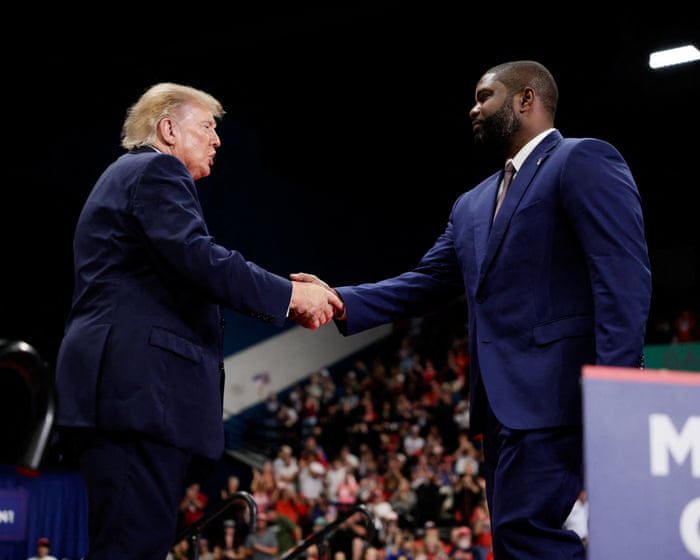
According to The Guardian live coverage, a federal judge issued an order limiting the Department of Justice from making threats to election workers in the run-up to the U.S. midterm elections on 3 November. The same report says former President Donald Trump plans tele-rallies in the days immediately before the vote. The midterms will decide control of the House, Senate and 36 governorships; the live piece also cites a NYT/Siena poll reporting 36% approval for Trump. The Guardian frames the midterms as high-stakes and centers Trump in the coverage.
Source and Framing Analysis
Source: The Guardian live blog (single supplied source). Strengths: provides timely context (election date, offices at stake), reports a specific court action and scheduled campaign events, and notes a poll figure. Framing: the piece treats the midterms as a referendum on Trump and combines factual reporting with interpretive language. Key limitations and uncertainties in the supplied reporting: the live update does not include the full text of the judge’s order or detailed legal reasoning; it does not specify which DOJ offices, officials, or practices are covered by the order; it lacks a quoted or linked DOJ response or any information about appeals or enforcement mechanisms; the tele-rally details (platform, times, scope) are not fully described; and the NYT/Siena poll methodology and context are not included. The live-blog format mixes facts and analysis, so readers should seek the court order, an official DOJ statement, and direct campaign materials for fuller verification.
How sources covered this story
Sanctuary separately assesses reporting quality and alignment with Christian virtues. The virtues assessment considers truthfulness, dignity, compassion, justice, peacemaking, humility, and care for vulnerable people. It does not assess a publisher's faith or reward religious language.
Compare 1 reports
Reporting 75/100Virtues 78/100
- Distinctive contribution
- Specifies the election date (3 November), that control of the House and Senate and 36 governorships are at stake, and summarizes the dominant voter concerns (cost of living, immigration, climate, AI, big tech, overseas wars). It also frames the midterms as a ‘referendum on Trump’ and asserts that he has urged voters to ‘pretend he is on the ballot.’
- Framing
- Framed as a high-stakes referendum on Trump, emphasizing his centrality to the midterms and presenting a list of societal concerns motivating voters; the tone is interpretive/analytical rather than merely descriptive.
- Omissions or uncertainty
- The excerpt does not substantiate the claim that Trump ‘has urged voters to pretend he is on the ballot’ (no quote, date, or source). It omits detail on the headline items (the judge’s order limiting DOJ, and Trump’s tele-rallies) that the title references. No polling, turnout expectations, or attribution for the list of voter concerns are provided.
- Why these scores
- The excerpt performs its apparent function — a short live-blog intro — by clearly stating date, stakes, and salient issues. It is concise and informative for general context. However, it lacks sourcing or specific evidence for the quoted characterization of Trump’s directive and omits promised details that appear in the headline, limiting precision. The language is generally respectful and non-dehumanizing, provides context that enables informed civic engagement, and avoids sensationalism. It does include a charged interpretive phrase (‘referendum on Trump’), but overall it presents civic-relevant facts and public concerns without evident exploitation of suffering or vilification.
Biblical Reflection
A Christian response to this story distinguishes careful factual attention from moral attention. Factually, seek clarity about what the court actually ordered and what officials did or did not do. Morally, center truth, mercy, justice, peacemaking, humility, dignity, and care for vulnerable neighbors. That means refusing to amplify threats or unverified accusations, protecting and supporting election workers who are often on the front lines of civic life, and praying for judges, public servants, and civic leaders to act with integrity. Our allegiance to Christ calls us to pursue fair processes, speak honestly without inflaming fear, and care practically for those exposed to intimidation or harm.
Scripture in context
- 1 — Paul’s practical instructions to a reconciled community emphasize truthful speech, avoidance of anger that damages, and behaviors that build up rather than harm neighbors. — calls believers to speak truth with kindness, to restrain destructive anger, and to protect vulnerable members of the community. Applied here: Christians can insist on factual accuracy about legal orders and political activity, oppose intimidation of civic workers, and model speech that seeks restoration and peace rather than escalation.
Faithful Response
Pray specifically for the safety and well‑being of election workers, judges, DOJ staff, and election officials.
Seek the primary documents (the judge’s written order) and official statements (DOJ, court, campaign) before sharing or drawing firm conclusions.
Avoid amplifying threatening or inflammatory rhetoric; prioritize reporting from primary legal and institutional sources.
Offer practical support to local election workers (meals, childcare, transportation, pastoral care) through nonpartisan channels if needs exist.
Provide congregational guidance for civil, truthful public conversation and discourage harassing or intimidating behavior toward public servants.
Reflection and Discussion
- 1When political rhetoric is charged, how do we test whether it advances truth, justice, or harm?
- 2How should Christians weigh obedience to lawful institutions with prophetic critique of injustice?
- 3What practical steps can our congregation take to protect and support neighbors who serve as election workers or public officials?
Sources
Reporting links are evidence inputs; Sanctuary News' biblical reflection is commentary.
This is a developing, single-source report. Details may change as more reporting becomes available.
- 1.Judge bars DoJ from threats to election workers as Trump to hold tele-rallies three days before elections – liveprimary_reporting