News Summary
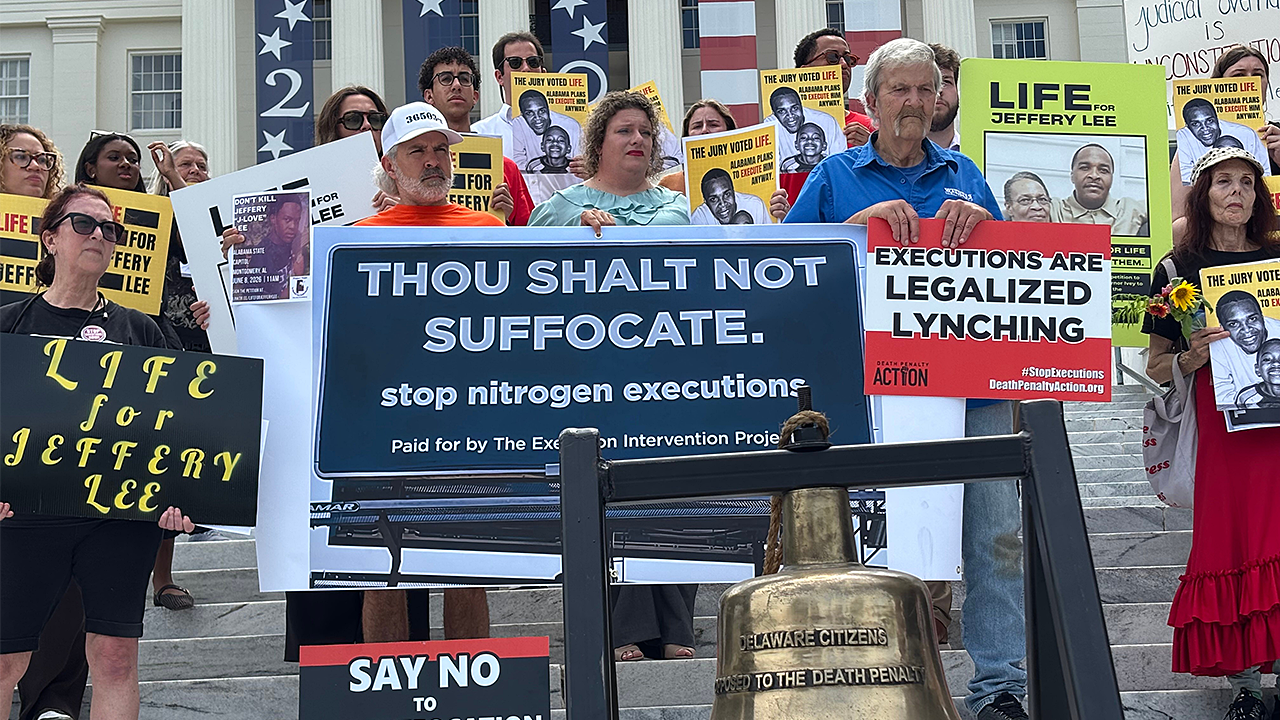
U.S. District Judge Emily C. Marks permanently barred Alabama from executing death-row inmate Jeffrey Lee using nitrogen gas, finding the state’s nitrogen hypoxia protocol violates the Eighth Amendment prohibition on cruel and unusual punishment. The order came after an 11th U.S. Circuit Court of Appeals panel had reversed an earlier ruling, expressing concern that the protocol posed a substantial risk of serious harm and that up to three minutes of conscious suffocation could cause intolerable suffering. Marks also found Lee had proposed a feasible alternative (the firing squad) and said the state may not use nitrogen on him though it may pursue other authorized methods (lethal injection or the electric chair); she did not enjoin those other methods. Alabama Attorney General Steve Marshall is appealing the decision. Alabama began using nitrogen gas for executions in January 2024; seven of eight U.S. nitrogen executions to date have been in Alabama. The case is likely to generate further appeals and could reach the U.S. Supreme Court. Lee was convicted of two counts of capital murder in a 1998 pawnshop shooting; his jury recommended life, but a judge overrode that recommendation at sentencing. The ruling affects only the use of nitrogen gas on Lee and does not by itself ban the method statewide, though it may influence ongoing and future litigation and policy debate.
Biblical Reflection
From a Christian perspective, this ruling raises two important concerns: the pursuit of justice for victims and the imperative to preserve human dignity even in punishment. The court’s decision focuses on whether a state-sanctioned method inflicts needless or disproportionate suffering; that legal question intersects with a deeper moral one about whether the state should participate in taking life at all and, if it does, how to do so without cruelty. The article reports competing legal views without exploring the theological or pastoral weight carried by victims’ families, the condemned, or society’s moral responsibility. Christians should note the underlying worldview shaping the coverage and debate: a rights- and harm-based legal framework that measures acceptability by risk and procedure, often separate from questions of mercy, repentance, and restorative justice. The ruling reflects a practical commitment to limiting state cruelty, which aligns with Christian concerns about the sanctity and dignity of every human life, while also leaving unresolved the larger ethical tensions surrounding capital punishment.
Scripture in context
This outlook does not yet include contextual Scripture citations. Do not treat a general biblical theme as an exegetical conclusion.
Faithful Response
No prescribed response is offered. Consider the reflection prompts below in your own church context.
Reflection and Discussion
- 1Does our legal and public conversation treat the condemned primarily as a problem to be managed, or as a human being whose dignity still matters?
- 2How do appeals to 'humane' procedure obscure the deeper question of whether the state should take life at all?
- 3Whose voices are missing from the coverage—victims’ families, clergy, or others who can speak to repentance, healing, and the common good?
Sources
Reporting links are evidence inputs; Sanctuary News' biblical reflection is commentary.
This outlook currently relies on fewer than two linked sources. Broaden verification before teaching from it.
- 1.Original reportprimary