News Summary
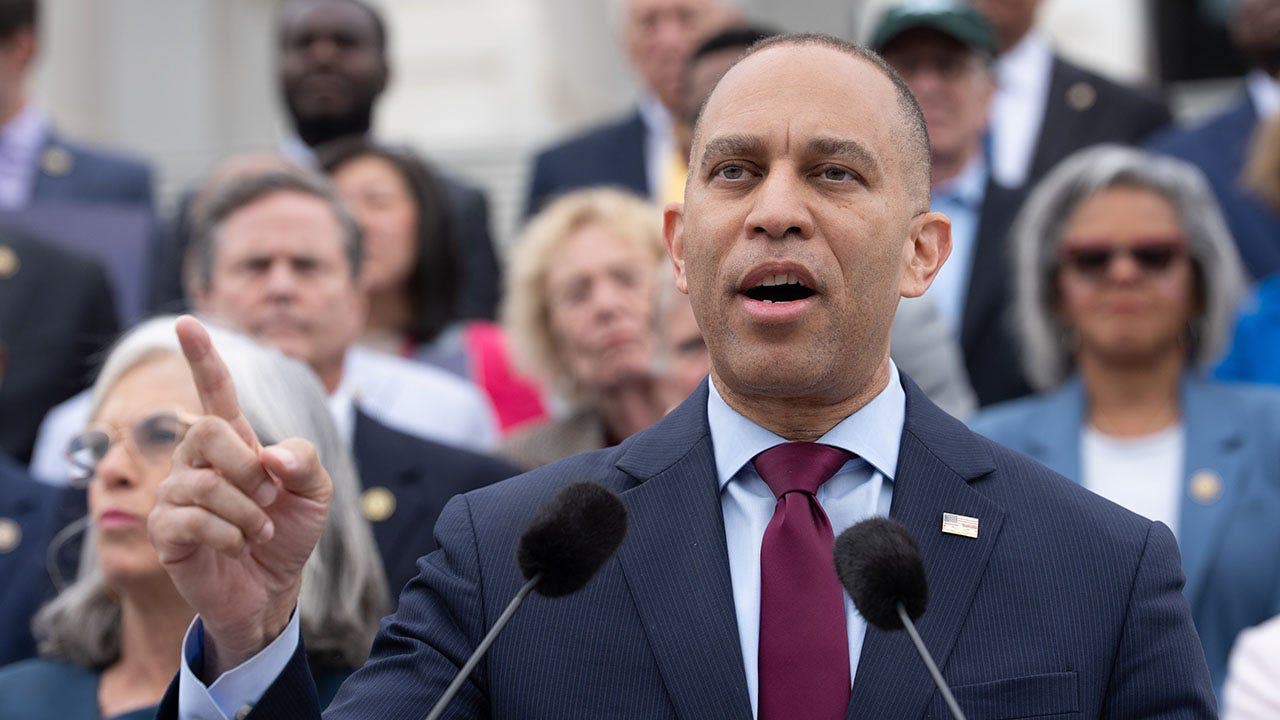
House Minority Leader Hakeem Jeffries posted congratulations to Democratic nominees from New York after recent primaries, naming several candidates backed by the Democratic Socialists of America (DSA), including Brad Lander, Claire Valdez and Darializa Avila Chevalier. Lander and Chevalier defeated incumbents who had Jeffries' endorsements; Valdez won an open seat. The article notes DSA-backed candidates have won or advanced in more than a dozen primaries this cycle and that New York Mayor Zohran Mamdani backed the three named candidates. Critics, including the Republican Jewish Coalition and former national security official Jamie Metzl, condemned Jeffries' public embrace, citing the nominees' past social-media posts and positions — such as calls to abolish the border, support for defunding police, and anti-Israel rhetoric — and questioned whether welcoming them signals the party's direction. Jeffries defended his message in media appearances, arguing that a handful of primaries in a heavily Democratic city do not predict November outcomes and stressing the need to defend frontline Democrats and flip Republican seats.
Biblical Reflection
This story highlights a familiar tension in politics between unity for practical goals and disagreements over principles and policy. Jeffries' public congratulations appear motivated by a desire to present a unified Democratic ticket for the general election and to avoid intra-party fracture ahead of a high-stakes midterm. Critics are focused on the nominees' past statements and positions they view as inconsistent with the party's core commitments or harmful to particular communities. The article's sourcing and tone (notably the prominence of critical voices and the selection of controversies) reflect a media angle that foregrounds alarm and partisan critique. Christians should note two things: first, political leadership often requires pragmatic coalition-building, which can look like compromise; second, moral discernment matters — rhetoric and policy proposals have real consequences for neighbors, especially vulnerable communities. Evaluate both intentions (seeking unity, expanding coalitions) and concrete effects (criminal justice proposals, border policy, stances on Israel and safety). Guard against reducing people to caricatures or fear-driven reactions; at the same time, do not dismiss legitimate concerns raised by affected communities. Seek leaders who combine competence, humility, and tangible concern for the common good rather than merely slogans or identity labels.
Scripture in context
This outlook does not yet include contextual Scripture citations. Do not treat a general biblical theme as an exegetical conclusion.
Faithful Response
No prescribed response is offered. Consider the reflection prompts below in your own church context.
Reflection and Discussion
- 1Is the call for party unity prioritizing electoral advantage over clear ethical commitments that protect vulnerable people?
- 2Are we responding to candidates' ideas and records, or to media-driven labels and fear-based framing?
- 3How should Christians weigh pragmatic coalition-building against the need to speak clearly about justice and protection for neighbors who could be harmed?
Sources
Reporting links are evidence inputs; Sanctuary News' biblical reflection is commentary.
This outlook currently relies on fewer than two linked sources. Broaden verification before teaching from it.
- 1.Original reportprimary