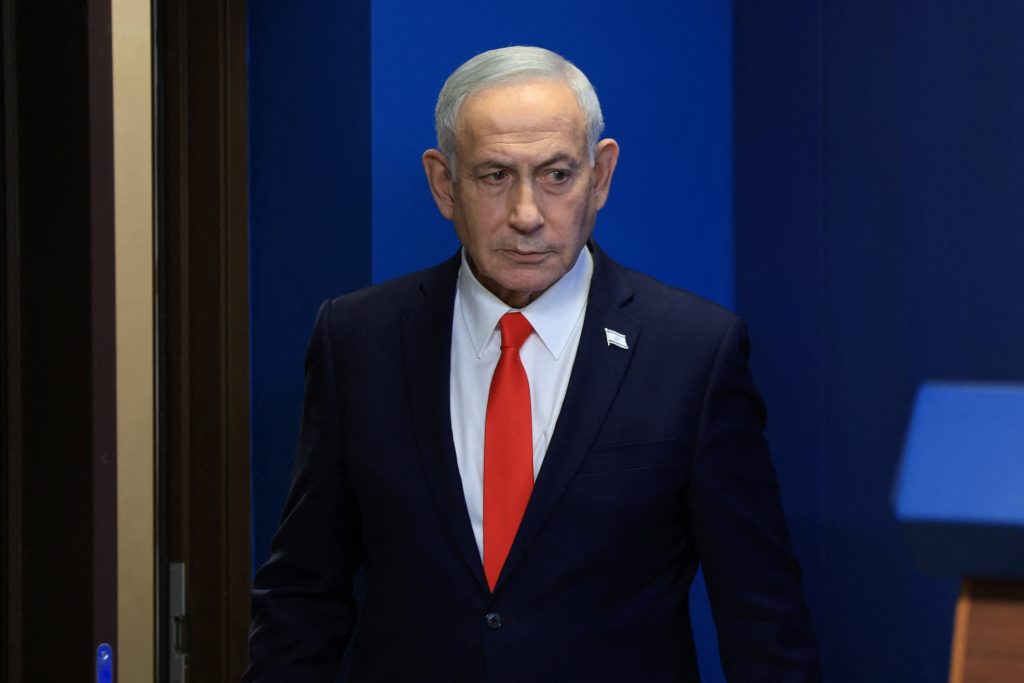
News Summary
Facts reported: The PBS NewsHour article states the Israeli parliament has dissolved and elections are scheduled for October; it reports that Prime Minister Benjamin Netanyahu faces a difficult reelection campaign and that there is a dispute between the government and the judiciary described as a constitutional crisis. Attributed claims: The article attributes to political actors and observers the view that the government has defied a court decision, and that Netanyahu's leadership is under heightened scrutiny following the Oct. 7 attacks. Uncertainties: The article does not provide court documents, the specific court ruling or legal details underlying the defiance, nor polling or vote projections — those details are not present in the supplied text.
Source and Framing Analysis
Material uncertainties that affect the story include lack of primary legal documents (the court decision referenced is not reproduced or linked) and limited attribution for the specific claim that the government 'defied' the court. The headline emphasizes confrontation; the short article text summarizes high-level facts without providing detailed legal, political, or polling context. This framing can make the situation read as a binary clash rather than a multi-faceted institutional dispute with complex legal and political steps.
Biblical Reflection
This report describes political turmoil in a country already under stress from recent violence. Christians should first seek sober discernment: institutions matter for the common good, and conflicts between branches of government raise real risks to justice, public trust, and security. The headlines emphasize confrontation — courts versus the government — which prompts us to ask whether power is being used to protect citizens or to shield leaders from accountability.
Pastoral wisdom calls for humility and care for neighbors on all sides. Republicans and critics alike should be wary of triumphalism; defenders of the government must be equally wary of ignoring legitimate legal processes. Faithful Christians will press both for truth (transparent facts and due process) and for mercy (protection of civilians, hostage families, and those hurt by the Oct. 7 violence), resisting narratives that harden hearts or dehumanize political opponents.
Finally, Christians should pray and advocate for peace, the rule of law, and responsible leadership. In contexts where courts and elected officials clash, the faithful witness is one that honors justice, seeks reconciliation where possible, and refuses to reduce complex public life to factional slogans.
Scripture in context
- 1Romans 13:1-7 — Written by Paul to Christians in the Roman Empire, this passage addresses the proper posture toward governing authorities, urging respect for institutions that maintain public order while recognizing that governing power is accountable to God. — The passage calls believers to respect lawful authority and seek the common good, while also reminding Christians that temporal authorities are not absolute; when leaders act unjustly, the faithful must pursue justice and protection for the vulnerable rather than reflexive loyalty to power.
Faithful Response
Pray for impartial legal processes, for protection of civilians, and for victims of violence.
Seek reliable, multiple sources before forming firm conclusions; avoid amplifying unverified or partisan claims.
Advocate, where appropriate and peaceful, for respect for rule-of-law institutions and for humanitarian protections for those harmed by conflict.
Reflection and Discussion
- 1How does my interpretation of political events reflect Christian commitments to truth, mercy, and the protection of the vulnerable?
- 2When institutions clash, where should the church's accountability focus lie — with stability, justice, or the needs of those harmed?
- 3Am I prioritizing partisan victory over faithful witness and the well-being of neighbors in crisis?
Sources
Reporting links are evidence inputs; Sanctuary News' biblical reflection is commentary.
This outlook currently relies on fewer than two linked sources. Broaden verification before teaching from it.
- 1.Netanyahu government defies court, raising constitutional crisis fears as election nearsprimary_reporting