News Summary
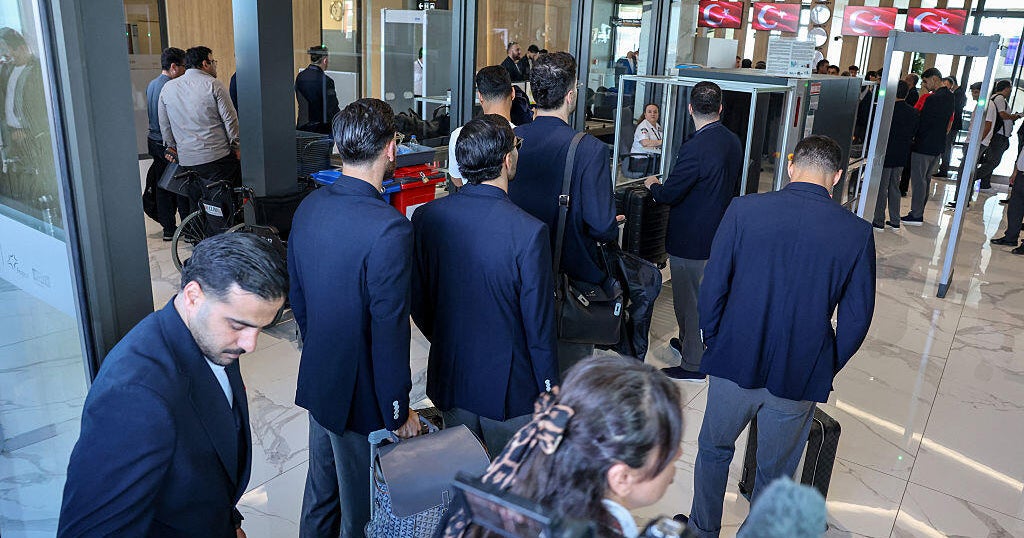
Iran's national soccer team left its training camp in Antalya, Turkey, and flew to Mexico to prepare for group-stage matches of the 2026 World Cup in the United States. Iran moved its training base from Tucson, Arizona, to Tijuana, Mexico, after problems processing U.S. visas. Iranian state television reported that 14 federation officials and backroom staff — including the federation's secretary-general and vice president — had not received U.S. visas; it was unclear whether the federation president had a visa. Iranian officials accused the United States of refusing visas and of discriminatory, politically motivated conduct, and said they would raise the matter with FIFA. U.S. officials, speaking anonymously to the Associated Press, said all players received visas and that some staff and applicants were denied, in some cases for allegedly requesting visas under false pretenses. The team has received Mexican visas and will play group matches in Inglewood, California (against New Zealand and Belgium) and Seattle (against Egypt); a potential Iran–U.S. meeting could occur in the knockout round in Arlington, Texas, if both teams advance in certain positions. FIFA President Gianni Infantino has affirmed Iran’s participation in the tournament.
Biblical Reflection
This report highlights how international sport can become entangled with geopolitics. On one hand, the U.S. obligation as a tournament host includes facilitating access for competing teams; on the other, host governments may lawfully adjudicate visa applications for security or immigration reasons. The article presents competing claims — Iran’s charge of discrimination and U.S. officials’ assertion that players were cleared while some applicants were rejected for reasons including false statements — without independent adjudication. Christian discernment calls us to seek truth (carefully weighing claims and evidence), to protect the vulnerable (players whose training and safety may be affected), and to resist using athletes as instruments of political posturing. The federation’s language of victimization and the U.S. officials’ anonymous denials both reflect interests: national reputation, security concerns, and institutional obligations to FIFA. Pastoral concern should be for fairness in competition, the dignity and safety of players and staff, and the integrity of institutions (FIFA, governments) to resolve disputes transparently and justly rather than inflaming nationalistic rhetoric.
Scripture in context
This outlook does not yet include contextual Scripture citations. Do not treat a general biblical theme as an exegetical conclusion.
Faithful Response
No prescribed response is offered. Consider the reflection prompts below in your own church context.
Reflection and Discussion
- 1Are we giving more weight to national rhetoric or to verified facts when we judge why officials were denied entry?
- 2How might politicizing athletes and sporting bodies harm the dignity and preparation of players who are primarily competitors, not policymakers?
- 3What processes should neutral institutions (like FIFA) and faith communities expect to see to ensure disputes over access and safety are resolved openly and fairly?
Sources
Reporting links are evidence inputs; Sanctuary News' biblical reflection is commentary.
This outlook currently relies on fewer than two linked sources. Broaden verification before teaching from it.
- 1.Original reportprimary