News Summary
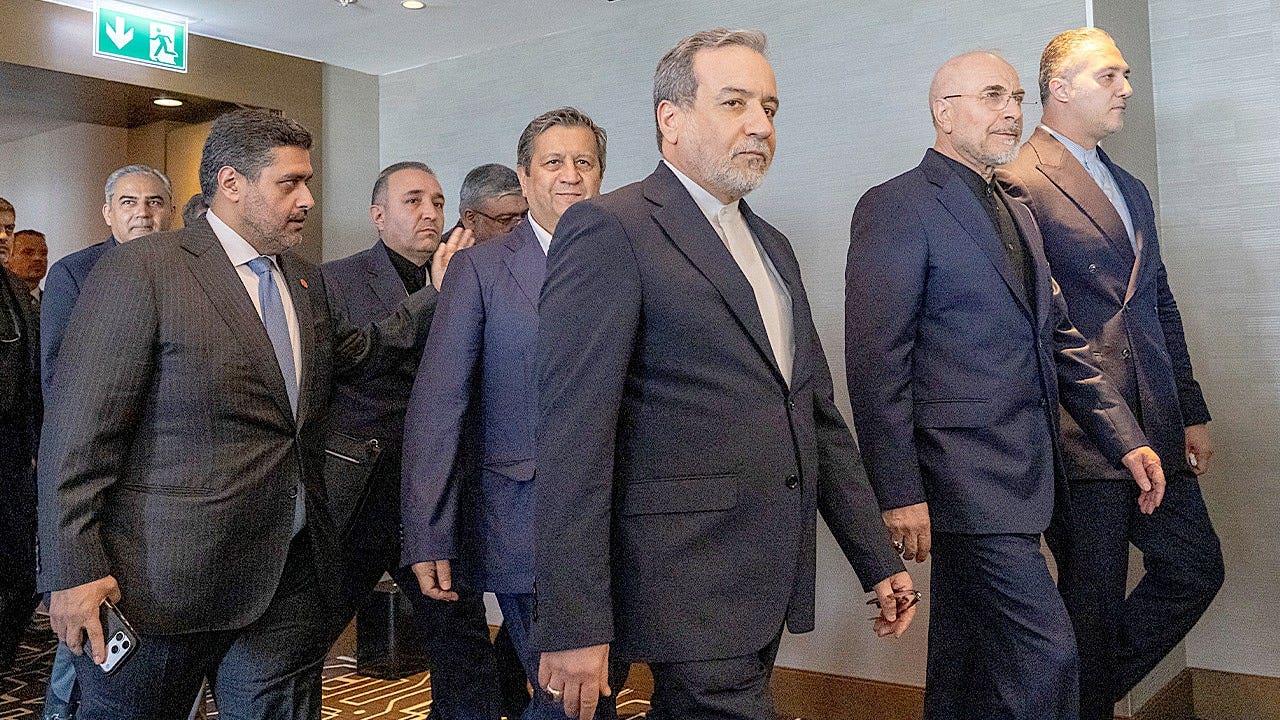
Delegations from Iran and the United States met for a first round of technical talks in Bürgenstock, Switzerland, following a memorandum of understanding signed between President Donald Trump and Iranian President Masoud Pezeshkian. Iran’s delegation included senior figures across the regime — chief negotiator Mohammad Baqer Qalibaf, Foreign Minister Abbas Araghchi, Central Bank governor Abdolnaser Hemmati, Supreme National Security Council deputy Ali Bagheri Kani, legal affairs deputy Kazem Gharibabadi, and senior oil and energy officials. U.S. participants included Vice President JD Vance, Special Envoy Steve Witkoff, and Jared Kushner. Analysts quoted by the article said the breadth of Iran’s team signals Tehran’s priority of securing rapid financial relief (frozen assets, sanctions relief, banking channels) and protecting energy and maritime leverage; the inclusion of legal and security officials was characterized as protecting domestic red lines and negotiation implementation. Iranian state media confirmed the broad delegation; a hardline lawmaker on Iranian state TV reportedly read excerpts of letters said to be from Supreme Leader Mojtaba Khamenei opposing talks and demanding compensation. Reuters reported that talks were paused on Sunday but not ended. The article attributes interpretive claims and warnings primarily to counterterrorism expert Dr. Omar Mohammed and frames Tehran’s participation in transactional and leverage terms.
Biblical Reflection
From a Christian discernment perspective, this article reports an important diplomatic development with real security and humanitarian implications, but it also carries framing choices that warrant careful scrutiny. The factual parts — who attended, where talks occurred, and that discussions paused — are straightforward. The article emphasizes analysis that interprets Iran’s delegation as seeking immediate cash and preserving leverage; that interpretation is plausible given the officials present, but it is an inference offered largely through one expert voice and through charged language ("collect," "red lines," "whole-regime"). Christians should weigh the reporting on two fronts: truth-seeking and charity. Truth-seeking requires attention to corroborating sources, the negotiators’ stated aims, and independent reporting about mechanics (what funds, what safeguards, what verification). Charity requires resisting premature demonization of entire peoples or the assumption that any relief to civilians is simply funding bad actors. The underlying worldview of the piece leans toward strategic realism and securitized suspicion — prioritizing deterrence and risk-avoidance over empathy — which is a legitimate posture for national security reporting but is not the only moral frame. A faithful Christian response holds both righteous prudence (protecting the vulnerable from violence) and mercy (concern for civilians harmed by sanctions or conflict). We should pray for negotiators to pursue just, verifiable agreements that prevent harm, for wisdom for policymakers to balance short-term relief with long-term accountability, and for media consumers to test analysis against multiple sources so fear or partisanship do not replace sober judgment.
Scripture in context
This outlook does not yet include contextual Scripture citations. Do not treat a general biblical theme as an exegetical conclusion.
Faithful Response
No prescribed response is offered. Consider the reflection prompts below in your own church context.
Reflection and Discussion
- 1What evidence would show these talks are a genuine, verifiable de-escalation rather than a tactical pause that preserves harmful leverage?
- 2Which voices and facts are emphasized or missing in this report, and how might that shape our perception of Iran’s intentions?
- 3How should Christians weigh the moral costs and benefits when sanctions relief could ease civilian suffering but also risk empowering a hostile regime?
Sources
Reporting links are evidence inputs; Sanctuary News' biblical reflection is commentary.
This outlook currently relies on fewer than two linked sources. Broaden verification before teaching from it.
- 1.Original reportprimary