News Summary
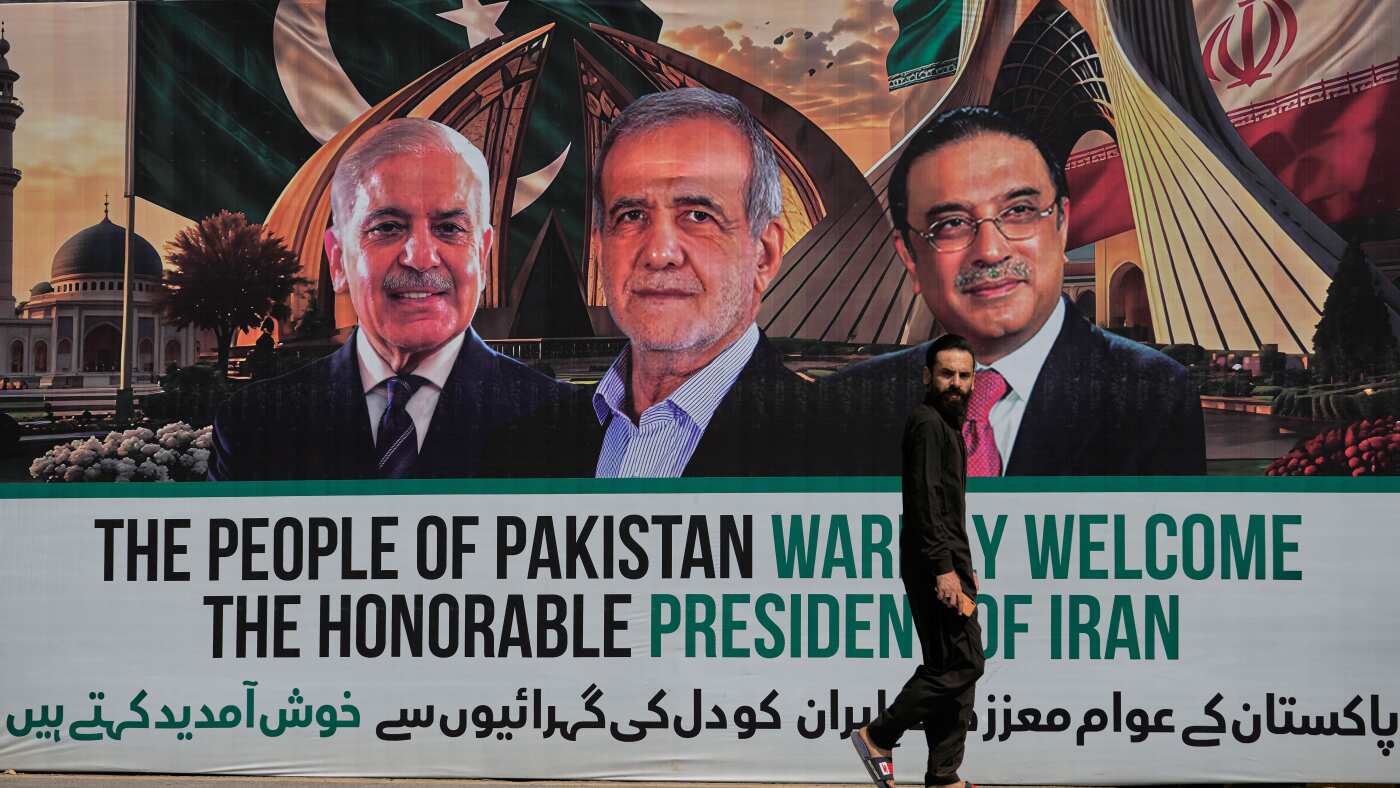
Iranian President Masoud Pezeshkian traveled to Islamabad for talks with Pakistani leaders while technical teams continued negotiating details of a 60-day diplomatic process intended to produce a permanent end to the Iran war. High-level talks in Switzerland involved U.S. Vice President JD Vance and Iran's parliamentary speaker Mohammad Bagher Qalibaf. Negotiators reportedly agreed to create a de-confliction cell aimed at reducing fighting between Israel and Hezbollah in Lebanon and discussed mechanisms to keep the Strait of Hormuz open to shipping. Iranian officials said there are no scheduled visits by the International Atomic Energy Agency (IAEA) to enrichment sites in Iran that were bombed last year, contradicting a prior U.S. statement that the IAEA would inspect those sites. Iranian and mediator statements say negotiation working groups have been formed to address sanctions relief, nuclear issues, reconstruction, monitoring, and maritime transit. Israel and Hezbollah are not parties to the U.S.-Iran discussions; Israeli Prime Minister Benjamin Netanyahu has said Israel retains freedom of action in Lebanon. A ceasefire in Lebanon brokered the prior weekend was reportedly holding at the time of reporting, and Lebanon and Israel planned further direct talks in Washington focused on an Israeli withdrawal.
Biblical Reflection
This story describes fragile, high-stakes diplomacy attempting to move from war toward an agreed settlement. The article accurately presents both progress (creation of negotiating groups, a de-confliction cell, talks on the Strait of Hormuz) and open disputes (contradictory claims about IAEA access, Israel and Hezbollah not being signatories). Christians should value the pursuit of peace while holding to truth — insisting that public statements match concrete actions, that all affected parties be engaged, and that verification mechanisms be credible. The underlying worldview in these negotiations is largely realist and state-centered: governments seek security and strategic advantage while mediators try to manage escalation. A Christian reading calls attention to the human cost that summary statements can obscure — displaced civilians, damaged infrastructure, and the need for justice and restoration alongside ceasefires. The deal’s durability will depend less on rhetoric and more on transparent steps, inclusion of key actors, and care for noncombatants; Christians should pray for leaders to act with humility, for negotiators to prioritize the vulnerable, and for truthfulness in public reporting so communities can trust that peace is real and not temporary.
Scripture in context
This outlook does not yet include contextual Scripture citations. Do not treat a general biblical theme as an exegetical conclusion.
Faithful Response
No prescribed response is offered. Consider the reflection prompts below in your own church context.
Reflection and Discussion
- 1Who is left out of the talks (for example Israel and Hezbollah) and how might their exclusion undermine any agreement’s durability?
- 2Are reported 'agreements' backed by verifiable actions or primarily by public statements and political posturing?
- 3Do the proposed mechanisms prioritize civilian protection and reconstruction as much as state security and access to strategic waterways?
Sources
Reporting links are evidence inputs; Sanctuary News' biblical reflection is commentary.
This outlook currently relies on fewer than two linked sources. Broaden verification before teaching from it.
- 1.Original reportprimary