News Summary
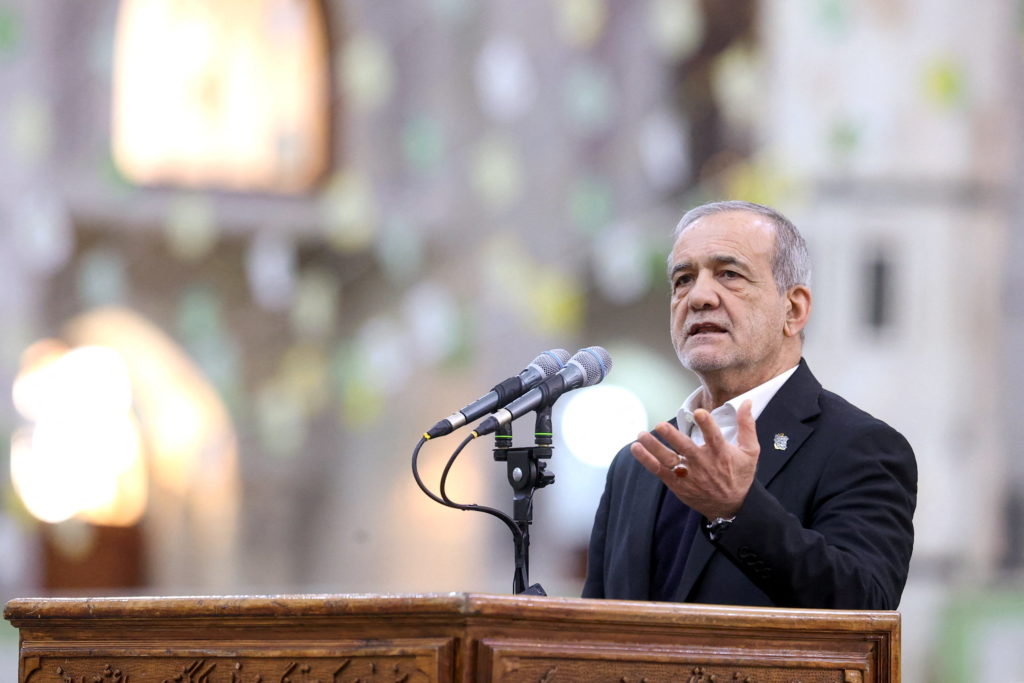
PBS NewsHour reports that Iran's president publicly defended a memorandum of understanding with the United States as "the best way out" of a stalled war, while the newly appointed head of Iran's top security body adopted a more defiant posture toward the same conflict. The report provides no text of the memorandum, no names or direct quotations, no identification of the specific war referenced, and no U.S. position or timetable for implementation.
Source and Framing Analysis
Source: PBS NewsHour (single supplied report). Framing is concise and neutral, highlighting contrasting tones inside Iran’s leadership without inflammatory language. Key omissions: no memorandum text or terms, no named officials or dates, no direct quotations or sourcing, no identification of which conflict is meant, and no sign of U.S. reaction. Because the account is brief and uncorroborated in the supplied material, it establishes only (a) that the president publicly endorsed a U.S.-linked memorandum and (b) that a security official expressed a harder line. Those two reported positions are the primary verifiable inputs; any assessment of legal standing, enforceability, humanitarian impact, or diplomatic status requires additional sources.
How sources covered this story
Sanctuary separately assesses reporting quality and alignment with Christian virtues. The virtues assessment considers truthfulness, dignity, compassion, justice, peacemaking, humility, and care for vulnerable people. It does not assess a publisher's faith or reward religious language.
Compare 1 reports
Reporting 72/100Virtues 75/100
- Distinctive contribution
- Identifies a specific claimed diplomatic instrument (a memorandum with the U.S.) that the Iranian president publicly defended as the best way out of a stalled war, and contrasts that with a contemporaneous defiant stance by the new head of Iran's top security body, indicating internal divergence in messaging.
- Framing
- Concise, neutral summary phrasing that frames two contrasting positions within Iranian leadership without loaded language; uses verbs like 'defended' and 'took a more defiant stance' to signal difference in posture.
- Omissions or uncertainty
- No names or dates are provided (which president and which security chief), no text or terms of the memorandum are given, no direct quotes or sourcing, no identification of the specific war or context, and no assessment of the memorandum's legal or political standing. The excerpt leaves unclear how representative or consequential the two statements are.
- Why these scores
- The supplied line is a clear, neutral précis suitable for a news roundup. It responsibly signals contrasting positions without apparent misstatement. However, it omits key specifics (names, dates, quotations, memorandum details, context about the 'stalled war') that would be needed for fuller understanding, so it is solid but limited in informational depth. The language is measured and non-inflammatory, presenting differing viewpoints without dehumanizing or sensationalist wording. It does not exploit suffering or promote fear, and it allows readers to see internal disagreement — aligning with virtues of truthfulness, humility, and respect. The excerpt offers little explicit compassion or calls for justice/peacemaking, so it scores moderately high but not at the top.
Biblical Reflection
From a Christian perspective, an executive endorsement of diplomacy that could end hostilities aligns with the biblical call to pursue peace and protect the vulnerable, while divergence toward defiance reminds us that peacemaking often faces internal resistance and raises legitimate questions about justice and accountability. Christians should welcome efforts that genuinely reduce suffering, press for transparency about any agreement’s terms especially where civilians are at risk, and resist partisan or dehumanizing rhetoric. At the same time, we must avoid premature moral certainty about an unnamed memorandum: faithful discipleship calls for humility, patient verification of facts, and advocacy for policies that protect life and dignity.
Scripture in context
- 1Matthew 5:9 — Part of the Sermon on the Mount where Jesus highlights the identity and calling of his followers in a contentious world. — Calls Christians to be peacemakers; in public life this supports pursuing negotiated settlements that protect life and dignity while continuing to seek justice.
- 2Romans 12:18 — Paul's instruction about living responsibly in a plural and often hostile society. — Encourages believers to seek peace when possible while recognizing limits of control; it prompts support for peaceful resolutions and compassion for victims.
Faithful Response
Pray for negotiators, security leaders, and civilians affected by the conflict — asking for truth, restraint, and protection.
Demand transparency and accountability: press for the memorandum’s text, identified signatories, and independent humanitarian assessments before endorsing or opposing it publicly.
Support reputable humanitarian organizations that assist civilians and refugees regardless of political affiliation; prioritize actions that reduce suffering.
Pastoral actions: convene focused prayers for peace, provide clear briefings to congregations summarizing verified facts, and prepare congregational assistance for displaced people or refugees.
Avoid dehumanizing language in speech or advocacy; center dignity of all persons and resist simplistic partisan interpretations when facts are limited.
Reflection and Discussion
- 1Does the focus on a single memorandum obscure other diplomatic or military tracks at work, and how would you verify whether this document is central or peripheral?
- 2How should Christians balance the urgent need to stop bloodshed with demands for accountability and justice when a negotiated settlement requires concessions?
- 3What concrete signs would persuade you that a memorandum will reduce civilian suffering rather than simply reposition power?
- 4Who in your community might be harmed or helped by a rapid endorsement or rejection of this reported memorandum, and how should that affect your response?
Sources
Reporting links are evidence inputs; Sanctuary News' biblical reflection is commentary.
This outlook currently relies on fewer than two linked sources. Broaden verification before teaching from it.
- 1.Iran's president says U.S. memorandum is best path out of stalled war, and other Middle East newsprimary_reporting