News Summary
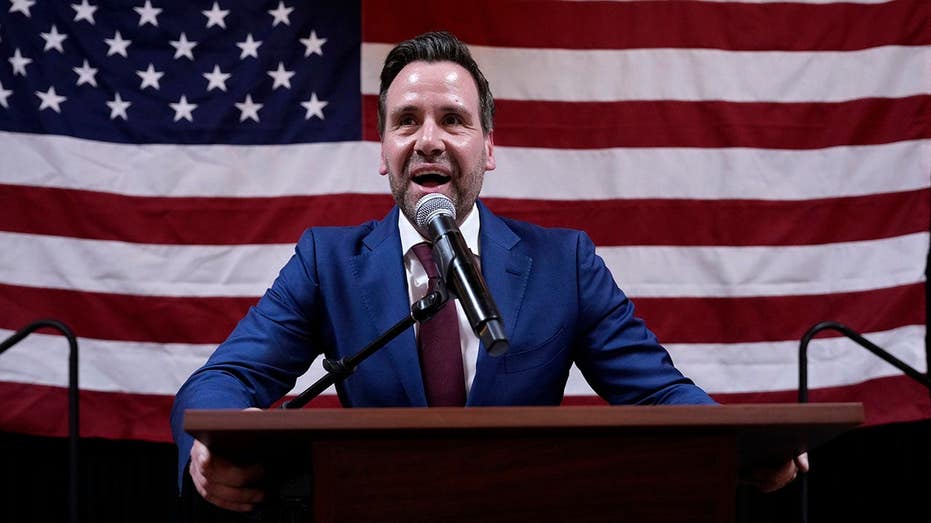
Reported facts: The Fox News article states that Ashley Hinson criticized Josh Turek for missing 58% of Iowa House votes and for receiving more than $20,000 in per diem; it calls him an 'absentee legislator' as the Iowa Senate race intensifies. Attributed claims: the vote-miss percentage and per diem total are presented as reported figures (attributed to the article's reporting). Uncertainty: the article as supplied does not include primary source documentation (voting records, payroll/per diem records), any explanation from Turek, or independent corroboration.
Source and Framing Analysis
The story relies on a single partisan-leaning outlet's presentation and uses charged language ('ripped,' 'absentee legislator'), which frames the facts as a political attack. Important missing context that affects interpretation includes the precise time span for the vote-count calculation, reasons for missed votes (medical, travel, committee work, etc.), whether per diem payments were authorized under existing rules, and links to official vote and payment records. Those gaps materially affect how readers should evaluate the claim.
Biblical Reflection
The article highlights a legitimate civic concern: elected officials have a responsibility to represent and participate in legislative work. From a Christian standpoint this calls us to pursue truth and integrity in public life. That requires careful attention to evidence and avoidance of premature character judgments. If the reported numbers are accurate, voters deserve clear documentation and explanation so they can assess stewardship of public trust.
At the same time, the reporting as presented functions as partisan attack messaging rather than thorough accountability journalism. Christians should resist the temptation to treat every political charge as final moral indictment. Scripture teaches both to call out wrongdoing and to practice mercy, to seek restoration rather than merely to shame. Practically, that means seeking corroborating records, allowing for explanation, and demanding transparent processes rather than repeating rhetorical labels.
Finally, the way the story is framed reveals a worldview where political advantage often outweighs patient truth-seeking. Followers of Christ are called to a different posture: insist on justice and truth, but temper public speech with humility and love for neighbor, even political opponents. Encourage civic participation—voting, asking questions of candidates, and supporting systems that make record-keeping clear—while modeling civility and measured critique.
Scripture in context
- 1Matthew 7:1-5 — In the Sermon on the Mount, Jesus warns against hypocritical judging and urges self-examination before criticizing others; the passage addresses the human tendency to notice faults in others while ignoring one's own. — This passage cautions Christians to avoid quick, dismissive condemnation of public figures based on partial information and to seek fuller knowledge and self-reflection before casting moral judgment.
- 2Philippians 2:3-4 — Paul instructs the Philippian church to act in humility, valuing others above themselves and looking to the interests of others; it addresses community relationships and the ethic of humble service. — Applied to political discourse, it invites Christians to critique public leaders without pride, seeking the common good rather than partisan victory, and to weigh both truth and neighbor-love in public speech.
Faithful Response
Pray for wisdom and restraint before sharing or repeating political allegations.
Seek primary sources (official legislative voting records and per diem/payment records) and allow candidates an opportunity to explain before forming a settled view.
Hold leaders accountable through civic channels (questions at forums, requests for documentation, voting) with respect and clarity rather than personal attacks.
Model charitable speech within churches and social networks: prioritize verified facts and avoid amplifying partisan rhetoric.
Reflection and Discussion
- 1What evidence would I need to responsibly conclude that a public official has failed their duties?
- 2How can I practice humility and charity when discussing political failures among people I disagree with?
- 3When allegations emerge in a campaign, how should the pursuit of justice be balanced with the risk of weaponizing truth for partisan gain?
Sources
Reporting links are evidence inputs; Sanctuary News' biblical reflection is commentary.
This outlook currently relies on fewer than two linked sources. Broaden verification before teaching from it.
- 1.Dem Senate hopeful ripped as 'absentee legislator' after missing nearly 60% of votesprimary_reporting