News Summary
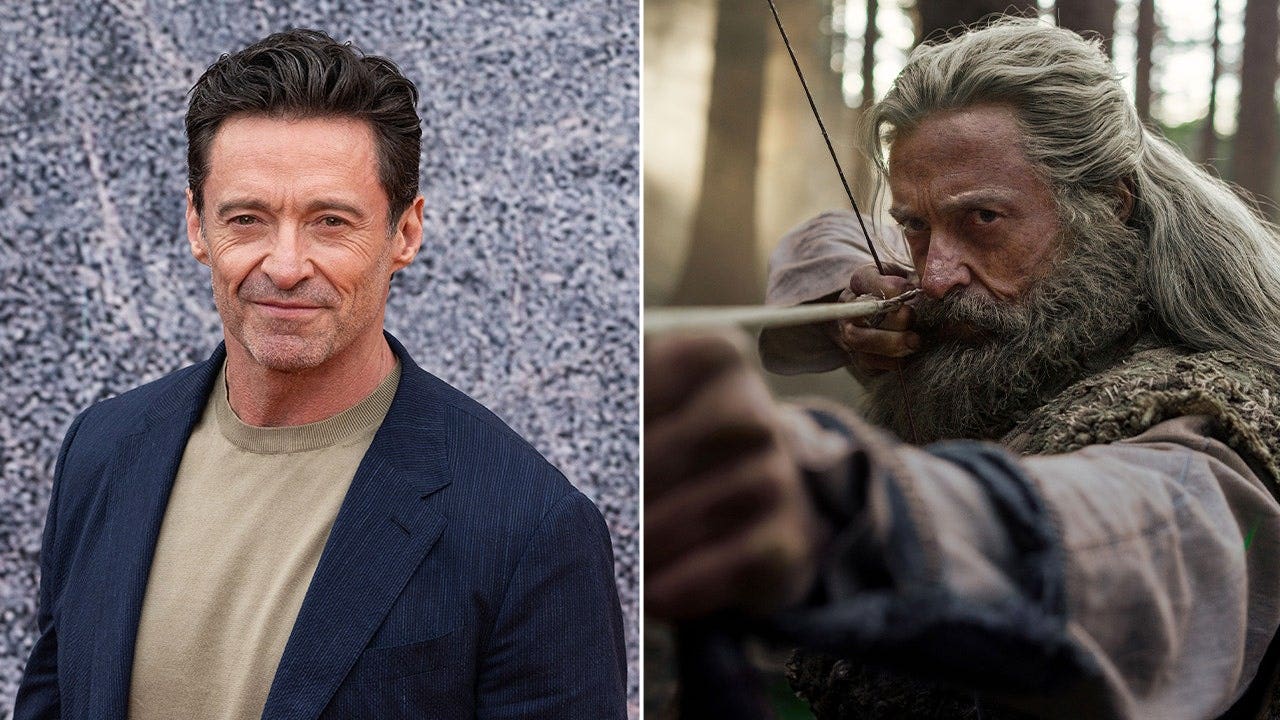
At the world premiere of The Death of Robin Hood, Hugh Jackman told Fox News Digital that the film's fight sequences were the most physically demanding of his career, in part because he wore a vest weighing about 200 pounds during production and rehearsals were exhaustive. Jackman said he intentionally avoided studying previous live‑action portrayals of Robin Hood and instead referenced the Disney animated version from his childhood. The film, written and directed by Michael Sarnoski and released by A24, is described as a darker, more grounded look at an aging Robin Hood haunted by violence and regret. Jodie Comer plays Sister Brigid, who nurses the wounded Robin and, according to Comer, guides him toward finding hope and his own goodness rather than serving as his savior. The cast also includes Bill Skarsgård, Murray Bartlett, Faith Delaney and others. The article is an entertainment interview and notes the film is now in theaters.
Biblical Reflection
This article is a promotional entertainment piece focused on craft and spectacle rather than deep critique. Its primary intent is to highlight an actor's preparation and to draw attention to a new film; it offers little evaluation of the film's theological or moral claims. The movie's themes — an aging warrior reckoning with violence and myth, and a caregiver urging inner transformation — intersect with Christian concerns about repentance, the cost of violence, and healing through community. Yet the film, as described, frames salvation more as personal recovery than theological redemption, which is a common secular narrative choice. Christians watching or engaging with this story can appreciate the honesty about consequences of violence and the humility of a character confronting his past, while remaining attentive to how popular culture reshapes ideas of heroism and salvation to fit modern psychological narratives. The article itself exhibits a celebratory, celebrity‑focused worldview and lacks critical distance about the ethical implications of depicting violence or how mythic stories are reinterpreted for contemporary audiences.
Scripture in context
This outlook does not yet include contextual Scripture citations. Do not treat a general biblical theme as an exegetical conclusion.
Faithful Response
No prescribed response is offered. Consider the reflection prompts below in your own church context.
Reflection and Discussion
- 1How does this film's portrayal of violence and 'self‑salvation' reflect broader cultural assumptions about redemption?
- 2Are we drawn to stories of rugged heroism at the expense of attending to victims and the real costs of violence?
- 3Does the interview's focus on physical endurance and spectacle distract us from asking whether the story promotes repentance, restoration, or merely romanticizes wrongdoing?
Sources
Reporting links are evidence inputs; Sanctuary News' biblical reflection is commentary.
This outlook currently relies on fewer than two linked sources. Broaden verification before teaching from it.
- 1.Original reportprimary