News Summary
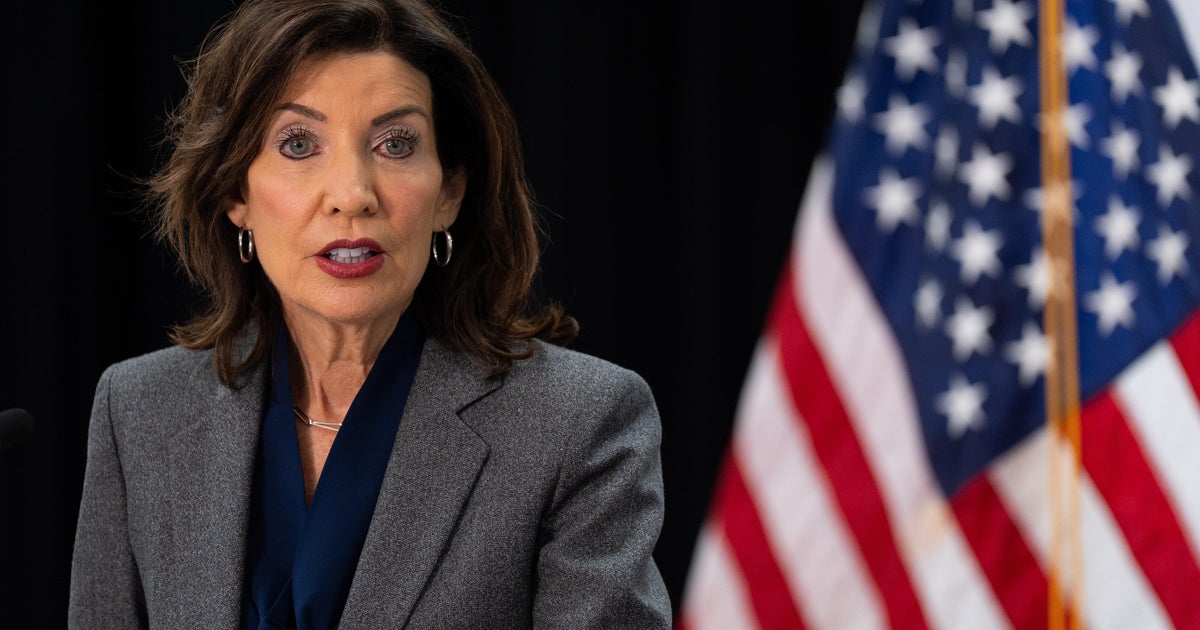
Facts reported: CBS News published a transcript of a July 19, 2026 Face the Nation interview with New York Governor Kathy Hochul. In the interview she said she signed an executive order pausing approvals for large-scale data centers in New York for one year; she described over 30 applications pending, assigned seven state agencies to manage review, plans to study water consumption, and seeks requirements that companies contribute to grid costs. She said the state will welcome AI under conditions and that protecting ratepayers and local benefits is the goal. She defended her record on union jobs and named projects (Micron, Gateway Tunnel). She also said federal election protections have been weakened, that she cannot rely on the federal government, expressed concern about ICE agents near polling places, and criticized former President Trump’s questioning of election results. Attributions and uncertainties: these are Governor Hochul’s statements as transcribed by CBS; the transcript does not include independent documentation of the executive order text, company responses, data on water/power use, evidence for the number of applicants, legal texts cited, or independent confirmation of federal actions she alleges.
Source and Framing Analysis
Source role: This is a verbatim transcript of a televised interview published by CBS News (primary reporting of an on-air conversation). The article functions as a primary source for what the governor said but does not attempt independent corroboration of factual claims she made. Missing voices: municipal officials whose negotiating capacity is discussed, energy and water regulators, the companies applying for data center permits, utility providers, independent technical experts on water and power use, union representatives speaking to job impacts, and federal officials on election-security resources. Incentives and framing: as an interview, the piece allows the governor to present policy justifications and political framing directly to viewers; Hochul has an incentive to explain and defend her policy change and to reassure constituents. Disputed claims and verification needs: the pause’s legal text and scope, counts of applicants, Micron job figures and timelines, measurable water and grid impacts, and the assertion that federal protections have been dismantled all require documentation from independent sources. The transcript is reliable for attribution (she said these things) but insufficient by itself to establish external facts.
Biblical Reflection
Hochul’s statements reflect a legitimate public-leadership tension: protecting common goods (reliable power, water, ratepayers, fair local benefits) while remaining open to economic opportunity. From a Christian pastoral perspective, the governor’s stated aims—care for neighbors, stewardship of shared resources, and protecting civic trust—resonate with biblical responsibilities to love neighbor and administer justice. At the same time, much of the interview is political framing and claims about federal behavior and economic impacts that require independent verification. Christians should welcome policies that seek equitable outcomes for communities and protection of common resources, but also insist on truthful, humble discourse: verify factual claims, listen to those most affected (municipal officials, utility regulators, workers, company representatives), and avoid treating opponents as morally illegitimate. The call is to pursue truth without fear, protect the vulnerable, and steward creation and civic institutions in ways that enable flourishing rather than deepen polarization.
Scripture in context
- 1Romans 13:1-7 — Paul’s letter to the Romans instructs early Christians on their relation to governing authorities, arguing that governments are instituted to promote order and punish wrongdoing; the passage functions within a larger argument about Christian ethics and social responsibilities in a pagan-dominated empire. — This passage prompts Christians to expect government to pursue the common good (safety, fair rule), but it does not remove the obligation to hold leaders accountable when policies harm neighbors or the vulnerable; it supports civic engagement that seeks truthful, just governance rather than partisan vilification.
Faithful Response
1) Pray for discernment about public claims and for leaders on all sides. 2) Seek reliable information: read official texts (the executive order), public utility filings, and statements by local officials and companies before forming a settled opinion. 3) Advocate for vulnerable neighbors—ratepayers, communities facing environmental strain, and workers—by asking local representatives for transparent impact studies. 4) Support election integrity in practical ways (volunteering as poll workers, supporting nonpartisan voter protection efforts) that protect access without inflaming partisan conflict.
Reflection and Discussion
- 1Which stakeholders are missing from the governor’s account, and why does their voice matter for judging the merits of the pause?
- 2How do claims about threats to elections or to ratepayers function rhetorically—do they clarify risk or escalate fear?
- 3What evidence would persuade you that the pause is necessary or harmful, and where could you find that evidence?
Sources
Reporting links are evidence inputs; Sanctuary News' biblical reflection is commentary.
This outlook currently relies on fewer than two linked sources. Broaden verification before teaching from it.
- 1.Transcript: New York Gov. Kathy Hochul on "Face the Nation with Margaret Brennan," July 19, 2026primary_reporting