News Summary
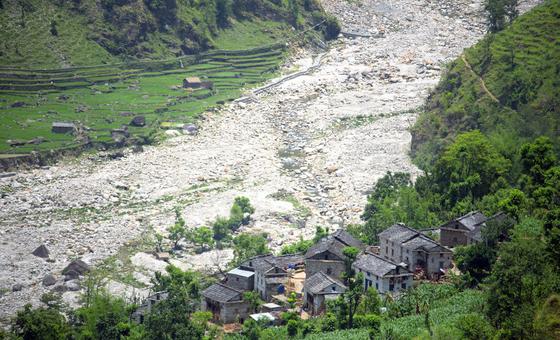
UN News reports that a floodwater surge struck towns and villages in the Himalayan region on Wednesday, affecting communities in Nepal and parts of China. The article states that "hundreds of people are still missing" and that aid teams are working to reach communities cut off by the disaster. The piece provides no named local sources, exact locations, precise casualty or displacement totals, or an explanation for the cause of the surge; the figure "hundreds missing" is presented without attribution to a specific agency or official.
Source and Framing Analysis
Source: UN News (single brief report excerpt). Contribution: the story centers human consequences (missing people, shock, communities cut off) and identifies Nepal and China as locations affected. Strengths: clear humanitarian frame that emphasizes urgency and the presence of relief efforts. Limitations and uncertainties: the report lacks named local or official sources, does not specify towns, counties, or provinces, gives no casualty or displacement breakdowns, and offers no cause (e.g., heavy monsoon rain, landslide, glacial lake outburst) or technical explanation. The emotional language ("shock and devastation") is appropriate to human suffering but increases the need for follow-up verification before policy, giving, or advocacy decisions. Because this cluster currently rests on a single brief UN News update, readers should treat numeric and operational claims as reported but unverified until corroborated by local authorities, technical assessments, or additional humanitarian agencies.
How sources covered this story
Sanctuary separately assesses reporting quality and alignment with Christian virtues. The virtues assessment considers truthfulness, dignity, compassion, justice, peacemaking, humility, and care for vulnerable people. It does not assess a publisher's faith or reward religious language.
Compare 1 reports
Reporting 72/100Virtues 78/100
- Distinctive contribution
- Specifically locates the event in Nepal and China, characterizes the event as a ‘floodwater surge’ that slammed into towns and villages, and emphasizes both high numbers missing and active aid teams reaching isolated communities.
- Framing
- Humanitarian/emergency framing that emphasizes shock, devastation, missing people, and ongoing rescue/relief efforts.
- Omissions or uncertainty
- No precise casualty or missing-person counts, no named sources or agencies, no specific locations or timelines beyond 'Wednesday', no detail on the scale or type of aid response, and no information on causes or damage assessments.
- Why these scores
- Concise, sober humanitarian reporting appropriate for a brief update. The language is measured and non-sensational. However, the excerpt is unspecific (uses 'reports' without attribution), provides no numeric detail or named sources/agencies, and therefore has limited independent informational depth. The passage centers compassion and concern for vulnerable people ('hundreds... missing', 'aid teams... reach communities cut off'), avoids dehumanizing language, and highlights efforts to help. It lacks explicit calls for justice or longer-term care but aligns well with truthfulness, dignity, and compassion in reporting.
Biblical Reflection
This event draws urgent attention to sudden human suffering and immediate relief needs. The Christian response combines compassionate action with careful truth-seeking: pray for victims and rescuers, support vetted relief efforts, and press for accurate information so assistance is directed where it is most needed. The story also highlights longer-term moral concerns: disasters often expose structural vulnerabilities (poverty, fragile infrastructure, limited early-warning systems). Christian care should include short-term relief and long-term advocacy for resilience and justice. Practically, churches are called to bring mercy, dignity, and practical help while resisting premature conclusions about causes or responsibility given current informational gaps.
Scripture in context
- 1Matthew 25:35-40 — In Matthew 25 Jesus teaches about serving 'the least of these' — framing acts of mercy as service to Christ within a larger discourse on final judgment and the ethics of the kingdom. — This passage calls Christians to see practical care—feeding, visiting, rescuing—as central to discipleship. Applied here, it supports immediate aid and sustained care for flood-affected neighbors as expressions of faithful love.
- 2Psalm 46 — A communal psalm that offers assurance of God's presence and refuge amid upheaval and turmoil. — Psalm 46 can provide pastoral consolation and honest lament, encouraging prayerful presence and steadying pastoral care for those who have lost homes or loved ones.
Faithful Response
Pray specifically for the missing, injured, and those cut off; intercede for rescuers, local leaders, and relief workers.
Seek and share verified information before mobilizing large-scale giving or advocacy; confirm partners' presence and capacity on the ground.
Give through established, accountable relief organizations or through trusted local church networks with operations in Nepal/China rather than responding to unverified appeals.
Balance immediate relief with commitments to long-term recovery: support reconstruction, trauma counseling, and efforts to strengthen early-warning and resilient infrastructure where appropriate.
Offer pastoral care and communal lament in congregations: name suffering honestly, resist simplistic theological answers for why disasters occur, and equip believers to sustain support over time.
Coordinate with denominational relief bodies or vetted NGOs for logistics, due diligence, and culturally informed aid that preserves recipients' dignity.
Reflection and Discussion
- 1Who are the most vulnerable neighbors in this disaster, and which local actors (churches, community groups, NGOs) are best placed to help them now?
- 2Given the reported but unsourced figure of 'hundreds missing,' how should we calibrate urgency and our giving so actions are generous but responsible?
- 3How can our congregation support both immediate rescue/relief and longer-term resilience measures without substituting our judgment for that of qualified local responders?
- 4What practices help our community grieve and pray without falling into voyeuristic consumption of others' suffering?
Sources
Reporting links are evidence inputs; Sanctuary News' biblical reflection is commentary.
This outlook currently relies on fewer than two linked sources. Broaden verification before teaching from it.
- 1.Shock and devastation remain, a day after Himalayan flood disasterofficial_document