News Summary
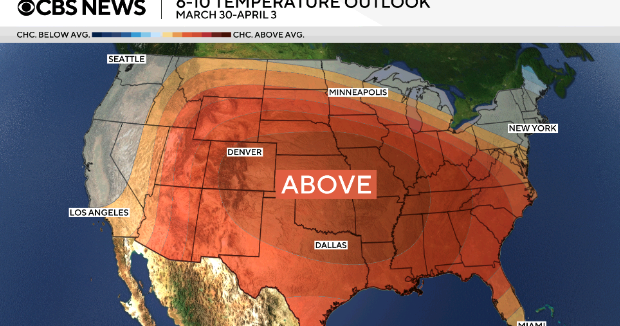
A heat wave that began in the western U.S. expanded into the central states on Wednesday, producing daily record high temperatures in more than a dozen states. The National Weather Service confirmed record or near-record highs in Arizona, California, Colorado, Idaho, Kansas, Montana, Nebraska, Nevada, Oklahoma, South Dakota, Texas, Utah and Wyoming. Denver recorded 88°F, its warmest March day on record; Phoenix reached 100°F (a daily record) and set a new record warm low of 68°F; Salt Lake City reached 83°F; other cities with daily records included Yuma, Las Vegas, Rawlins and Pocatello. Forecasters expect the heat wave to move eastward this week, possibly reaching the East Coast by Friday, and warned that more than 200 additional daily records could be broken through Sunday. Dry, warm, and windy conditions across a large swath of the central U.S. prompted numerous fire weather alerts and forecasts of a "critical threat" for fire weather in parts of the Rocky Mountains and Southern Plains, with expected wind gusts up to 40–50 mph and relative humidity dropping as low as about 4% in some areas.
Biblical Reflection
What the report offers: factual, source-driven coverage based on National Weather Service and NOAA data; it focuses on observed records, short-term forecasts, and immediate hazards (fire risk, wind, low humidity). The article is largely straightforward and narrowly scoped — it reports measurements and warnings without advancing explicit policy prescriptions. What it does not do: place these single-day records in long-term climate context or analyze root causes; it also does not address social responses beyond issuing hazard warnings. From a Christian perspective, several truths and responsibilities emerge. Truthfulness: the piece cites authoritative meteorological sources and sticks to observable data — readers can rely on its immediacy while remembering it is a snapshot, not a long-term analysis. Stewardship and care: heat waves and elevated fire risk put vulnerable people (elderly, outdoor workers, rural communities) and creation at risk; Scripture calls Christians to protect neighbors and to steward creation responsibly. Prudence and preparedness: the warnings about fire weather are practical; Proverbs-style prudence calls us to heed such alerts, support emergency responders, and help those with fewer resources prepare. Avoiding fear and blame: while it's reasonable to be concerned about extreme weather, Christians should avoid fatalism or partisan simplifications. The article's omission of long-term trends is a gap readers should notice — drawing larger conclusions about climate requires more data and careful interpretation. In short: accept the factual report, respond with compassion and prudence, and seek fuller context before making sweeping causal claims.
Scripture in context
This outlook does not yet include contextual Scripture citations. Do not treat a general biblical theme as an exegetical conclusion.
Faithful Response
No prescribed response is offered. Consider the reflection prompts below in your own church context.
Reflection and Discussion
- 1Does the article give enough context to connect these records to longer-term climate trends, or does it present short-term data without that analysis?
- 2Whom do these immediate hazards (extreme heat, fire risk) most affect in your community, and what systems (public, church, neighbor networks) should be alerted or strengthened?
- 3Is the reporting framed to inform readiness and care, or does it risk encouraging sensational reactions without practical guidance?
Sources
Reporting links are evidence inputs; Sanctuary News' biblical reflection is commentary.
This outlook currently relies on fewer than two linked sources. Broaden verification before teaching from it.
- 1.Original reportprimary