News Summary
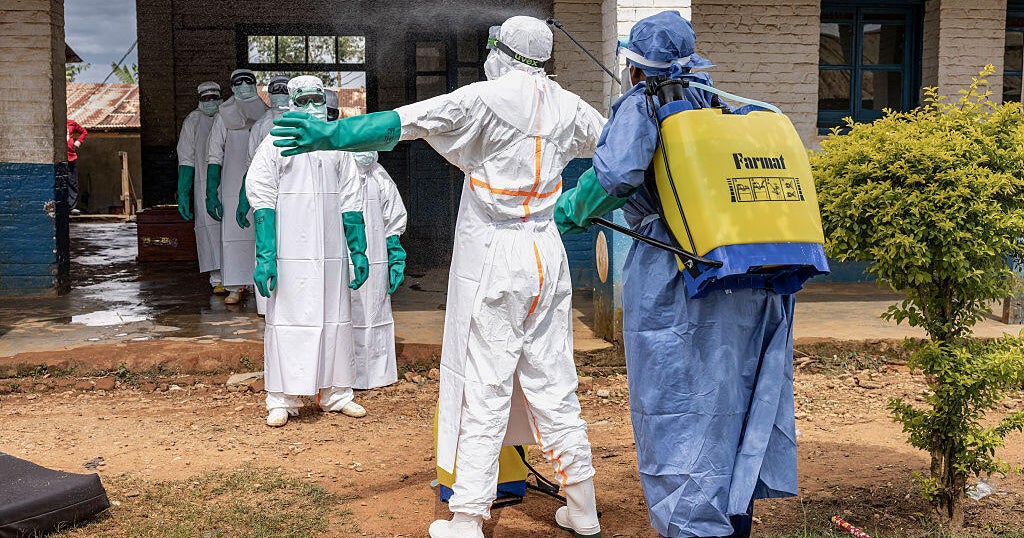
The article reports that recent infectious-disease events — a hantavirus cluster aboard the expedition cruise ship MV Hondius and an Ebola outbreak in the Democratic Republic of Congo and Uganda involving the Bundibugyo strain — have intensified public and political scrutiny of the Trump administration's reductions in federal public health staffing and funding. The MV Hondius cluster infected 11 passengers (three deaths) and involves the Andes hantavirus, which can spread person-to-person. The Ebola outbreak has more than 1,000 suspected cases, prompted WHO concern about its scale and speed, and led to evacuation of seven Americans to Germany; no Ebola cases have been confirmed in the U.S. The article describes large layoffs at the CDC and FDA and cancellation of federal contracts and grants as part of initiatives led by Elon Musk and the Department of Government Efficiency (DOGE), including near-$500 million cancellations of mRNA vaccine development contracts. Democrats, infectious disease specialists, and humanitarian groups say cuts to USAID and U.S. public-health programs reduced surveillance and preparedness in vulnerable regions and hampered outbreak response. Senate Democrats and public-health leaders have called for rehiring staff, restoring funding, and rejoining the WHO; some have filed or supported lawsuits related to dismantling USAID. Federal officials defended the U.S. response, saying agencies are coordinating, providing testing and resources, quarantining exposed passengers, and that claims that the cuts imperil responses are inaccurate. The article notes differences between the current response and past U.S. deployments during the 2014–15 West Africa Ebola outbreak and records criticism about timing of U.S. public communications on the hantavirus cluster.
Biblical Reflection
The article presents a contest between public-health experts and political leaders who say recent agency cuts weakened surveillance and response capacity, and administration officials who say the federal response remains coordinated and effective. Christians should weigh both the factual claims and the framing. Factually, layoffs, canceled contracts, and reduced foreign-aid programming are documented policy changes that plausibly reduce surge capacity and international surveillance — capacities that protect both neighbors abroad and communities at home. At the same time, linking policy changes directly to any single outbreak requires careful evidence; outbreaks arise for many reasons, and assessing causal chains needs measured analysis rather than partisan certainty. The article's sources lean heavily on critics of the administration, with officials’ rebuttals summarized but less deeply interrogated; that imbalance can shape readers’ impressions. From a Christian perspective, stewardship, humility, and neighbor-love argue for policies that protect the vulnerable, fund early detection, and sustain international cooperation (such as WHO partnerships) so that suffering is minimized. Truth-seeking requires resisting partisan exaggeration, asking for transparent data about capacity and outcomes, and advocating for wise preparedness that values human life over short-term cost-cutting. Mercy and courage call the church to support healthcare workers and vulnerable communities affected by outbreaks and to urge leaders toward cooperative, evidence-based responses rather than politicized retreat.
Scripture in context
This outlook does not yet include contextual Scripture citations. Do not treat a general biblical theme as an exegetical conclusion.
Faithful Response
No prescribed response is offered. Consider the reflection prompts below in your own church context.
Reflection and Discussion
- 1Whose voices are most prominent in this coverage — public-health experts, political actors, or agency officials — and how does that shaping affect what conclusions feel convincing?
- 2What specific evidence would show that funding and staffing changes materially changed outbreak outcomes, and are those data available or being sought?
- 3How does our obligation to love neighbors (locally and globally) shape priorities for funding public health, diplomacy, and emergency response?
Sources
Reporting links are evidence inputs; Sanctuary News' biblical reflection is commentary.
This outlook currently relies on fewer than two linked sources. Broaden verification before teaching from it.
- 1.Original reportprimary