News Summary
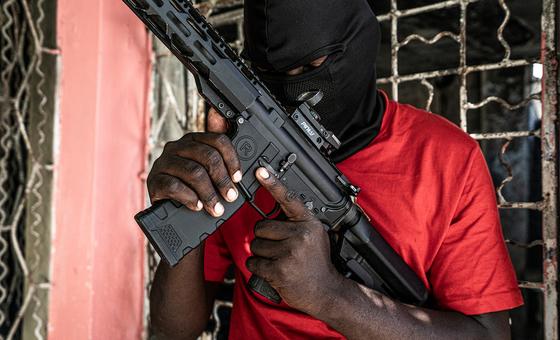
UN News reports that the Haitian government has stepped up operations against gangs in Port‑au‑Prince while violent attacks spread to other areas. The article describes an assault on the farming community of Kenscoff that began late Sunday, saying armed men set homes ablaze and attacked residents; by the following day bodies were visible in the streets and survivors were searching for missing relatives. The report attributes these claims to a United Nations source but does not provide casualty totals, named perpetrators, or detailed official statements about the capital operations.
Source and Framing Analysis
This update relies on a single UN News report. The supplied passages are concise and sober in tone and give a specific incident (Kenscoff) and actions (homes set on fire, residents attacked). However, the report as supplied lacks attribution to named witnesses or Haitian authorities, offers no casualty counts or perpetrator identification beyond 'armed men,' and provides limited operational detail about the government's campaign in the capital. Those omissions limit corroboration and leave key contextual questions unanswered. The article does not appear sensationalist; its main framing uncertainty is the narrow evidentiary base (one source) and the absence of details about civilian protection, motives, and response plans.
How sources covered this story
Sanctuary separately assesses reporting quality and alignment with Christian virtues. The virtues assessment considers truthfulness, dignity, compassion, justice, peacemaking, humility, and care for vulnerable people. It does not assess a publisher's faith or reward religious language.
Compare 1 reports
Rank 1
UN News: Haiti ramps up the fight against gangs in the capital, but violence spreads elsewhereReporting 74/100Virtues 75/100
- Distinctive contribution
- Identifies Kenscoff as the site of killings that began late Sunday and describes attackers setting homes on fire and assaulting residents, providing a specific incident and modus operandi not implied by the headline alone.
- Framing
- Concise, direct, and factual in tone. Uses terms like 'killings' and 'armed men' without sensationalist language; no explicit attribution or casualty figures are provided in the excerpt.
- Omissions or uncertainty
- No attribution to witnesses, authorities, or organizations; no casualty or injury counts; attackers' identity or affiliation (e.g., gangs) is not specified; no information on motive, security response, or timing beyond 'late Sunday'.
- Why these scores
- The sentence is clear and informative for its length and purpose, conveying a specific violent incident and actions taken by attackers. It lacks attribution, quantitative details (casualties), and contextual follow-up in the supplied excerpt, which limits full assessment but does not contradict standards of accurate concise reporting. The language is non-dehumanizing and factual, focusing on harm to civilians and property. While it does not include explicit compassion language or humanitarian detail, it responsibly reports harm without sensationalism and thus aligns reasonably well with virtues of truthfulness and respect for human dignity.
Biblical Reflection
This story highlights the human cost of lawlessness and the limits of security measures that focus on one area while violence spills into others. Christians should respond with clear‑eyed compassion: grieve for victims, seek truth about who is responsible, and press for protection of vulnerable civilians. Avoid asserting certainties the reporting does not supply. At the same time, the call to be peacemakers and to care for neighbors in danger is immediate: advocate for humanitarian relief, support trustworthy local partners, and pray for justice and restoration for those harmed.
Scripture in context
- 1Matthew 5:9 — Part of the Sermon on the Mount where Jesus names peacemakers as blessed. — Calls Christians to pursue peace and protection for the vulnerable amid political violence; urges seeking reconciliation and justice rather than rejoicing in others' defeat.
- 2Micah 6:8 (summary) — Prophetic instruction about doing justice, loving mercy, and walking humbly with God. — Frames Christian responsibilities here: advocate for just protection of civilians, practice mercy in relief and accompaniment, and act with humility about what we know and can achieve.
Faithful Response
Pray with named petitions for the injured, the bereaved, the missing, displaced families, humanitarian workers, and Haitian leaders tasked with civilian protection.
Support reputable humanitarian and church partners who can deliver shelter, medical care, family‑tracing, and trauma‑informed pastoral care to affected communities.
Avoid amplifying unverified claims; rely on corroborated reporting and local partner input before public advocacy or fundraising appeals.
Advocate to civic authorities and international bodies for measures that prioritize civilian safety, access for aid organizations, and accountability for perpetrators.
Prepare congregational pastoral responses (listening teams, practical assistance, welcome for displaced persons) informed by cultural sensitivity and trauma care best practices.
Reflection and Discussion
- 1How should a disciple balance prayerful lament with concrete acts of justice and protection for those suffering violence?
- 2In situations where government capacity is limited, what responsibilities do Christians and churches have toward neighbors who lack security and basic needs?
- 3What theological resources (lament, prophetic critique, peacemaking) help us hold both truth and mercy when responding to reports of attacks?
Sources
Reporting links are evidence inputs; Sanctuary News' biblical reflection is commentary.
This outlook currently relies on fewer than two linked sources. Broaden verification before teaching from it.
- 1.Haiti ramps up the fight against gangs in the capital, but violence spreads elsewhereofficial_document