News Summary
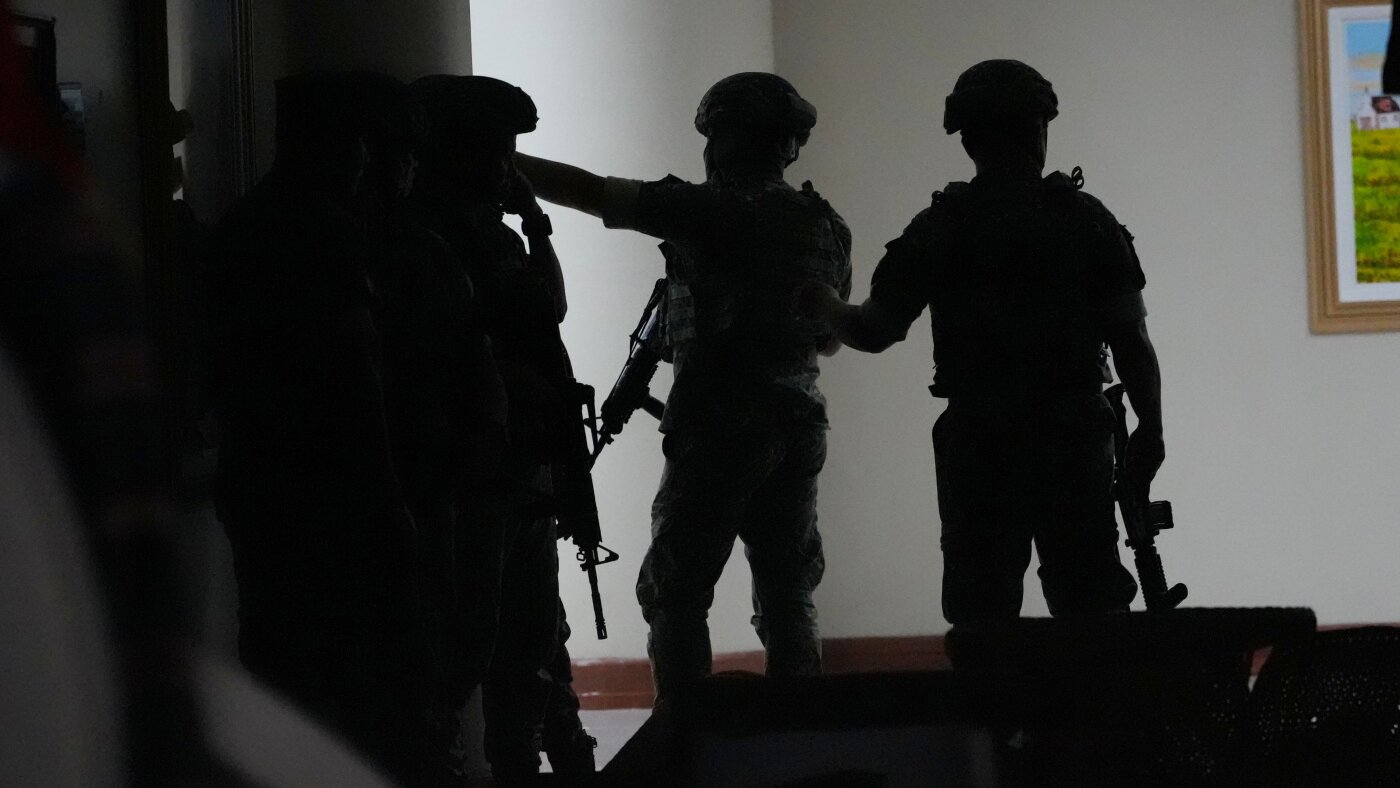
On the evening of May 13 in Pasay, Philippines, witnesses and an Associated Press journalist reported a burst of gunfire inside the Philippine Senate building as authorities sought to arrest Senator Ronald dela Rosa. Dela Rosa, a former national police chief under President Rodrigo Duterte, is the subject of an international criminal court (ICC) arrest warrant unsealed on May 13; the warrant, originally issued in November, alleges the crime against humanity of murder of "no less than 32 persons" between July 2016 and April 2018. Dela Rosa has denied condoning extrajudicial killings and said he will pursue legal remedies, preferring Philippine courts. He had sought refuge in the Senate after National Bureau of Investigation agents attempted to arrest him earlier, and allied senators and Senate security prevented immediate removal. Senate President Alan Cayetano acknowledged reports of gunshots but provided few details. Hundreds of police officers were deployed outside the Senate to maintain order. Some senators proposed a resolution urging dela Rosa to surrender; others opposed it. The ICC says it retains jurisdiction over alleged crimes committed while the Philippines was a member, despite Manila's 2019 withdrawal. The International Criminal Court had no immediate comment on the May 13 events.
Biblical Reflection
This episode raises two overlapping moral and spiritual questions: the pursuit of justice for alleged mass abuses and the political and personal resistance to that pursuit. The article reports a high-stakes clash between state and international legal action and the protective instincts of political allies. As Christians, we should affirm the biblical imperative for justice and for protecting the vulnerable (see Proverbs, Micah, and the prophets), while also recognizing the Biblical teaching about respecting lawful authority and avoiding violence. The coverage highlights competing worldviews: one that emphasizes national sovereignty, political loyalty, and distrust of international institutions; another that emphasizes universal human dignity, accountability, and transnational mechanisms when domestic remedies are seen as insufficient. Media accounts can amplify emotion by focusing on dramatic moments (gunfire, crowds, pleas) — which are real — but they may understate longer-term legal processes, evidentiary standards, and the rights of the accused. Spiritually, Christians are called to seek truth, lament wrongdoing, and pursue healed and impartial justice rather than tribal protection. Where leaders use fear, nationalist rhetoric, or the spectacle of force to deflect accountability, Christians should test those moves against Scripture and the clear command to defend the weak and call for justice (Isaiah 1:17; Psalm 82:3–4). At the same time, we must guard against simple certainty about complex legal matters: allegations require due process, and the impulse to either cheer or reflexively reject international courts should be measured against both evidence and a commitment to moral integrity.
Scripture in context
This outlook does not yet include contextual Scripture citations. Do not treat a general biblical theme as an exegetical conclusion.
Faithful Response
No prescribed response is offered. Consider the reflection prompts below in your own church context.
Reflection and Discussion
- 1Do headlines and dramatic images (gunfire, crowds, pleas) shape your impression of guilt or innocence before the legal process runs its course, and how should that affect a Christian's judgment?
- 2Where do appeals to national sovereignty or political loyalty become a cover for avoiding accountability, and how does Scripture guide us when domestic systems appear unwilling or unable to provide justice?
- 3Are there signs in the coverage of moral language, emotion, or tribal rhetoric being used to protect powerful figures — and how should Christians weigh those signs against the biblical call to defend the vulnerable?
Sources
Reporting links are evidence inputs; Sanctuary News' biblical reflection is commentary.
This outlook currently relies on fewer than two linked sources. Broaden verification before teaching from it.
- 1.Original reportprimary