News Summary
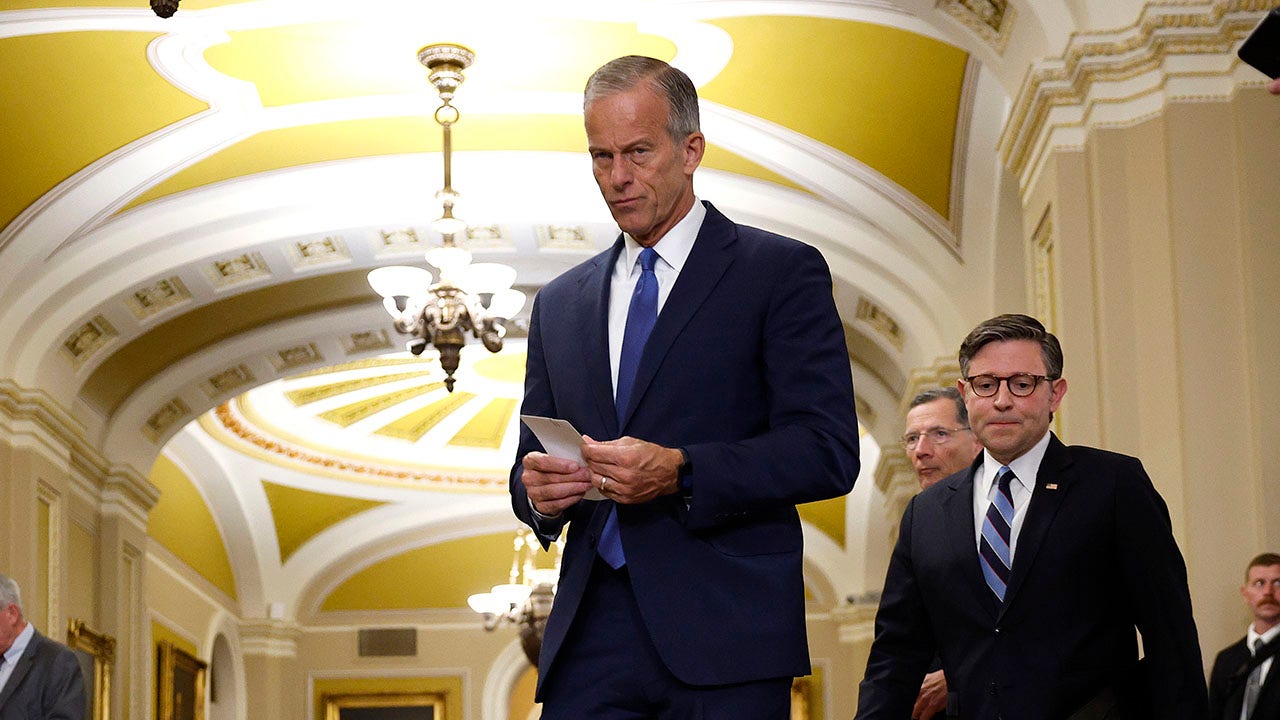
The article details ongoing political negotiations to end a partial U.S. government shutdown affecting 78% of federal operations. The shutdown persists due to disagreements primarily over funding and reforms for ICE (Immigration and Customs Enforcement). A Senate-passed spending bill funds most of the government through September 30 but only temporarily funds DHS (Department of Homeland Security), pending ICE reforms. House Democrats are divided: moderates want to reopen the government, while progressives demand concrete ICE reforms before supporting any funding package. The Republican majority in the House is razor-thin, adding to the procedural and political challenges in passing the necessary rule and subsequent bill. If an agreement is not reached by Friday the 13th, DHS will lose funding, impacting agencies like FEMA and TSA. Both parties face internal divisions, with some bipartisan agreement on the need for ICE reform. Former President Trump and current congressional leaders express hope for a bipartisan solution to end the 'long, pointless and destructive shutdown.'
Biblical Reflection
From a scriptural perspective, the protracted government shutdown and partisan maneuvering reflect a struggle to prioritize the common good over political or ideological entrenchments. Scripture repeatedly calls leaders to act with justice, compassion, and humility (Micah 6:8; Proverbs 29:2). The shutdown's ripple effects—on public safety, vulnerable communities, and government workers—underscore the biblical imperative to seek peace and serve others (1 Timothy 2:1-2; Philippians 2:3-4). The debate over ICE and immigration policy further challenges leaders to balance justice with mercy, remembering that God commands care for the foreigner and the oppressed (Leviticus 19:33-34; Matthew 25:35). The procedural wrangling, focus on party advantage, and sometimes dismissive attitudes toward cooperation expose a deficit in humility and servant leadership. Christians are reminded to pray for those in authority and to advocate for governance that reflects righteousness, compassion, and a willingness to listen and seek common ground. The scriptural temperature here is cool: while some lawmakers show willingness to compromise, the overall tone reflects more focus on political survival than on serving people with Christ-like love and integrity.
Scripture in context
This outlook does not yet include contextual Scripture citations. Do not treat a general biblical theme as an exegetical conclusion.
Faithful Response
No prescribed response is offered. Consider the reflection prompts below in your own church context.
Reflection and Discussion
- 1How can Christians encourage political leaders to prioritize justice, mercy, and humility in times of crisis?
- 2What does it look like to balance justice and compassion in the context of immigration and government policy?
- 3In what ways might you pray for wisdom and unity among those in authority during this season of political division?
Sources
Reporting links are evidence inputs; Sanctuary News' biblical reflection is commentary.
This outlook currently relies on fewer than two linked sources. Broaden verification before teaching from it.
- 1.Original reportprimary