News Summary
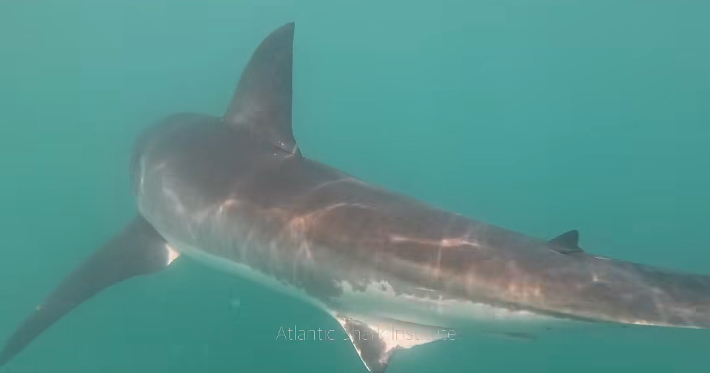
Researchers from the Atlantic Shark Institute and Mystic Aquarium recorded underwater footage of an approximately 8-foot great white shark feeding on the carcass of an estimated 40-foot humpback whale in waters near Block Island, Rhode Island. The searchers had been surveying roughly 50 square miles when they located the floating dead whale and the shark; the animal rescue manager collected samples from the carcass for research. The nonprofit said the shark appeared healthy and solitary while feeding. Days later the whale washed ashore on Block Island’s Crescent Beach and bore numerous shark bite marks. The article notes that great white sightings are uncommon in the region except when whale carcasses are present and that another great white was recently observed feeding on a whale carcass nearby, though it is unclear whether multiple sharks or the same carcass were involved.
Biblical Reflection
The report is straightforward, grounded in observation and local scientific activity, and contains little editorializing. Its primary worldview is scientific-naturalistic—documenting a marine scavenging event and the research opportunity it presented. From a Christian pastoral perspective, the footage reminds us of two truths: God’s created order includes predator and scavenger relationships that can appear harsh to human sensibilities, and thoughtful curiosity and stewardship—shown by the researchers collecting samples—are proper human responses. Be wary of treating such moments purely as spectacle or fodder for fear; instead let them prompt care for marine ecosystems, support for legitimate research, and compassion for communities affected by washed-ashore carcasses. The article does not make causal claims about why the whale died, nor does it inflate risk to people, so its factual claims are modest and credible.
Scripture in context
This outlook does not yet include contextual Scripture citations. Do not treat a general biblical theme as an exegetical conclusion.
Faithful Response
No prescribed response is offered. Consider the reflection prompts below in your own church context.
Reflection and Discussion
- 1Am I inclined to view wildlife events as spectacle, or as occasions to learn and care for God’s creation?
- 2How does media attention on dramatic animal encounters shape our fears about nature rather than our responsibility toward it?
- 3What practical support can Christians offer to scientific and community efforts that study and respond to coastal ecological events?
Sources
Reporting links are evidence inputs; Sanctuary News' biblical reflection is commentary.
This outlook currently relies on fewer than two linked sources. Broaden verification before teaching from it.
- 1.Original reportprimary