News Summary
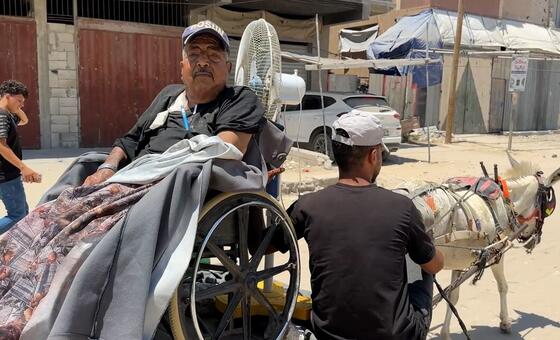
Reported facts: UN News describes Palestinian dialysis patient Fathi Hajji making a thrice-weekly, pre-dawn journey by donkey cart to Nasser Hospital in Khan Younis in the Gaza Strip. Attributed claims: the report frames this as indicative of grueling journeys faced by dialysis patients amid war-related disruption. Uncertainty: the article does not provide numbers of affected patients, details on why motorized transport is unavailable, hospital capacity, or whether alternative arrangements exist.
Source and Framing Analysis
The piece is a short human-interest report from UN News focusing on one named individual's experience to illustrate wider hardship. That human focus conveys urgency and moral gravity but introduces uncertainty about scale and causal detail. Important contextual data—how many patients are affected, the status of ambulances, fuel and road conditions, and the hospital's service capacity—are not provided, limiting how far the anecdote can be generalized without further sources.
Biblical Reflection
This brief report highlights a painful human consequence of conflict: people with life-sustaining medical needs forced into dangerous or degrading travel because regular transport and health infrastructure are unavailable. Seen through a Christian lens, the story calls attention to the vulnerable—those who cannot meet their most basic needs without external help—and invites compassion, advocacy for safe medical access, and practical care.
The article, while short, points to systemic failures rather than isolated misfortune: when hospitals, roads, fuel, and ambulatory services are disrupted, chronic patients become acutely at risk. Christians are reminded both of the call to tend the sick and to pursue justice: prayer and direct aid for individuals must be coupled with advocating for humanitarian corridors, protection of medical services, and policies that preserve human dignity during conflict.
At the same time, readers should note the limits of the report: it offers one vivid example but does not quantify how many patients face this exact journey, the hospital's capacity, or the specific obstacles to motorized transport. Our pastoral response should therefore combine compassion with careful discernment—seeking further information from relief agencies and supporting credible humanitarian actors while resisting the temptation to simplify complex political causes into single-person narratives.
Scripture in context
- 1Matthew 25:31-46 (Sheep and Goats) — A teaching of Jesus about final judgment in which care for 'the least of these'—feeding the hungry, visiting the sick, and welcoming the stranger—is treated as service to Christ himself within a pastoral and ethical exhortation to mercy and justice. — The passage emphasizes that responding to visible human need is both a moral obligation and a spiritual duty; it frames practical care for vulnerable patients as worshipful service, prompting Christians to offer direct aid and to advocate for protections that enable care.
- 2Luke 10:25-37 (Good Samaritan) — A parable where Jesus challenges listeners to recognize neighborly love beyond ethnic and religious boundaries, highlighting practical, costly help to a wounded stranger. — The story calls Christians to cross social and political divides to provide urgent, hands-on help to those in need—suggesting that care for dialysis patients in conflict settings should be immediate, compassionate, and practically resourceful.
Faithful Response
Pray regularly for patients, medical staff, and humanitarian workers in Gaza and for political leaders to protect medical access.
Support reputable humanitarian organizations providing medical aid, ambulance services, fuel, or patient transport in the region.
Advocate with elected leaders, church networks, and relief coalitions for unhindered humanitarian corridors and protection of medical infrastructure in conflict zones.
Educate your congregation or small group about the humanitarian needs in Gaza and encourage practical giving and informed advocacy.
Reflection and Discussion
- 1Are we responding primarily with sympathy, or are we also asking how systems and policies can be changed to protect vulnerable lives?
- 2How does Scripture shape our priorities when deciding between short-term aid and long-term advocacy in conflict-affected regions?
Sources
Reporting links are evidence inputs; Sanctuary News' biblical reflection is commentary.
This outlook currently relies on fewer than two linked sources. Broaden verification before teaching from it.
- 1.Gaza: Dialysis patients face grueling hospital journey by donkey cartofficial_document