News Summary
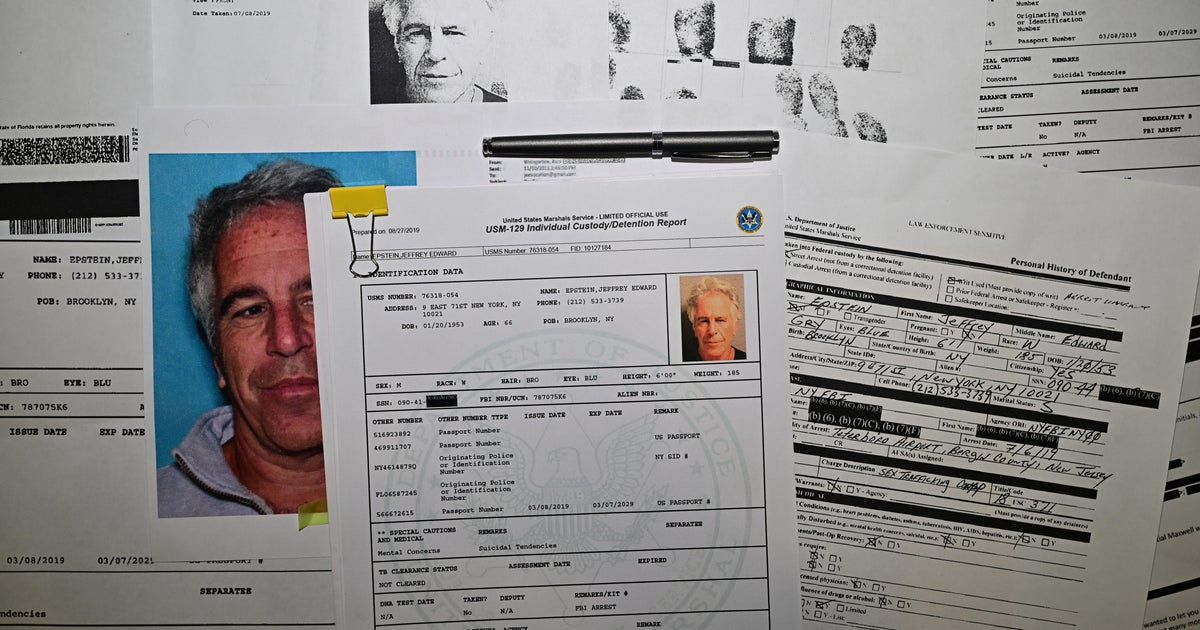
The DOJ released more than three million pages under the Epstein Files Transparency Act; the department says it collected over six million pages but released every document required by the law and that the unreleased material consists of duplicates, unrelated records, or privileged material. CBS News reviewed the archive and identified numerous apparent gaps and redactions. Examples include redactions of prominent names and images (some later un-redacted after inquiry), heavily redacted inbox screenshots from an early Epstein email account, the absence of roughly 20,000 messages from an older Epstein email account that have been archived elsewhere, missing FBI 302 interview records referenced in DOJ indexes, absent or hard-to-link attachments (including a gun-inventory file whose serial numbers do not appear in the release), and missing Signal messages and certain video footage. The Epstein Files Transparency Act requires redaction justifications to be published and submitted to Congress; CBS reports the DOJ provided only a general statement rather than itemized explanations. Members of Congress have had limited review access and some have criticized the process; the Government Accountability Office has opened an inquiry into redactions at the request of lawmakers. Other federal agencies (DEA, ICE, State, Treasury, intelligence agencies) are not covered by the law and may hold additional records not released. Independent legal action (e.g., by journalist Katie Phang) seeks to compel more disclosure, and House Oversight has asked the DOJ official responsible for redactions to testify.
Biblical Reflection
This reporting raises legitimate questions about institutional transparency and the sufficiency of public disclosure in a case involving grave harm to vulnerable people. From a Christian perspective, the pursuit of truth and justice matters both for victims and for the health of public life. The article documents factual gaps and procedural difficulties—missing records, unexplained redactions, and the statutory requirement for itemized justifications not being publicly met—so concern about incomplete disclosure is reasonable. At the same time, the reporting does not prove deliberate suppression of evidence; some gaps may reflect legitimate legal privilege, investigative limitations, document duplication, or materials held by agencies outside the law’s reach. Christians should resist cheap cynicism or conspiratorial certainty while insisting on accountability and compassionate attention to survivors. That means supporting careful oversight, proper legal remedies, and patient, evidence-driven inquiry rather than rumor. It also means guarding against treating famous names as ends in themselves; the primary moral focus should be on truth, protection of victims, and the integrity of institutions charged with justice. Pray for transparency balanced with fairness, for investigators to act conscientiously, and for the vulnerable whose stories depend on an honest public record.
Scripture in context
This outlook does not yet include contextual Scripture citations. Do not treat a general biblical theme as an exegetical conclusion.
Faithful Response
No prescribed response is offered. Consider the reflection prompts below in your own church context.
Reflection and Discussion
- 1Am I presuming malicious intent when gaps exist, or am I weighing plausible legal and practical reasons for redactions?
- 2Whose welfare is centered by the way we discuss these files—famous figures, institutional reputation, or survivors seeking justice?
- 3How does secrecy in serious criminal inquiries affect public trust in institutions meant to protect the vulnerable?
Sources
Reporting links are evidence inputs; Sanctuary News' biblical reflection is commentary.
This outlook currently relies on fewer than two linked sources. Broaden verification before teaching from it.
- 1.Original reportprimary