News Summary
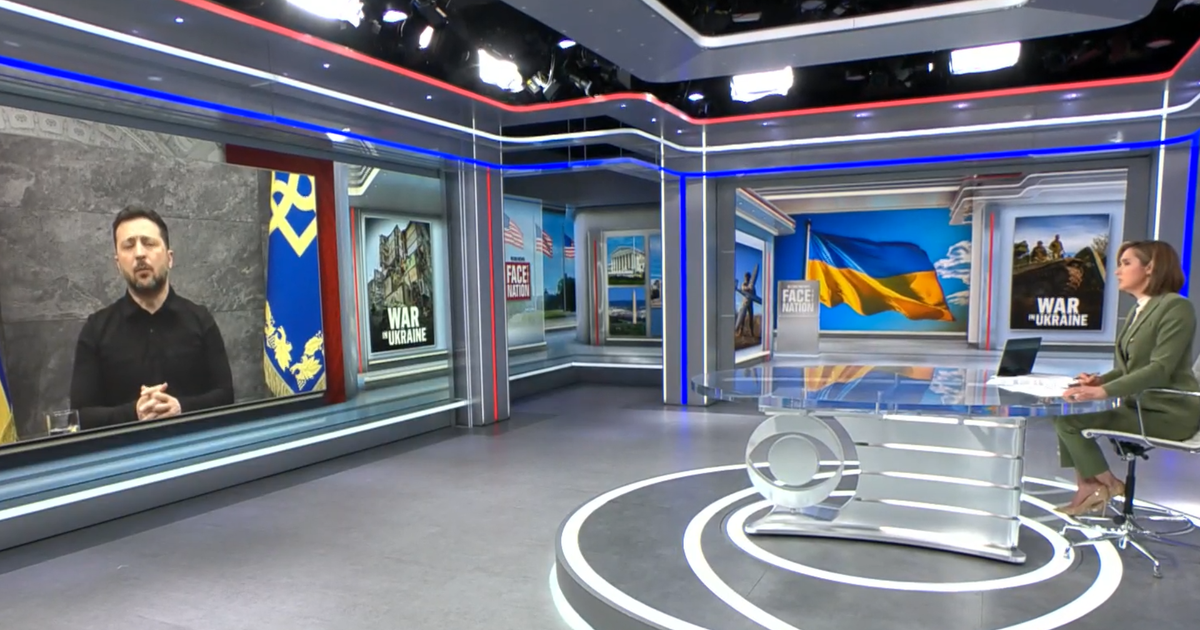
CBS's Face the Nation (May 31, 2026) featured interviews and segments with Ukrainian President Volodymyr Zelenskyy, Senator Chris Murphy, former Vice President Mike Pence, and World Food Programme Executive Director Cindy McCain. Key factual points:
- Zelenskyy warned Ukraine expects large-scale Russian attacks using drones, cruise missiles and ballistic missiles; he cited a prior attack involving roughly 600 Iranian-made Shahed drones and about 30–35 ballistic missiles. He emphasized Ukraine's shortage of anti-ballistic interceptors, requested increased U.S. production and transfers, described ongoing intelligence-sharing with U.S. and European partners, and said Ukraine can destroy many drones but lacks sufficient anti-ballistic systems. Zelenskyy said he is willing to negotiate with Russia if pressure and sanctions make talks possible, and discussed pending drone-technology cooperation with the United States and other partners.
- The program reported mediators are awaiting Iran's response to further U.S. edits of a proposed truce framework.
- Senator Chris Murphy said he doubts bipartisan support to reallocate U.S. air-defense systems to Ukraine, criticized President Trump for withholding aid and blocking sanctions that would tighten pressure on Russia, argued the U.S. war with Iran has harmed U.S. interests and strengthened Russia, and discussed themes from his new book on civic and spiritual malaise in the U.S. He also commented on recent political character controversies and the Democratic Party's messaging.
- Former Vice President Mike Pence argued the Republican Party should return to a traditional conservative agenda, criticized elements of the populist right and some of President Trump's governing choices, defended certain Trump-era policies, and condemned proposals he viewed as excusing or whitewashing January 6-related violence. He spoke on gerrymandering, primary dynamics, and concerns about political character in GOP races.
- Cindy McCain, leaving her post at the WFP, warned of multiple famine risks, described an Ebola emergency in the Democratic Republic of Congo, explained that Middle East conflict and disrupted shipping (including Strait of Hormuz issues) have lengthened delivery times for food and supplies, stressed the danger to aid workers, and called for increased donor support while noting the effects of U.S. policy changes such as the dismantling of USAID on humanitarian capacity.
- The program also noted a federal judge ordered that the Kennedy Center remove President Trump's name and blocked the board's planned temporary closure for renovation; President Trump said he canceled his involvement.
Biblical Reflection
This episode brings together urgent realities: civilians and children bear the immediate cost of geopolitical conflict, and leaders appeal for matériel, political will, and humanitarian access. From a Christian perspective, the core moral demands are clear — truth, compassion, and the protection of the vulnerable must guide our response. The interviews reveal competing priorities (military assistance, domestic politics, and humanitarian relief) and political narratives that can obscure the human cost. Christians should test political claims for accuracy, resist tribal reflexes that make policy a matter of identity instead of neighbor-love, and press for policies that alleviate suffering while seeking just and durable peace. Be wary of narratives that reduce complex crises to single causes or partisan blame; likewise, be cautious of absolutist remedies that ignore the real trade-offs leaders describe (limited stockpiles, stretched supply chains). At the same time, the biblical imperative to care for the hungry and protect the innocent calls the church to advocate for more robust humanitarian access, to support trustworthy relief organizations, and to pray and work for de-escalation and reconciliation. Finally, this broadcast highlights how public discourse often privileges political positioning over pastoral concern — Christians are called to bring mercy and truth into that conversation, urging leaders to safeguard civilians and to steward resources wisely.
Scripture in context
This outlook does not yet include contextual Scripture citations. Do not treat a general biblical theme as an exegetical conclusion.
Faithful Response
No prescribed response is offered. Consider the reflection prompts below in your own church context.
Reflection and Discussion
- 1How does my political loyalty shape which human needs I notice or ignore when I read international news?
- 2Am I treating complex security and humanitarian decisions as moral absolutes, or am I willing to weigh trade-offs with care, humility, and compassion?
- 3Where can my church or community practically support relief efforts that protect children and noncombatants regardless of which side they are on?
Sources
Reporting links are evidence inputs; Sanctuary News' biblical reflection is commentary.
This outlook currently relies on fewer than two linked sources. Broaden verification before teaching from it.
- 1.Original reportprimary