News Summary
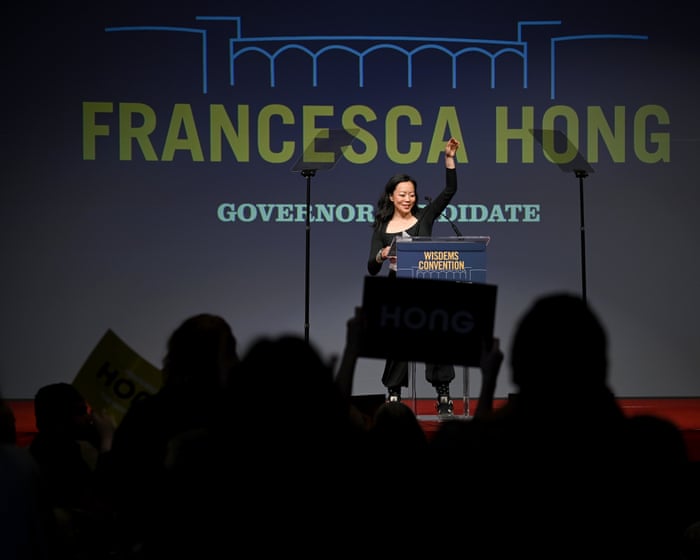
The Guardian’s coverage presented Francesca Hong, a Wisconsin state lawmaker, as the frontrunner in a four‑way Democratic primary to succeed outgoing Governor Tony Evers, describing her in the supplied text as a "democratic socialist" and situating the contest in a broader "anti‑establishment" or progressive wave among Democratic primary voters. Subsequent Guardian reporting in the cluster described a narrow, last‑minute outcome in which David Crowley — after re‑entering the race and receiving an endorsement from Tony Evers — was reported to have eked out a victory over Hong. The supplied excerpts do not include named polling sources, poll numbers, vote totals or margins, the names or platforms of the other primary candidates, nor direct quotes or detailed sourcing to substantiate the broader "wave" framing or the pre‑election "frontrunner" label.
Source and Framing Analysis
Primary source in the cluster: The Guardian. Its pre‑election excerpts frame Hong as a progressive or "democratic socialist" frontrunner and cast the contest as a test of anti‑establishment momentum within the party. Later pieces in the same outlet emphasize the narrowness of the outcome and attribute a late swing to strategic factors (Crowley’s re‑entry and an endorsement from outgoing Governor Evers). These are legitimate journalistic frames, but the supplied texts rely on interpretive shorthand without providing the underlying polling data, vote totals, named polls, or full opponent profiles in the supplied excerpts. Key interpretive elements to treat cautiously: the ideological label "democratic socialist" (may be a reporter’s label rather than the candidate’s self‑identification), the assertion that the race is definitive proof of a national "anti‑establishment wave" (requires systematic cross‑race evidence), and the pre‑election "frontrunner" designation (not accompanied in the supplied text by poll citations or margins). The later reporting of Crowley’s narrow win and Evers’s endorsement are material facts in the cluster’s articles, but the supplied excerpts still omit precise vote totals, timing details, and the names/policy positions of the other primary candidates. In short: The Guardian supplies a coherent narrative and distinct details, but several empirical claims in the excerpts need corroboration from polling data, official vote counts, campaign statements, and additional reporting.
How sources covered this story
Sanctuary separately assesses reporting quality and alignment with Christian virtues. The virtues assessment considers truthfulness, dignity, compassion, justice, peacemaking, humility, and care for vulnerable people. It does not assess a publisher's faith or reward religious language.
Compare 3 reports
Reporting 80/100Virtues 78/100
- Distinctive contribution
- Provides a concise interpretive angle: the narrow Crowley win as a ‘snapshot’ of the Democratic party and a potential limit to the progressive movement, plus the specific characterization of the margin as ‘a few thousand votes.’
- Framing
- Frames the Wisconsin primary result as both a close, photo-finish electoral outcome and as evidence testing the momentum/limits of a leftwing/progressive wave within the Democratic party; it emphasizes questions of unity ahead of November.
- Omissions or uncertainty
- No precise vote totals or percentages are provided; timing and geographic breakdowns (e.g., urban vs. rural turnout) are missing. The excerpt cites polls favoring Hong but gives no poll sources or margins of error. Lacks direct quotes or attributions beyond general polling and interpretation.
- Why these scores
- The excerpt is concise and responsibly cautious (uses phrases like ‘was on course’ and ‘it was not to be’), conveys key facts (polling expectations, narrow margin), and supplies interpretive context. It loses points for lack of specific numbers, source attribution for the polling claim, and limited on-the-ground detail in the supplied text. The tone is measured and non-sensational, avoids dehumanizing language, and raises questions about political unity (a concern for community and peacemaking). It treats actors respectfully and does not exploit suffering; somewhat higher score limited only by the brief analytical framing without explicit attention to affected communities.
Rank 2
The Guardian: Wisconsin considers democratic socialist for governor amid US wave of progressive winsReporting 74/100Virtues 76/100
- Distinctive contribution
- Confirms that Hong was widely seen as the frontrunner in a four-way contest to succeed Tony Evers and situates the primary as part of an anti-establishment wave.
- Framing
- Frames the contest as a referendum on anti-establishment/leftwing momentum within Democratic primaries and positions Hong as the representative of that trend.
- Omissions or uncertainty
- No poll numbers, timelines, or information about the other three candidates are included in the excerpt. Lacks sources for the claim that she ‘emerged as the frontrunner,’ and provides no demographic or turnout context to assess the strength of the claim.
- Why these scores
- The excerpt succinctly sets up the stakes and identifies the key candidate and contest type. It is appropriate for a pre-election profile but omits quantitative backing (polls, margins) and details about opponents, which limits its standalone evidentiary weight in the supplied text. The piece treats the candidate and political dynamics respectfully and neutrally, focusing on civic implications rather than sensationalism. It promotes informed debate by highlighting stakes; the score is slightly tempered because the excerpt does not explicitly address impacts on communities or vulnerable groups.
Rank 3
The Guardian: David Crowley defeats Francesca Hong to win Democratic primary for Wisconsin governorReporting 77/100Virtues 75/100
- Distinctive contribution
- Reports that Crowley re-entered the governor’s race and received Tony Evers’s endorsement, which helps explain a late swing in the contest.
- Framing
- Frames the outcome as a comeback/last-minute victory influenced by strategic moves (re-entry and a high-profile endorsement), and situates it in a broader pattern by referencing other primaries where polls overstated progressive leads.
- Omissions or uncertainty
- The excerpt does not include exact vote counts, timing/details of Crowley’s re-entry, explanation of why Evers endorsed him, or direct sourcing for the comparison to other races. One sentence referencing Michigan and Abdul El-Sayed is elliptical and could confuse readers without fuller context.
- Why these scores
- The supplied text conveys clear, newsworthy details (endorsement, re-entry, narrow win) and links the result to a broader electoral pattern. It falls short in the excerpt of providing specific numbers, dates, or attribution for comparative claims, and one comparative sentence is under-explained, slightly reducing clarity. The passage is factual and avoids inflammatory language; it highlights political maneuvering rather than personal attacks. The focus is on events and implications rather than exploiting individuals, which aligns with truthfulness and respect. The score is moderated for lack of fuller context in the excerpt (e.g., motives, impacts on voters).
Biblical Reflection
Christian discernment calls us to look past partisan labels and narrative momentum, and to evaluate leaders and proposals by concrete effects on human dignity and the vulnerable. Labels like "democratic socialist" or "anti‑establishment" are shorthand that may help orientation but can also harden tribal identity. Christians should prioritize truth, mercy, justice, peacemaking, humility, and care for neighbors when engaging this story: seek accurate facts, demand policy specifics and evidence of probable outcomes for the poor and marginalized, resist dehumanizing opponents, and foster respectful civic conversation. Practically: separate factual claims (who ran, who led in polls, who won) from interpretive framing; ask for polling sources and vote totals; examine each candidate’s policy proposals for likely effects on healthcare access, poverty, housing, jobs, and public safety; and hold leaders accountable to the common good.
Scripture in context
- 1Luke 10:25–37 (Parable of the Good Samaritan) — A teacher of the law asks Jesus how to inherit eternal life; Jesus tells the story of a man beaten and ignored by religious leaders but helped by a Samaritan, illustrating that 'neighbor' is defined by acts of mercy beyond ethnic or religious boundaries. — The parable invites Christians to judge political leaders and policies by their capacity to show practical mercy to those in need, and to resist defining political community solely by identity. It presses voters to ask whether a candidate’s proposals will actually care for marginalized people rather than primarily serving partisan or identity interests.
Faithful Response
Treat The Guardian’s reporting in the cluster as a starting point: seek corroborating polling data, official vote counts, and direct statements from the campaigns to confirm claims about frontrunner status and the reported outcome.
Learn the candidates’ concrete policy proposals and independent analyses of their likely impact on healthcare access, housing, child poverty, jobs, and public safety, and prioritize how policies will affect the most vulnerable.
Pray for discernment for voters, humility and integrity for candidates, and protection for those most at risk in policy debates.
Engage neighbors respectfully across political differences: listen for the real grievances and hopes driving anti‑establishment energy and share evidence‑based concerns about policy consequences.
Support nonpartisan voter‑education efforts in your congregation that emphasize policy outcomes and civic processes rather than partisan labels.
Participate in the civic process (vote, attend candidate forums, encourage turnout) as an act of stewardship for the common good.
Reflection and Discussion
- 1How does my faith shape the criteria I use to evaluate this candidate — character, concrete policy outcomes, or ideological label?
- 2When a news story frames a candidate as part of an "anti‑establishment wave," what additional evidence (named polls, vote margins, and cross‑race comparisons) do I need to test that claim?
- 3Which concrete outcomes for the poor, families, and community safety should I prioritize when comparing Francesca Hong’s proposals with her opponents’?
- 4How can my congregation model respectful disagreement and neighbor‑love amid heated primary coverage?
- 5Does the candidate self‑describe using the ideological label applied by reporters, and what do her own policy texts and speeches actually propose?
Sources
Reporting links are evidence inputs; Sanctuary News' biblical reflection is commentary.
This outlook currently relies on fewer than two linked sources. Broaden verification before teaching from it.
- 1.Wisconsin considers democratic socialist for governor amid US wave of progressive winsprimary_reporting