News Summary
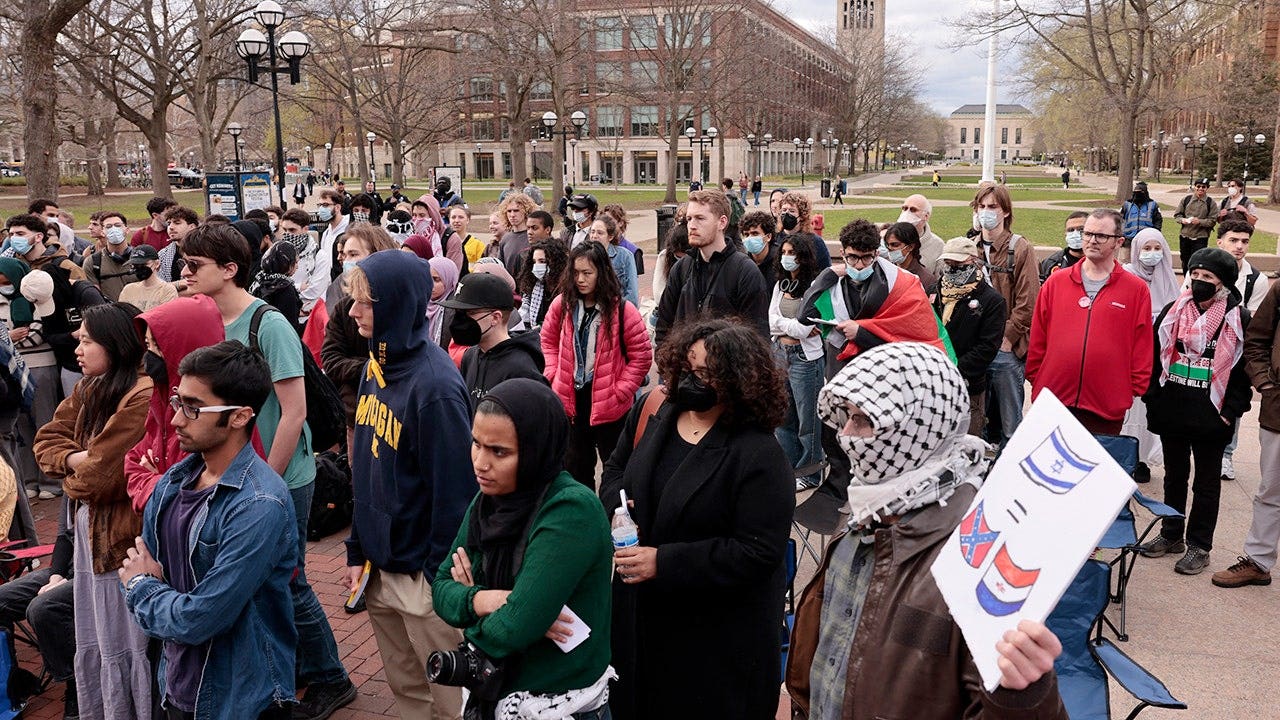
Federal prosecutors in the Eastern District of Michigan charged eight college-aged individuals with conspiring to threaten University of Michigan leaders and others over the university’s refusal to divest from Israel. Allegations in the indictment include spray-painting threatening messages and pro-Hamas symbols, caulking doors shut, breaking windows, leaving demand notes, staging fake corpses outside a regent’s home, and throwing glass jars containing butyric acid and dye into a provost’s home. Prosecutors say the group discussed using poison, bombs and psychological torture and stalked identified targets; some defendants allegedly threatened or attempted to intimidate potential witnesses. Four defendants — Zainab Hakim, Paige Feyock, Jonathan Zou, and Colin Weger — pleaded not guilty and were released on bond with travel restrictions, GPS monitoring, passport surrender and no-contact orders. Other defendants remain in custody or face separate hearings; the indictment includes charges carrying penalties up to 20 years for witness intimidation and up to five years for conspiracy to transmit threats or destroy property. Authorities cite social-media evidence and encrypted chats as part of the investigation, while the magistrate noted free-speech considerations during the bond hearing.
Biblical Reflection
From a Christian perspective, this story raises core concerns about truth, neighbor-love, and justice. If the allegations are true, the actions described are not legitimate protest but criminal intimidation that endangers people and targets a religious community — that violates the biblical call to protect the vulnerable and to seek the good of our neighbors. At the same time, the judicial process must be respected: accusations require careful evidence and fair proceedings rather than pre-judgment. The article reflects competing commitments in public life — passion for political causes, the ethics of protest, and the rule of law — and shows how rhetoric and social-media organizing can escalate into real harm. Readers should be wary of partisan framing that makes the story into a symbol for broader political battles rather than focusing on concrete facts and victims. The Christian response is to insist on both truth and mercy: support thorough investigation and accountability for unlawful violence, care for those harmed (especially religious minorities), and resist language or tactics that dehumanize opponents. Pastoral care for campus communities and families affected is also essential, as is calling believers to pursue nonviolent, truth-speaking advocacy that honors both justice and peace.
Scripture in context
This outlook does not yet include contextual Scripture citations. Do not treat a general biblical theme as an exegetical conclusion.
Faithful Response
No prescribed response is offered. Consider the reflection prompts below in your own church context.
Reflection and Discussion
- 1How should we distinguish between protected political protest and criminal intimidation when rhetoric and tactics threaten real people?
- 2What biases or frames in reporting (including emphasis, language choice, and source selection) might push us toward anger or presumption rather than careful discernment?
- 3How does our understanding of justice require both accountability for wrongdoing and care for the accused until facts are established in court?
Sources
Reporting links are evidence inputs; Sanctuary News' biblical reflection is commentary.
This outlook currently relies on fewer than two linked sources. Broaden verification before teaching from it.
- 1.Original reportprimary