News Summary
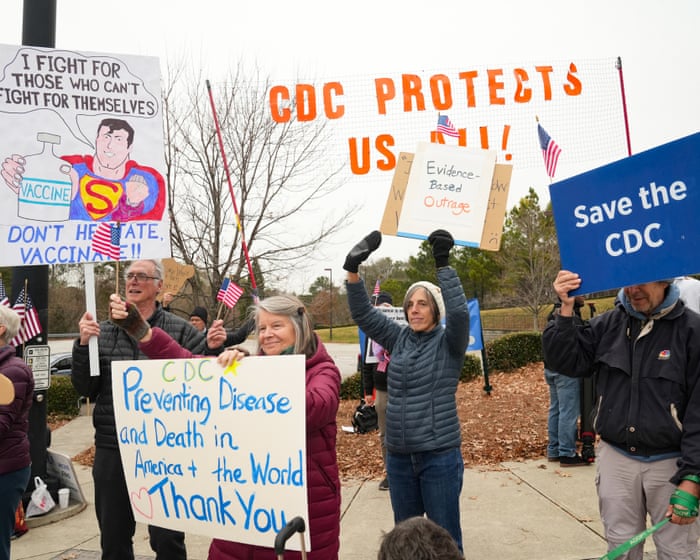
Reported facts: The Guardian article reports statements from former top CDC officials who say staffing and expertise losses at CDC and across public-health agencies have weakened U.S. readiness for infectious disease outbreaks. The article lists recent or emerging threats including measles, hantavirus, cyclospora, screwworm, Ebola, whooping cough, and bird flu as examples highlighting gaps.
Attributed claims: The central claim — that cuts and dismantling of public-health capacity leave the U.S. worse off than before the COVID-19 pandemic — is attributed to former CDC officials and framed as their assessment. Specific operational impacts (which programs were cut, exact staffing losses, or measurable delays in responses) are described at a high level and attributed to experts rather than documented with independent data in the article.
Uncertainty: The article does not provide detailed, independently verifiable data on budget or staffing declines, nor does it include official CDC responses or quantitative measures of response delays. The extent to which each named outbreak was slowed by cuts versus other causes is not established in the reporting.
Source and Framing Analysis
Material uncertainty stems from reliance on assessments by former officials without accompanying public documents or independent data in the article. The Guardian frames a series of varied outbreaks together to illustrate a pattern; that narrative choice highlights a systemic problem but can conflate disparate events with different causes. The article attributes conclusions to named experts, which is appropriate, but readers should note the lack of quantitative evidence presented here (for example, specific budget lines, headcount statistics, or timeline comparisons). The framing emphasizes institutional decline and risk, which is a valid concern but needs corroboration from additional sources and official records to determine scale and causes.
Biblical Reflection
The article highlights a civic and moral responsibility to care for vulnerable neighbors by maintaining the institutions that protect public health. Christians are called to truth-telling and wise stewardship: evaluate the claims honestly, pray for those affected, and support policies and practices that protect life and neighborly welfare. The framing — warnings from former officials about lost staff and expertise — points to broken systems and human fragility, not to inevitable catastrophe; this invites a posture of humble vigilance rather than panic. Practically, the story calls Christians to love of neighbor by encouraging vaccination and supporting local public-health efforts, advocating for adequate resources, and resisting fear-driven judgment toward public servants and policy-makers.
Scripture in context
- 1Luke 10:25-37 (Parable of the Good Samaritan) — A lawyer asks Jesus how to inherit eternal life; Jesus tells the parable of a man robbed and left injured. Religious leaders pass by; a Samaritan cares for the man, illustrating love of neighbor across social boundaries. — The passage addresses practical compassion and obligation to care for those in need, cutting through assumptions of who is 'in' or 'out' of our responsibility; applied here, it supports sustained public action to protect the sick and vulnerable rather than indifference or partisan blame.
- 2Proverbs 21:5 (wisdom about planning) — A proverb contrasting the plans of the prudent with the haste of fools, encouraging careful, long-term planning. — This text underscores the biblical value of prudent preparation and stewardship: funding and staffing public-health systems is a form of wise foresight that preserves life and serves the common good.
Faithful Response
Pray regularly for public-health workers, decision-makers, and those affected by outbreaks.
Encourage and participate in practical neighbor-care: support vaccination clinics, offer assistance to vulnerable neighbors, and share reliable public-health information compassionately.
Advocate respectfully to local and national leaders for sustained public-health funding and workforce development, framing the request as concern for the neighbor rather than partisan politics.
Resist anxiety-driven reactions: verify claims before sharing, avoid scapegoating individuals or agencies, and model calm, informed care.
Reflection and Discussion
- 1How does the biblical call to love our neighbor change the way we weigh public-health recommendations and policy debates?
- 2Amid warnings of institutional weakness, where should Christians prioritize energy: charity (direct care), advocacy (policy), or both, and why?
- 3How can Christians hold leaders accountable without succumbing to fear, cynicism, or partisan hostility?
Sources
Reporting links are evidence inputs; Sanctuary News' biblical reflection is commentary.
This outlook currently relies on fewer than two linked sources. Broaden verification before teaching from it.
- 1.CDC cuts leave US less prepared for disease outbreaks, former officials warnprimary_reporting