News Summary
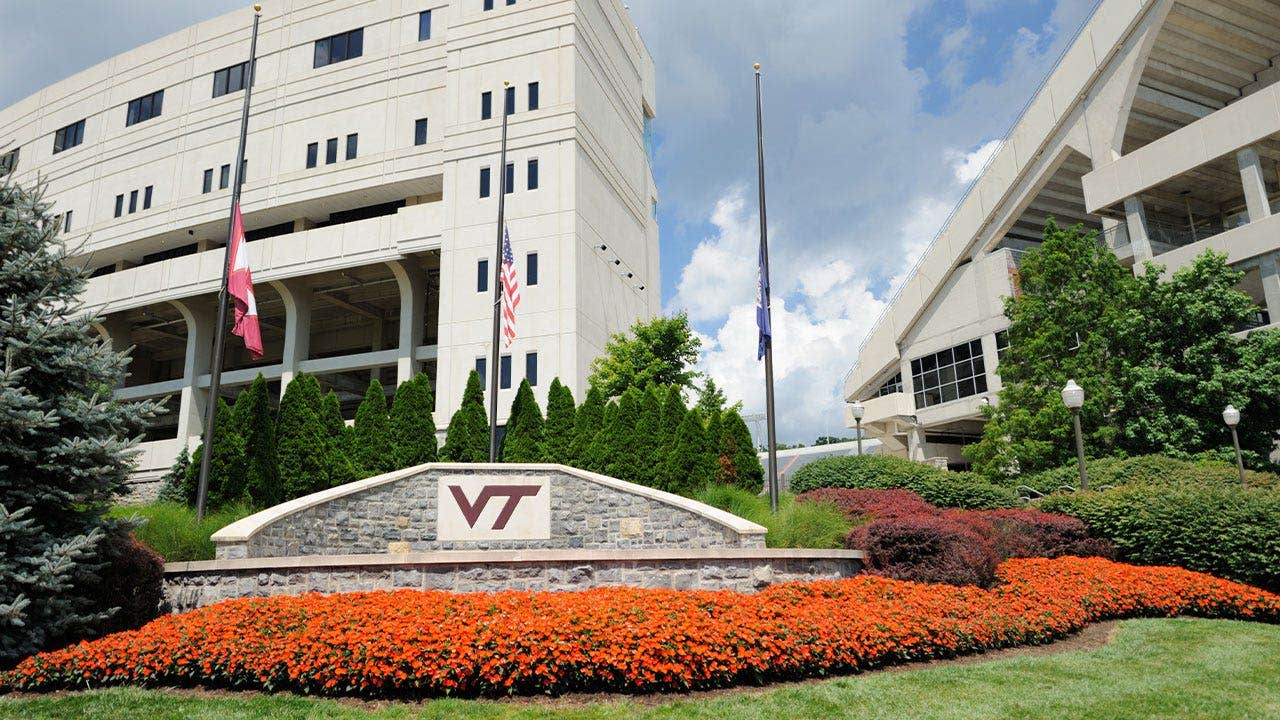
Video clips show Mohamed Abdou, a former Columbia University professor barred from re-employment after expressing support for Hamas, Hezbollah and Islamic Jihad, speaking at an off-campus event in Blacksburg as part of his 'Death to the Akademy' tour. In the clips Abdou says that the phrase 'Death to America' means 'a total end to U.S. empire' and the 'destruction' of what he characterizes as a 'crusading settler colony.' He praises the Oct. 7 attacks, referring to that day as the 'blessed day of Al-Aqsa Flood,' and calls student activists in the room a 'branch of the resistance' and a 'branch of the mujahideen.' Abdou also criticizes the weapons industry and appears to urge students to disrupt "every single choke point" and supply-chain bottlenecks, saying "Study what our mujahideen did" and urging them to 'start soon.' He references Adolf Hitler in a way that appears to urge students to 'understand what Hitler stands for' while also calling the 'modern Zionist entity' to have a 'Hitlerite mentality.' Virginia Tech officials stated the event was not university-sponsored or registered. Abdou and Virginia Tech did not provide comment to the reporting. Columbia previously barred Abdou following a congressional hearing in which Columbia's president said his file would permanently mark him ineligible for re-employment.
Biblical Reflection
From a Christian perspective, this story raises several distinct concerns. First, the public advocacy or praise of violent attacks and calls for the destruction of peoples or institutions stand in direct conflict with biblical teaching about the sanctity of human life and the command to love even our enemies (see Matthew 5:43–48). Christians should distinguish legitimate critique of power, empire, and injustice — which Scripture sometimes models (e.g., prophetic calls for justice) — from rhetoric that endorses violence or dehumanization. Second, the speech’s language frames political and military conflict in existential, religious-war terms, which can harden identities and justify retaliatory violence rather than promote truth-seeking, reconciliation, or just methods of protest. Third, the university context introduces questions about free speech, institutional responsibility, and safety: institutions must balance protections for speech with the duty to prevent incitement and protect campus safety. Media framing can also shape how readers interpret these events — highlighting inflammatory quotes can be factual but may omit broader context, motives, or the event’s registration status, so readers should watch for selective quoting and confirmation bias. Spiritually, Christians are called to pursue justice and speak truth to power, but to do so by means consistent with Christ’s commands — truth, peace-making, and nonviolence — and to resist narratives that sanctify violence or reduce people to enemies. Pray for clarity in discerning grievance from justified resistance and for Christian witnesses who model nonviolent, biblically rooted justice.
Scripture in context
This outlook does not yet include contextual Scripture citations. Do not treat a general biblical theme as an exegetical conclusion.
Faithful Response
No prescribed response is offered. Consider the reflection prompts below in your own church context.
Reflection and Discussion
- 1Does the rhetoric used by the speaker seek constructive change or does it explicitly endorse violence and destruction, and how should those be distinguished in public discourse?
- 2What implicit assumptions or grievances underlie calls to 'destroy' an empire, and how might those be transformed into nonviolent, truth-seeking actions consistent with Christian ethics?
- 3How might media selection of quotes and contextual details shape public perception, and what further information would help you assess the credibility and danger of such speeches?
Sources
Reporting links are evidence inputs; Sanctuary News' biblical reflection is commentary.
This outlook currently relies on fewer than two linked sources. Broaden verification before teaching from it.
- 1.Original reportprimary