News Summary
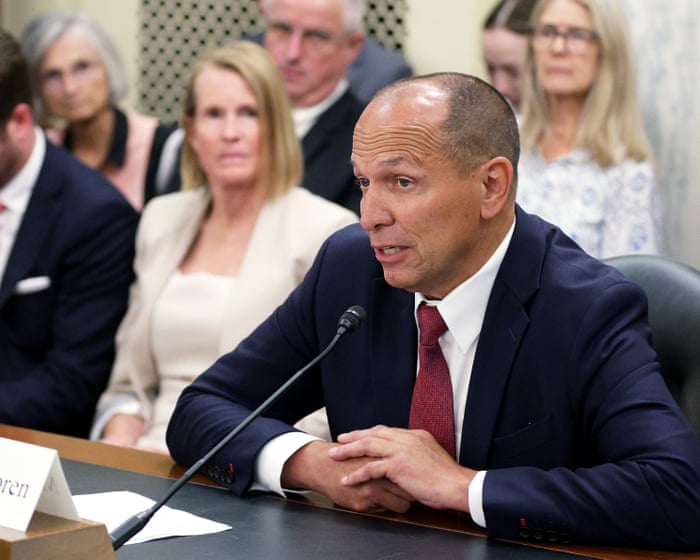
Secondary reporting (The Guardian citing a Washington Post story) says Michael Boren, U.S. undersecretary of agriculture for natural resources and environment who oversees the U.S. Forest Service, pressed agency staff in July 2026 to deploy additional aircraft to the 7-acre Cabin Creek fire burning near his Idaho ranch. The Guardian/Washington Post account attributes the claim that some aircraft were diverted from other fires to that reporting. Official public details in the supplied material: the Cabin Creek fire began around July 12, was reportedly caused by an unattended campfire, and the Forest Service reported it was 100% contained by July 15. The supplied articles do not include direct internal communications, flight logs, on-the-record responses from Michael Boren, or documentation showing operational impact on other fires; therefore the allegation of preferential influence and measurable diversion of resources remains unverified in the supplied reporting.
Source and Framing Analysis
The immediate published account is a secondary report (The Guardian) that attributes the central allegation to a Washington Post story. The Guardian excerpt uses hedged language ('reportedly pressed', 'according to a Washington Post report'), which signals attribution rather than assertion. Strengths of the reporting: it identifies the official involved, the specific incident (Cabin Creek fire), dates, reported cause, and containment status—facts useful for assessing the newsworthiness of possible influence or conflict of interest. Limitations and uncertainties in the supplied material: no primary documents (emails, orders), no contemporaneous dispatch or flight logs, no named on-the-record witnesses or agency spokespeople quoted, and no record of a response from Michael Boren or the Forest Service explaining operational context. Because the claim that aircraft were diverted from other fires is attributed to a single earlier report and the supplied text contains no corroborating operational data, the framing risks implying a conclusion that the available evidence in the excerpt does not fully support. The story as presented is newsworthy (potential misuse of influence over public safety resources), but verifying operational impact and intent will require primary records and responses from the involved parties.
How sources covered this story
Sanctuary separately assesses reporting quality and alignment with Christian virtues. The virtues assessment considers truthfulness, dignity, compassion, justice, peacemaking, humility, and care for vulnerable people. It does not assess a publisher's faith or reward religious language.
Compare 1 reports
Reporting 78/100Virtues 75/100
- Distinctive contribution
- Reports that Boren requested more aircraft for a 7-acre Cabin Creek fire near his ranch, that some aircraft were diverted from other fires, and gives timeline (fire began ~12 July; 100% contained by 15 July) and reported cause (unattended campfire).
- Framing
- The piece attributes the central allegation to the Washington Post and uses hedged language ('reportedly pressed', 'according to a Washington Post report'), while stating Boren's official role and providing factual context about the fire's size, cause, and containment. That framing signals attribution and caution rather than asserting the claim as established fact.
- Omissions or uncertainty
- No direct quotes or documentary evidence are supplied in the excerpt (e.g., emails, orders, or officials' statements). It does not report any response from Boren, the USDA/Forest Service, or the Washington Post sourcing details. It does not specify which aircraft were diverted, which other fires were affected, whether formal policies were violated, or the operational impact of the alleged diversions.
- Why these scores
- The excerpt is concise, gives key facts (who, what, where, when), and responsibly attributes the core allegation to another news report, using hedged language. That demonstrates basic journalistic caution and useful specificity (dates, containment status, cause). It loses some points because, in the supplied text, there are no direct quotes, primary documents, or responses from the named official or agency, and the account depends on another outlet's reporting without further corroboration in this excerpt. The reporting is neutral and careful in tone (uses attribution and hedging), avoiding sensationalism or dehumanizing language, which aligns with truthfulness and humility. It does not show explicit compassion or justice-focused framing, nor does it give voice to affected parties or officials in the supplied excerpt; those omissions prevent a higher score but do not indicate misconduct in the reporting itself.
Biblical Reflection
Christian reflection calls for honest pursuit of truth together with mercy. Public servants are stewards of resources intended for the public good; allegations that influence was used to shift emergency assets are thus rightly subject to careful inquiry. At the same time, Christians should avoid rush-to-judgment or slander before facts are independently verified. The virtues to hold together here include humility (recognizing uncertainty), courage (seeking accountability if warranted), and care for vulnerable neighbors (prioritizing the safety of communities and firefighters). Pray for clarity for investigators, for humility from leaders, for protection of responders, and for institutions to uphold transparent, fair processes that allocate emergency resources by need rather than connection.
Scripture in context
- 1Mark 10:42–45 — Jesus reframes worldly notions of power and greatness by calling his followers to servant leadership; leaders are measured by service to others rather than exercise of privilege. — This passage challenges public officials and citizens alike to evaluate leadership by stewardship and service, asking whether decisions about shared safety resources prioritize the common good.
- 2Micah 6:8 — Prophetic instruction urges doing justice, loving mercy, and walking humbly with God as foundations for public life and personal conduct. — These themes remind the church to seek fair procedures, to pursue mercy toward individuals, and to demand institutional humility and integrity in the stewardship of public trust.
Faithful Response
Pray for clear facts to emerge, for impartial review of operational records if warranted, and for the safety and welfare of firefighters and affected communities.
Avoid repeating or amplifying unverified allegations; distinguish clearly between reported claims and confirmed evidence when speaking with others or on social media.
Advocate for transparent, evidence-based review: request flight logs, incident dispatch records, and contemporaneous communications if public oversight processes exist and if transparency is appropriate.
Support local firefighting services—volunteer or professional—through prayer, volunteering, donations, or pastoral care for responders and their families.
Encourage congregations to hold leaders to standards of stewardship and accountability without demonizing individuals before facts are established.
Reflection and Discussion
- 1How should Christians balance the call to seek accountability for possible misuse of public resources with the call to avoid slander and premature judgment?
- 2In what concrete ways can a congregation support first responders and simultaneously urge transparent oversight of public agencies?
- 3What institutional safeguards and cultural practices should communities expect so that emergency resources are allocated by need rather than by personal connection?
Sources
Reporting links are evidence inputs; Sanctuary News' biblical reflection is commentary.
This outlook currently relies on fewer than two linked sources. Broaden verification before teaching from it.
- 1.US forest service chief reportedly pressed staff for more support for wildfire near his ranchprimary_reporting