News Summary
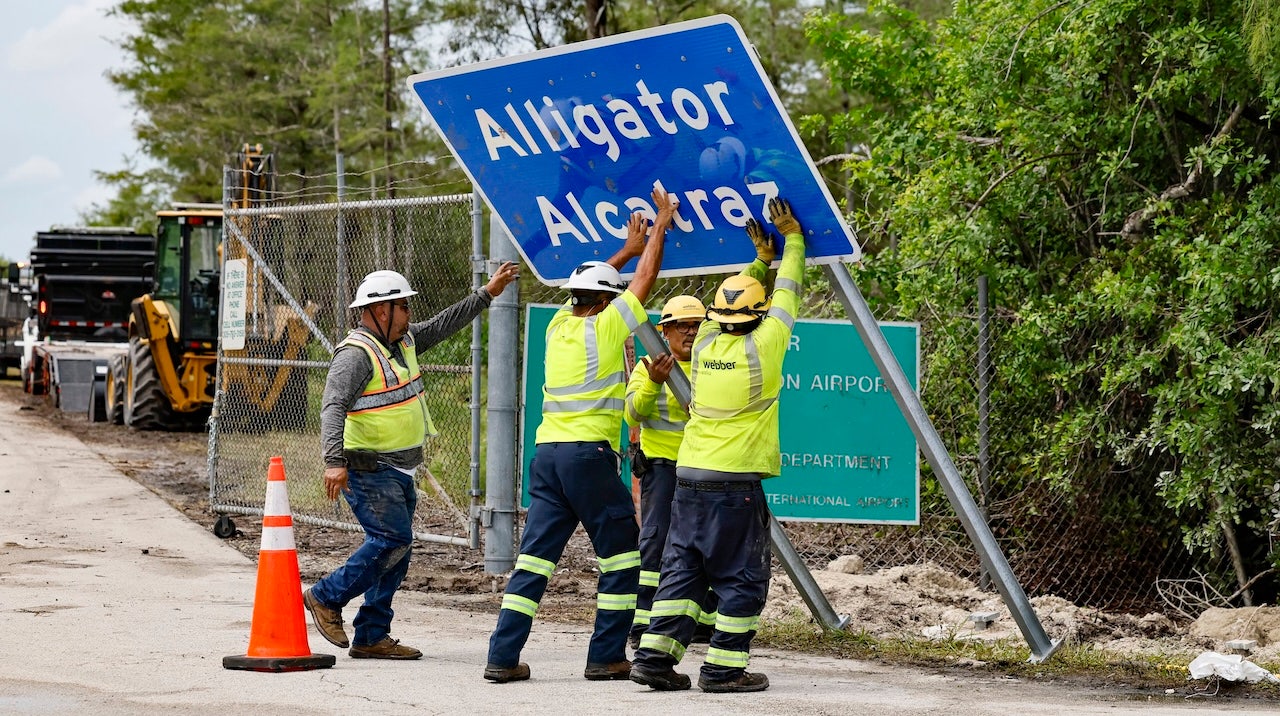
Florida state officials say the Alligator Alcatraz ICE holding facility in Collier County (near Ochopee, in the Everglades area) will be returned to the Everglades when it is no longer needed. The New York Times reported that Florida is in talks with the federal government about shutting the facility, citing very high operating costs reportedly totaling hundreds of millions of dollars and a Department of Homeland Security finding that the site was too expensive to continue. A senior Florida official characterized the facility as a temporary, rapid solution and said it processed over 21,000 migrants for deportation. Florida has said the federal government will reimburse the state for its initial costs; the state also plans to keep the site’s 2.5-mile runway available for flights from nearby ICE facilities. The 11th U.S. Circuit Court of Appeals recently ruled 2–1 that the state-run facility is not under federal control and therefore is not subject to federal environmental-impact-review requirements; the ruling came after a lower court ordered the facility to wind down for alleged violations of federal environmental law. Reports indicate Florida has been spending more than $1 million per day to operate the center.
Biblical Reflection
This report sits at the intersection of several competing responsibilities: enforcement of immigration law, stewardship of creation, fiscal accountability, and the humane treatment of vulnerable people. The article largely reflects the state’s and allied national political viewpoint by quoting officials who call the site a “massive success” and frame it as a temporary response to a perceived border crisis; it also cites external reporting about high costs and a DHS assessment. Readers should note the partisan framing (language such as “open border invasion,” praise from state officials, and emphasis on deportation totals) and that several important perspectives are compressed: environmental advocates’ concerns, migrant welfare and legal rights, and independent cost verification are not explored in depth here. Biblically, Christians must weigh respect for lawful governance and public order (Romans 13) against persistent scriptural calls to welcome and protect the stranger (Leviticus 19:33–34; Matthew 25). Stewardship of God’s creation (Genesis 2:15) calls for careful consideration of actions taken on fragile ecosystems like the Everglades. Transparency and truthfulness in public claims—about costs, legal authority, and humanitarian outcomes—are moral goods the church should expect from leaders. In short: evaluate the factual claims (costs, legal status, number processed) apart from political rhetoric; hold competing biblical responsibilities—care for the vulnerable, obedience to lawful authority, and care for creation—in tension rather than letting partisan framing force a false either/or.
Scripture in context
This outlook does not yet include contextual Scripture citations. Do not treat a general biblical theme as an exegetical conclusion.
Faithful Response
No prescribed response is offered. Consider the reflection prompts below in your own church context.
Reflection and Discussion
- 1What assumptions or political commitments underlie the language used in the article (e.g., “massive success,” “open border invasion”), and how do those assumptions shape what facts are highlighted or omitted?
- 2How should Christians weigh legitimate concerns about law, order, and fiscal stewardship against the biblical call to treat strangers and vulnerable people with dignity?
- 3What accountability and transparency questions should be posed about operations that affect both human beings and fragile ecosystems (cost reporting, environmental review, conditions of detention)?
Sources
Reporting links are evidence inputs; Sanctuary News' biblical reflection is commentary.
This outlook currently relies on fewer than two linked sources. Broaden verification before teaching from it.
- 1.Original reportprimary