News Summary
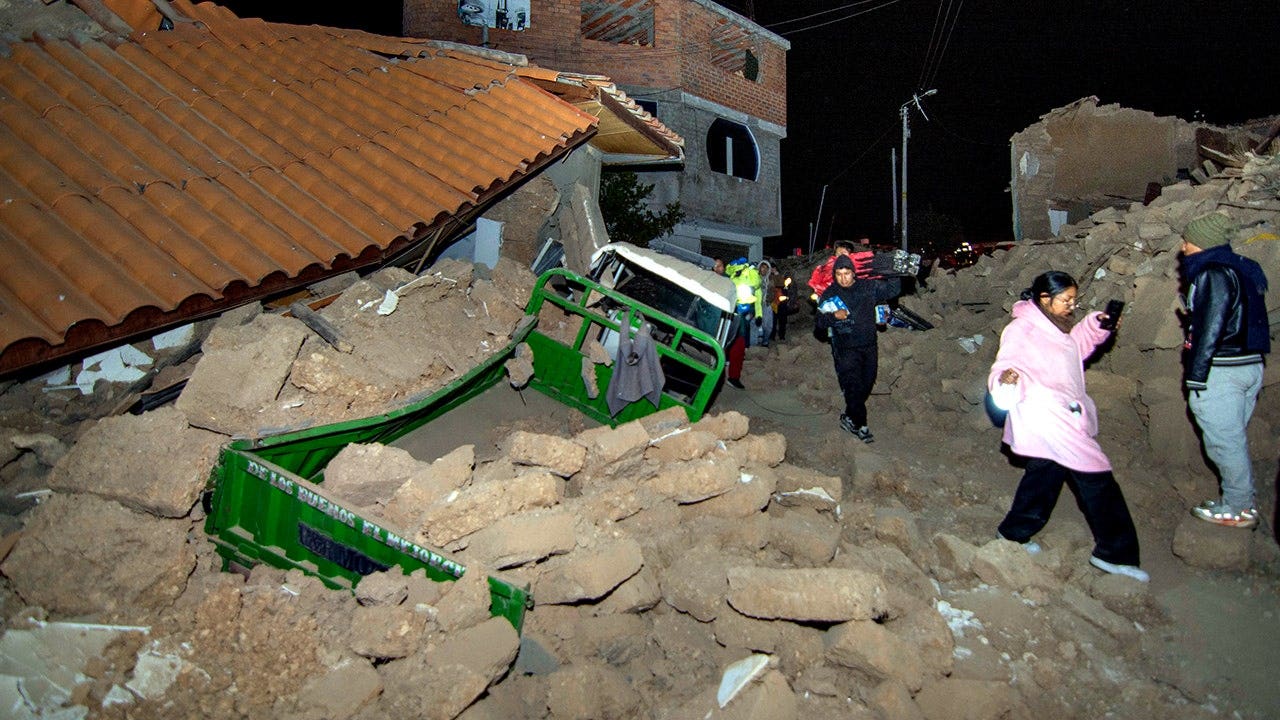
Facts: A magnitude 5.5 earthquake struck near Sicaya shortly after 9:20 p.m.; at least five people were killed, more than 20 injured, and at least 300 residents displaced; several buildings including a church and convent collapsed or became unsafe; officials cited adobe construction as worsening damage. Attributions: Magnitude and location are cited to the U.S. Geological Survey; casualty and displacement figures and the statement about adobe construction are attributed to Peru's National Civil Defense Institute and local civil defense officials; photographs credited to the Associated Press. Uncertainty: The article notes an unknown number of people remain missing and that casualty and displacement figures are initial counts, subject to revision as officials continue to account for residents.
Source and Framing Analysis
Source role: The story is a primary news report published by Fox News that cites the U.S. Geological Survey and Peru's National Civil Defense Institute and includes Associated Press images. Missing voices: direct testimony from a broader range of survivors, local first responders beyond the civil defense head, structural engineers, regional government officials, and humanitarian agencies (local NGOs, international relief organizations) are absent. Incentives and framing: as an early breaking report it emphasizes casualty counts, vivid imagery, and immediate displacement, which draws attention but may prioritize immediacy over context. Disputed or provisional claims: casualty, injury, and missing-person counts are early figures requiring follow-up verification. What requires independent verification: final death and missing counts, extent of structural damage beyond cited communities, aftershock activity, and the status of state and international response capacity.
Biblical Reflection
This report documents a localized natural disaster with clear human cost. The piece mostly relays initial official figures and on-the-ground images, which rightly draw attention to immediate needs. Christians should note both the factual report and what it omits: long-term recovery needs, the capacity of local and international relief efforts, and the structural poverty that makes adobe homes common and vulnerable. The article's factual claims are appropriately attributed to agencies and officials, but readers should be cautious about treating early casualty and missing-person counts as final. From a pastoral perspective, the Christian response is to combine honest grief with concrete mercy: pray, give, and support effective relief while advocating for safer rebuilding and dignified care for displaced neighbors. Avoid voyeuristic consumption of images of suffering; instead let the news prompt sustained compassion and service.
Scripture in context
- 1Romans 12:15 — Paul instructs the Christian community to 'rejoice with those who rejoice; mourn with those who mourn' as part of practical, mutual care that binds the church together in empathy and action. — This passage encourages Christians to enter into the grief of earthquake survivors rather than observing from a distance—meaning prayer alongside practical relief, listening to survivors' needs, and sustained support through recovery.
- 2Psalm 46:1-3 — A psalm expressing trust in God as refuge amid upheaval and natural disaster imagery (earth quakes, nations in turmoil), written to reassure the faithful that God is present in crisis. — Use this language to comfort those shaken by disaster while resisting the temptation to offer shallow platitudes; rely on God for comfort and motivate action that brings real help to those in need.
Faithful Response
Pray specifically for victims, rescuers, local leaders, and for wisdom for relief organizations.
Give to reputable relief organizations working in Peru (prefer those with local partnerships) rather than ad-hoc or unvetted appeals.
If able, volunteer skills through vetted agencies (e.g., logistical support, trauma counseling) or support local churches and partners providing shelter and aid.
Educate yourself and your congregation about longer-term recovery needs—shelter, rebuilding to safer standards, and advocacy for resources—so help is sustained, not episodic.
Reflection and Discussion
- 1Which local perspectives (survivors, local aid groups, engineers) are missing from the coverage, and why does that matter for understanding needs?
- 2How might the article's emphasis on immediate casualty counts shape public charity in ways that help or hinder long-term recovery?
- 3What structural issues—poverty, building standards, rural access to services—does this event expose that require advocacy in addition to short-term relief?
Sources
Reporting links are evidence inputs; Sanctuary News' biblical reflection is commentary.
This outlook currently relies on fewer than two linked sources. Broaden verification before teaching from it.
Download source notes