News Summary
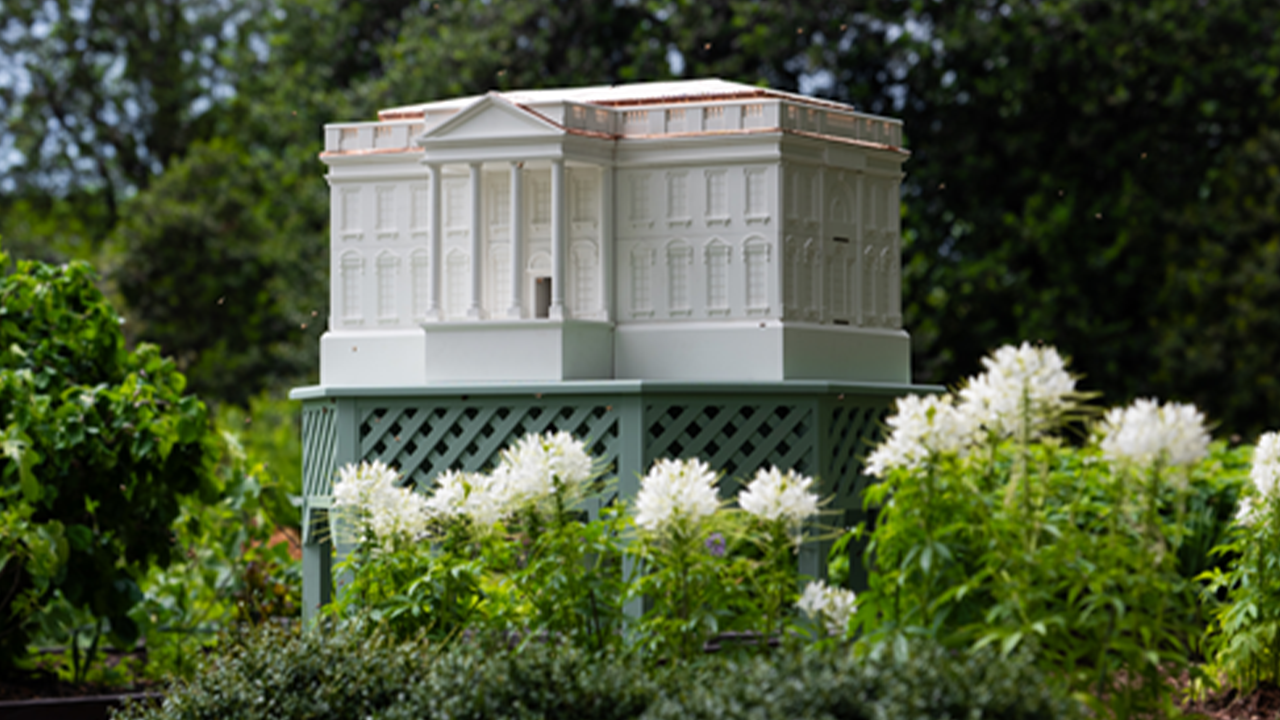
First Lady Melania Trump announced the addition of a new, fully functioning beehive on the South Lawn of the White House. The new hive is a hand-crafted replica of the Executive Mansion made by a Virginia artisan and is intended to add two new bee colonies to the property’s existing two colonies. The Office of the First Lady said the expansion is expected to increase annual honey production by about 30 pounds, to be used in White House cooking, as official gifts, and for charitable donations to local food kitchens. Funding for the installation came through the Trust for the National Mall. The Office also described the hive as supporting pollination of the White House Kitchen Garden, the Flower Cutting Garden, and nearby vegetation on the National Mall, and as an educational feature for visitors. The White House beekeeping program began in 2009 after a carpenter, Charlie Brandt, kept bees on the complex as a hobby.
Biblical Reflection
This report describes a small, symbolic public stewardship initiative that intersects food, conservation, education, and public relations. Viewed positively, the expansion reflects care for creation (pollination, food production) and a desire to use a small government property resource for charitable giving and education. It also continues a light tradition that humanizes the executive residence and offers an opportunity to teach about ecosystems and food systems. On the other hand, this kind of story is easily framed as symbolic pageantry; the choice to highlight the replica hive and production gains serves both environmental messaging and public image-building. Christians should note both the good in practical stewardship and neighbor care and the ease with which such acts can be presented as spectacle rather than sustained policy. Theologically, small acts of creation care and feeding the hungry are consistent with biblical witness, but they do not substitute for broader commitments to justice, long-term food security, or ethical treatment of animals and workers. Readers should appreciate the concrete benefits (pollination, modest honey production, donations) while remaining discerning about how much attention and resources are devoted to symbolic gestures versus structural good. The article is largely factual and low on overt partisan spin; minor ambiguities (for example, an image caption noting a worker “sprays gas” on the replica hive) should prompt questions about beekeeping practices and transparency rather than alarmist conclusions.
Scripture in context
This outlook does not yet include contextual Scripture citations. Do not treat a general biblical theme as an exegetical conclusion.
Faithful Response
No prescribed response is offered. Consider the reflection prompts below in your own church context.
Reflection and Discussion
- 1What evidence would you look for to distinguish genuine, sustained stewardship and charitable impact from symbolic or PR-centered initiatives?
- 2How does attention to small acts of creation care (like beekeeping) shape our understanding of broader Christian responsibilities toward the environment and the hungry?
- 3When public figures highlight modest charitable outputs, how should Christians weigh praise for the immediate good against the need for systemic solutions?
Sources
Reporting links are evidence inputs; Sanctuary News' biblical reflection is commentary.
This outlook currently relies on fewer than two linked sources. Broaden verification before teaching from it.
- 1.Original reportprimary